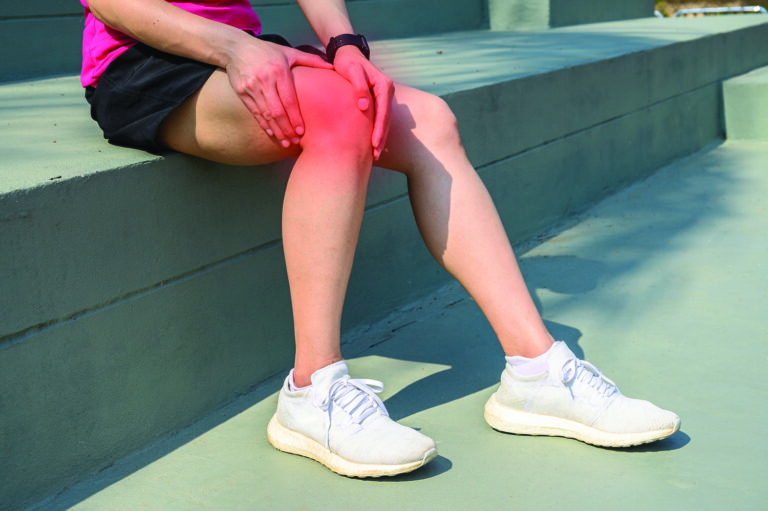
Your muscles ache and your joints are stiff. You have chronic back or neck pain. You pulled a muscle while exercising. These are all reasons why you might reach for a muscle pain relief cream. While a muscle soreness cream can’t treat the underlying cause of your pain, it can ease symptoms and help you feel more comfortable.
Ming-Chih Kao, PhD, MD, pain management specialist and general musculoskeletal physiatrist at Stanford Health Care walks us through what to know about muscle pain relief creams and how to choose the best muscle pain relief cream for you.
How to Choose the Best Muscle Pain Relief Cream
Applied to the skin, topical pain relief creams can be helpful for mild or moderate localized muscle pain, soreness, and stiffness.
But not all muscle pain relief creams are the same. For example, some creams target joint pain and muscle pain. Others target inflammation-related pain or neuropathic (nerve) pain.
The best muscle pain relief cream “depends on the condition that’s being treated and the way that topical product is being used,” Dr. Kao says. “For that reason, it’s a bit hard to have a broad answer.”
As Dr. Kao notes, topical pain relief creams should be used as part of a comprehensive pain relief care plan. “Pain management is very interdisciplinary in nature,” he says. Pain treatment options include interventions like topical and oral pain medications, physical therapy, minimally invasive medical procedures, and psychological management approaches.
“With that broad range of options, topical medications remain an important component,” Dr. Kao says.
In addition to selecting the best muscle pain relief cream for your specific condition, other factors to consider include:
- Price and availability
- Application method (roll-on, squeeze bottle, spray, or patch)
- Active ingredients and inactive ingredients, especially if you have allergies or sensitivities to certain ingredients
- Texture and scent of the product
Best Muscle Pain Relief Creams at a Glance
Wondering about the best pain relief cream for muscle aches and pains? Use this guide for quick reference:
|
CATEGORY |
PRODUCTS |
|
Best Overall Muscle Relief Cream |
Diclofenac Gel; Lidocaine |
|
Best for Fast Cooling Relief |
Biofreeze; Icy Hot; Bengay; Tiger Balm |
|
Best for Warming Relief |
Capzasin; Zostrix |
|
Best for Targeted Spot Treatment |
Biofreeze Pain Relief Roll-On; Icy Hot Nighttime Recovery No-Mess Roll-On |
|
Best for Sensitive Skin |
Aspercreme Odor Free Pain Relief Cream with Lidocaine; Tylenol Precise Pain Relieving Cream |
Best Overall Muscle Pain Relief Cream: Diclofenac Gel and Lidocaine
There is no one “best” muscle pain relief cream, because what’s best for you depends on your individual condition. Still, Dr. Kao cites two muscle pain relief creams that are most commonly used by patients.
- Diclofenac Gel. When it comes to acute pain, strains, sprains, or bruises, “the general guideline is the use of an anti-inflammatory topical medication—basically a diclofenac gel,” Dr. Kao says. Diclofenac gel is a nonsteroidal anti-inflammatory drug (NSAID), the same class of medication as oral ibuprofen (Advil, Motrin) or naproxen (Aleve). Diclofenac gels relieve general muscle pain and pain caused by arthritis. Diclofenac gels are sold with or without a prescription. Voltaren Arthritis Pain Gel is the most common over-the-counter brand name for diclofenac gel.
- Lidocaine. For nerve pain, particularly peripheral neuropathy (nerve pain outside the brain or spinal cord), Dr. Kao recommends lidocaine-based products. “Lidocaine comes in several different forms—gel, cream, as well as a patch—and that can be appropriate for nerve pain,” he says. Lidocaine can be prescribed by your doctor or sold as over-the-counter products like Aspercreme and AsperFlex.
Best for Fast Cooling Relief: Biofreeze, Icy Hot, Bengay, and Tiger Balm
If you are looking for a cooling pain relief cream, Dr. Kao’s top pick is a topical menthol pain reliever. Menthol “binds to a subset of our pain fibers that are cold sensors,” he explains, which causes you to experience a cold sensation on your skin. Menthol-based cooling products are helpful for many types of pain, including arthritis, backaches, and muscle aches and pains.
Some common menthol-containing products for muscle pain relief include Biofreeze, Icy Hot, Bengay, and Tiger Balm.
Best for Warming Relief: Capzasin and Zostrix
Many people are looking for a cream that heats up their muscles, to relieve feelings of tightness and stiffness.
The type of warming pain relief cream that Dr. Kao recommends is a capsaicin-based cream. “Capsaicin is actually the active ingredient in hot pepper,” he says. “It binds to pain fibers that also sense heat, and that’s why capsaicin and hot pepper both feel kind of hot.”
Be cautious with capsaicin products because they can irritate you, especially if you get them in your eyes. However, “the over-the-counter capsaicin creams are fairly low in concentration,” Dr. Kao says, so they are relatively low risk.
Over-the-counter capsaicin-based creams include Capzasin and Zostrix.
Best for Targeted Spot Treatment: Roll-On Biofreeze and Icy Hot
When it comes to pain relieving creams for sore muscles, stiffness, muscle aches, or other similar conditions, Dr. Kao recommends a targeted approach using these creams only on small areas of the body. “Sometimes, patients are tempted to apply it to an entire leg or entire arm, and that can easily be too high of a dose,” he says.
Some pain relief creams come with dosing cards, so you just squeeze out enough to treat the targeted area. Other application options include sprays or patches. When it comes to targeting especially small areas of the body, Dr. Kao recommends using roll-on products.
Some roll-on muscle relief products include Biofreeze Pain Relief Roll-On and Icy Hot Nighttime Recovery No-Mess Roll-On.
Best for Sensitive Skin: Aspercreme Odor Free; Tylenol Precise
If you have sensitive skin or are prone to skin irritation or allergies, Dr. Kao recommends being cautious about which muscle pain relief creams you purchase. “Try to avoid ones that have fragrances,” he says. “Look for ones labeled fragrance-free or odor-free.”
He also recommends avoiding high-strength menthol or methyl salicylate. You may also need to avoid capsaicin products, if they are irritating.
Some muscle pain relief creams that tend to be less irritating include Aspercreme Odor Free Pain Relief Cream with Lidocaine and Tylenol Precise Pain Relieving Cream.
How Muscle Pain Relief Creams Work
The two main types of muscle pain relief creams include those with active ingredients like lidocaine or diclofenac, and those that provide sensory relief, like menthol-based products and capsaicin-based creams.
- Lidocaine and Diclofenac. These two active ingredients work slightly differently. “Diclofenac is an anti-inflammatory, and it works by reducing inflammation,” Dr. Kao says. Diclofenac is effective, but it can take a little while to work, so you won’t have immediate relief. Conversely, lidocaine is an anesthetic. “It basically binds to and numbs nerves,” he says. “It numbs a lot of the skin nerves and maybe a little bit deeper than that, but generally does not penetrate very deeply. So, it’s pretty good for a more topical nerve pain.”
- Menthol-Based Products and Capsaicin-Based Creams. Menthol-based products have a cooling effect on the skin, whereas capsaicin-based products warm it. But they have a similar purpose. “They’re called counterirritants because they basically produce an additional sensation on the skin that helps reduce pain signals that go to the brain,” Dr. Kao explains.
How to Use Muscle Pain Relief Cream Safely
Before you use any muscle pain relief cream, make sure the product is the right one for you. “Patients who are older than 60 years old, on blood thinners, or who have heart disease, kidney disease, or stomach ulcers, or who are pregnant, please do check in with a physician,” Dr. Kao recommends.
Follow these other tips for safe use of muscle pain relief creams:
- Avoid Applying on Broken or Sensitive Skin. “These topical medications can only be applied to intact skin,” Dr. Kao cautions. “So, if there’s a cut, a rash, sunburn, or a sensitive part of the body, like around the eyes or around the genital area, those should be avoided.”
- Patch Testing. If you’re using a patch product, test it first. “Unfortunately, with capsaicin, patches tend to be very irritating to a lot of people,” Dr. Kao says. “With a patch, we recommend trying a small part of the skin first and making sure it works OK without a reaction.”
- Don’t Add Heat. The U.S. Food and Drug Administration recommends against using heat (e.g., heating pads) after applying topical medications, Dr. Kao notes. Taking a hot shower right after using one of these products has a similar effect, he adds. “The concern there is potentially causing serious burns,” he explains.
- Use Sparingly. Use the amount of product that’s recommended by your doctor or by the product’s instructions. “Don’t put too much on or use it too frequently,” Dr. Kao says. Contrary to what you might think, you can overdose on some of these products. “Some patients, especially with diclofenac gel, can develop stomach ulcers even with a topical cream,” Dr. Kao says.
- Don’t Mix Products. “Don’t stack; don’t put multiple products together,” Dr. Kao warns, because there are many unknowns of mixing these products together.
- Wash Your Hands. You should absolutely wash your hands after using these products, Dr. Kao says. Remember that many of these products are quite strong and can be irritating if you get them in your eyes or into an open wound.
- See Your Provider If Pain Isn’t Improving. Muscle pain relief creams are meant to be used for minor aches and pains. If your pain gets worse, reach out to your doctor. “It’s also good to see a physician when the pain is new and you don’t really know yet the best way to treat it,” Dr. Kao advises.
While muscle pain relief creams are helpful and have their place, “It’s best to make sure that you’re being treated in a comprehensive way for the pain that you’re experiencing, Dr. Kao emphasizes.