If you experience pain on the outside of your knee or hip, you might think an underlying condition like arthritis or a sprain is to blame. Or maybe you tweaked a muscle or ligament while exercising.
Odds are, you won’t suspect that your iliotibial (IT) band is the culprit. In fact, you might be unaware of what the IT band is.
It’s a long fibrous tendon that runs down the outside of the hip to just past the knee. IT band pain can present near the outside of the knee or hip. Fortunately, an array of nonoperative treatments can help ease this pain.
“IT band treatment has changed within the last 10 or 15 years,” says Cleveland Clinic physical therapist Brittany Smith, PT, DPT. “We used to stretch it, but the IT band doesn’t really like to be stretched. IT band stretching might help with some short-term pain relief, but it’s not going to fix the issue. Treatment now focuses on load management and strengthening, which can address weakness that is at the root of the problem.”
What Is the IT Band?
The IT band begins at the top of your pelvis, connecting to muscles and tissues including the gluteus maximus and tensor fascia latae in the buttocks and hip. It traverses the outside of your leg and attaches just below the knee, at the top of the tibia (shinbone). The tendon connects muscles to bones and causes the bones to move when the muscles contract.
The IT band helps with stabilization of the hip and knee for lateral or sideways movements and then for stability in knee flexion and knee extension. Quite simply, “The IT band is active in anything you’re doing on your feet,” Smith says.
Common IT Band Problems
What used to be called IT band tightness is now known as iliotibial band syndrome. IT band syndrome occurs when the tissue becomes irritated and inflamed when the band rubs against the knee or hip. Weakness in the muscles near the hip causes many of the common IT band problems.
Although the IT band can cause pain on the side of the hip, it is more often a cause of lateral knee pain, on the outside of the knee. “Sometimes there is a snapping noise or sensation that people will feel at the knee,” Smith says.
Causes and Risk Factors
IT band syndrome is usually caused by repetitive motion, and it can begin at any age. Increasing the amount or intensity of exercise too quickly, like running, is a frequent culprit. Women have IT band problems more often than men because women tend to have wider hips that add stress on the IT band.
Knee osteoarthritis is also a risk factor for IT band syndrome. With arthritis, “That space in the knee joint will shrink, and the ligaments, tendons, and muscles can change how they’re functioning around that joint, and that can cause some irritation,” Smith explains. “People with knee osteoarthritis will shift the way they are walking, doing stairs, or exercising to offload pain from the joint. A common place for arthritis in the knee is on the inside of the knee joint. So, people with pain on the inside of the knee will offload work to the lateral side—outside the knee—and then the IT band gets more stress placed upon it than in normal walking.”
Furthermore, IT band syndrome can occur due to lack of stretching the leg muscles, poor footwear, running on banked or uneven surfaces, and insufficient rest between exercises. In addition to arthritis, other physical conditions—including unequal leg lengths, bowed legs, tight leg muscles, and weak muscles in the hips, buttocks, or abdomen—may raise the risk of IT band syndrome.
Symptoms to Watch For
You can have IT band syndrome in one or both legs. It can cause stiffness and clicking or popping sounds on the outside of the hip or knee.
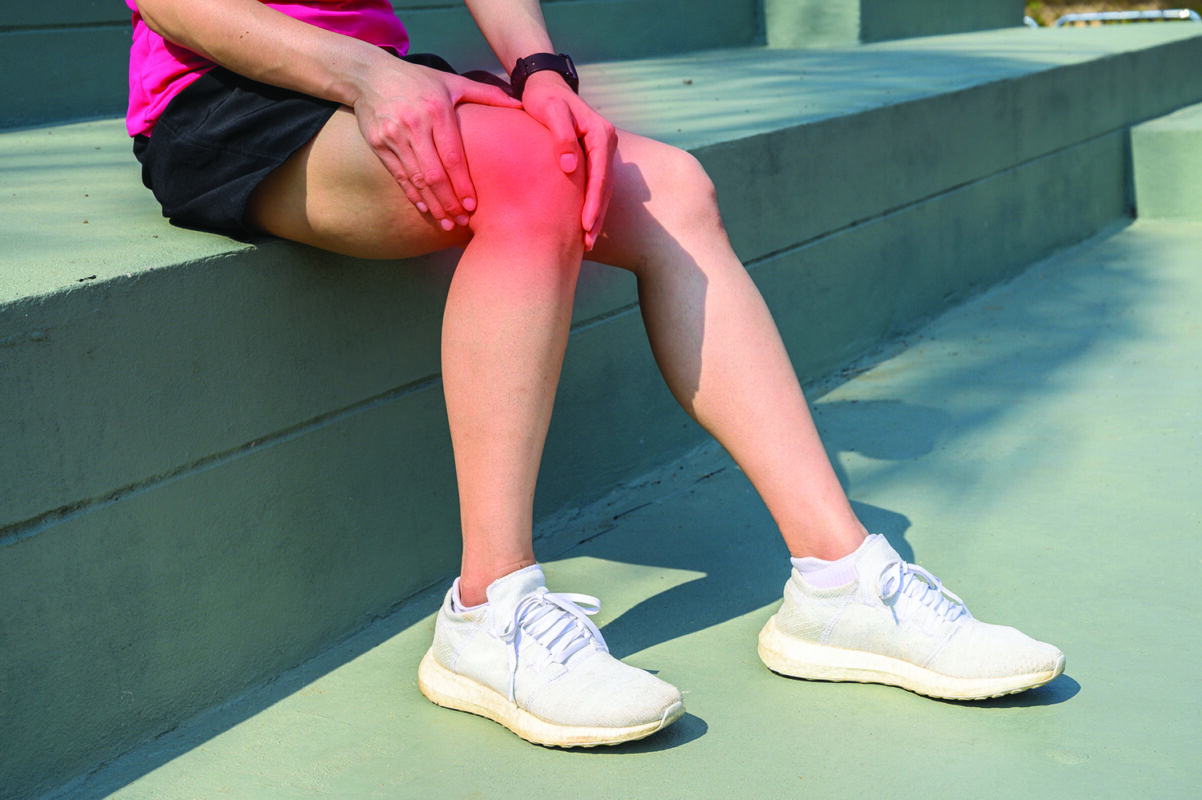
However, it most typically presents as an aching or burning pain on the outside of the knee. It also can cause pain on the outside of the thigh or hip. IT band pain often gets worse with activity. If it doesn’t go away with rest, seek medical assistance. Your healthcare provider will consider IT band syndrome among the many potential causes of your knee pain.
How IT Band Issues Are Diagnosed
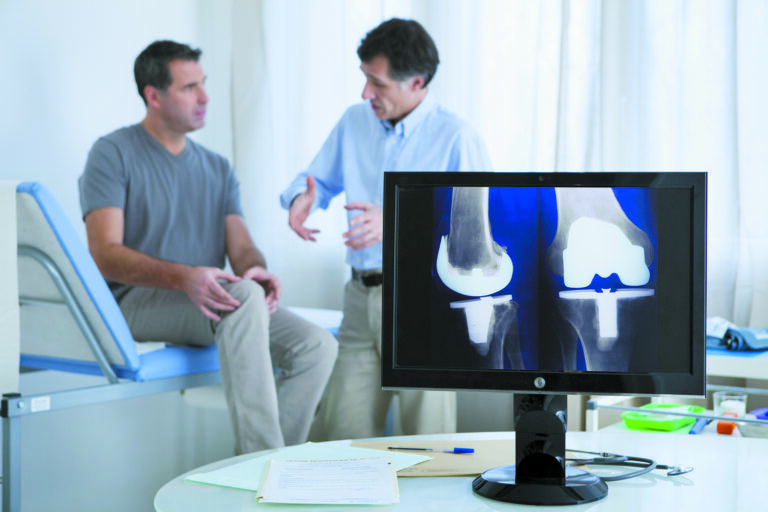
IT band problems are typically diagnosed in a clinical exam. Your provider may also order x-rays or magnetic resonance imaging (MRI) to fully diagnose knee pain.
To evaluate the IT band, Smith examines flexibility in the knee and hip, carefully watches walking and balance, and performs the Ober test. For this test, the physical therapist will have you lie on your unaffected side, with straight or slightly bent legs. The provider will then lift your top leg, bend your knee, move the leg up and slightly back, and finally attempt to lower the leg. If your top leg does not drop down, it suggests IT band tightness.
IT Band Treatment and Relief Options
Six to eight weeks of physical therapy will often improve symptoms. IT band exercises will focus on strengthening the muscles around your hips.
A rest period from intense exercise can help reduce symptoms, especially if you’re engaging in activity with repetitive motions, like running. Avoid sudden increases in the intensity and distance of your running or walking, and change your running or walking shoes every 300 miles. Over-the-counter nonsteroidal anti-inflammatory drugs (NSAIDs) like ibuprofen (Advil, Motrin) and naproxen (Aleve) can help reduce pain.
Strengthening Exercises to Reduce IT Band Pain
Consider these exercises that can help ease the pain of iliotibial band syndrome:
Clamshells
Description: Lie on one side, with your knees bent. Lift your top knee toward the ceiling, keeping your knee bent, and open your legs like a clamshell.
Tip: You can add a resistance band around your knees to increase the intensity.
Frequency: Perform two sets of 10 repetitions on each side three to four times per week.

Sit to Stand with Arms Crossed
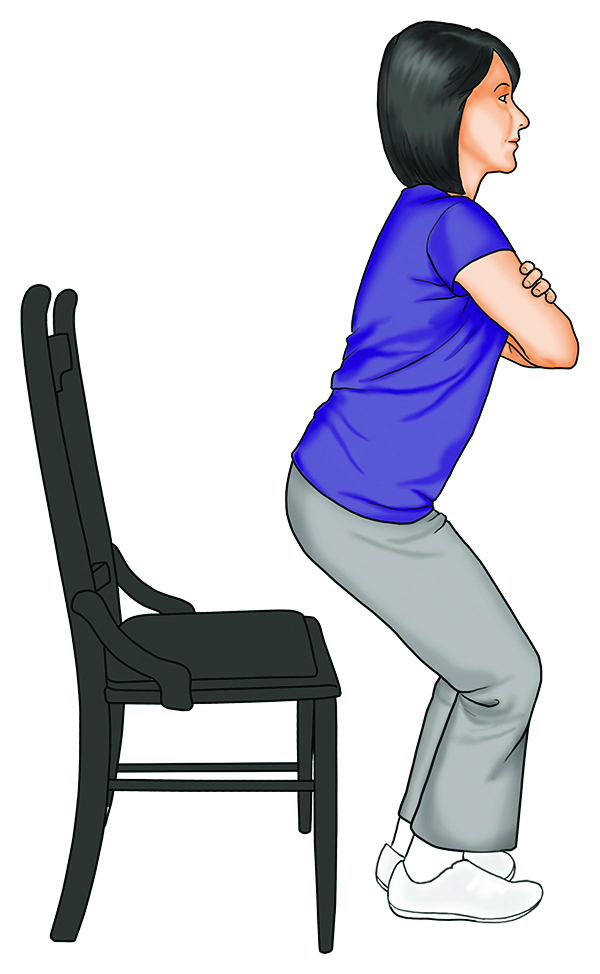
Description: Sit upright in a chair. Cross your arms on your chest and lean your torso forward; then, press into your feet to stand up. Slowly sit back down and repeat.
Tip: Make sure to maintain your balance, and try to keep your weight evenly distributed between both legs. Do not lock your knees when you are standing.
Frequency: Perform two sets of 10 repetitions three to four times per week.
Step Up
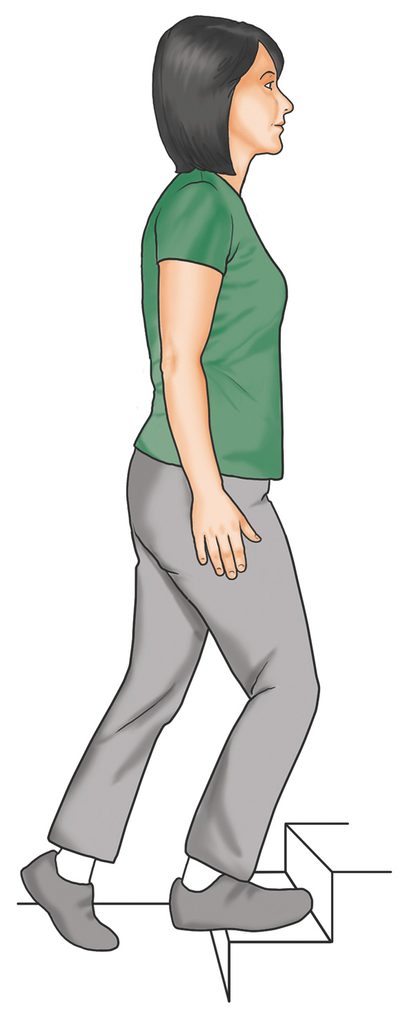
Description: Begin standing, keeping a small step or platform in front of you. Step onto the step/platform with one foot, and then follow with your other foot. Return back down to the starting position and repeat.
Tip: Make sure to maintain good posture during the exercise, and do not let your knee bend forward past your toe as you step up.
Frequency: Perform two sets of 10 repetitions three to four times per week.