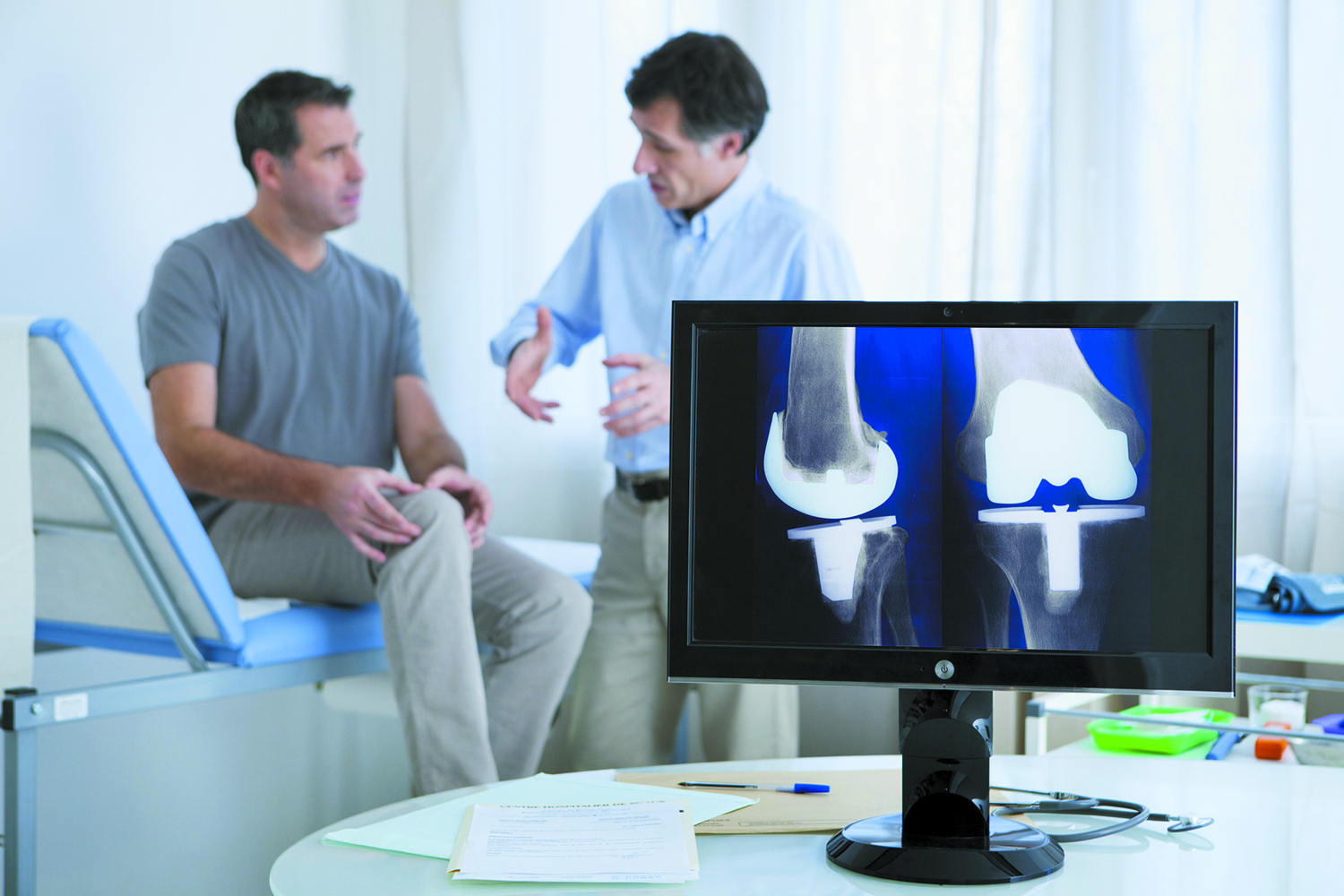
When arthritis in the knee no longer responds to conservative treatment and is causing pain and limiting activities, knee replacement surgery may be an option.
“The person coming in for a knee replacement usually has arthritis and longstanding pain and has tried activity modification, medications and injection therapy, and they are still having pain that is preventing them from returning to their previous lifestyle,” says Cleveland Clinic orthopedic surgeon Nicholas Scarcella, MD.
If, despite conservative therapies, your knee arthritis is still causing pain and detracting from your quality of life, it may be time to consider a surgical solution. Just be sure to review the advantages and disadvantages of knee replacement surgery with a skilled, experienced orthopedic surgeon.
Advantages
- Restores function and reduces pain in the long term
- Eliminates arthritis in the knee
- Can help you return to more activity, which may improve quality of life and other medical conditions
- Is elective and can often be delayed to accommodate your activities
Disadvantages
- Surgical risks, including infection, blood clots, a rare allergic reaction to the implant, and risk of subsequent surgery
- Six to 12 weeks of limited activity
- Return to most activities by 12 weeks, with full recovery potentially taking six months to a year
- Short-term increased pain
- Lots of dedicated physical therapy rehab, which requires time and pushing through discomfort to restore motion to the knee
Total Knee Replacement
During total knee replacement surgery, or knee arthroplasty, an orthopedic surgeon will remove diseased/damaged bones and cartilage in your knee joint and replace them with implantable components, which are generally made of metal alloys, such as cobalt chrome and titanium, and also durable plastic parts. A partial, or unicompartmental, knee replacement removes bones/cartilage in only one compartment of the knee rather than the entire joint.
Some surgeons perform these operations with the assistance of surgical robots. Cleveland Clinic adopted robot-assisted knee replacement surgery techniques about 10 years ago. Dr. Scarcella uses the robot to plan the surgery and make precise cuts in the bone before placing the implant.
“The goal of knee replacement surgery is to relieve pain and get better function and overall quality of life,” he says, “but it is a pay-it-forward situation. Knee replacement entails a lot of physical therapy to achieve a good result, and you have to do it while your knee is sore.”
During surgery, you will receive anesthesia and nerve blocks to prevent pain. A combination of medications, including acetaminophen, anti-inflammatories and prescription pain medications, may be used to manage pain after surgery.
Before and After Knee Replacement Surgery
To prepare for knee replacement, your surgeon or a physical therapist may recommend “prehab” exercises to strengthen muscles around the knee and improve your recovery. Once you have had a knee replacement, physical therapy will take place about every other day starting soon after surgery. “Knees tend to get stiff after any operation, and it’s important to push through a little bit of the soreness to get your motion back,” Dr. Scarcella says.
Knee Replacement Recovery
Dr. Scarcella advises that full recovery takes six months to a year. “Most people are walking independently with no assistive device four to five weeks after surgery and are able to begin returning to work at six weeks and recreational activities at eight weeks,” he says.
Ideal Timing of Surgery
Because the recovery from knee replacement is lengthy, carefully consider when you schedule surgery. “There’s no rush to the surgery. It’s an elective surgery,” Dr. Scarcella says. “The procedure I’m going to do for you is generally the same whether it’s today or a year or two from now.”
If you are planning a trip or a family event, Dr. Scarcella recommends waiting 10 to 12 weeks after a knee replacement to make sure you have full recovery with physical therapy before traveling. “You’re still recovering after that, but at 10 to 12 weeks after surgery, you’re safe to do a lot of things,” he advises.
One risk of delaying knee replacement for too long is bone deformity or muscle atrophy. Bone deformity can require more advanced surgical techniques. Muscle atrophy, which is most common in the thigh muscle above the knee, called the quadriceps, may require strengthening exercises before surgery. Your surgeon will be able to advise if these are risks if you delay surgery to a more ideal time.
Am I a Candidate for Knee Replacement?
An orthopedic provider can help you determine if you are a candidate. Age is no longer the issue it used to be for knee replacement surgery. Concerns about how long an implant would last used to prevent younger people from getting knee replacement. Now, implants last longer, making knee replacement a reasonable option for younger people. “Studies suggest that at 20 to 25 years after knee replacement surgery, 85% of total knee implants are still in place and functioning,” Dr. Scarcella says.
Other medical conditions can sometimes increase the risks of surgery. Cleveland Clinic orthopedic surgeons work with clinical colleagues in other departments to perform a risk-benefit analysis for knee replacement surgery when someone with medical complexities is considering knee replacement. This collaborative care may make knee replacement an option for higher-risk people who can still benefit. “Getting a knee replacement can sometimes improve other conditions,” Dr. Scarcella says.