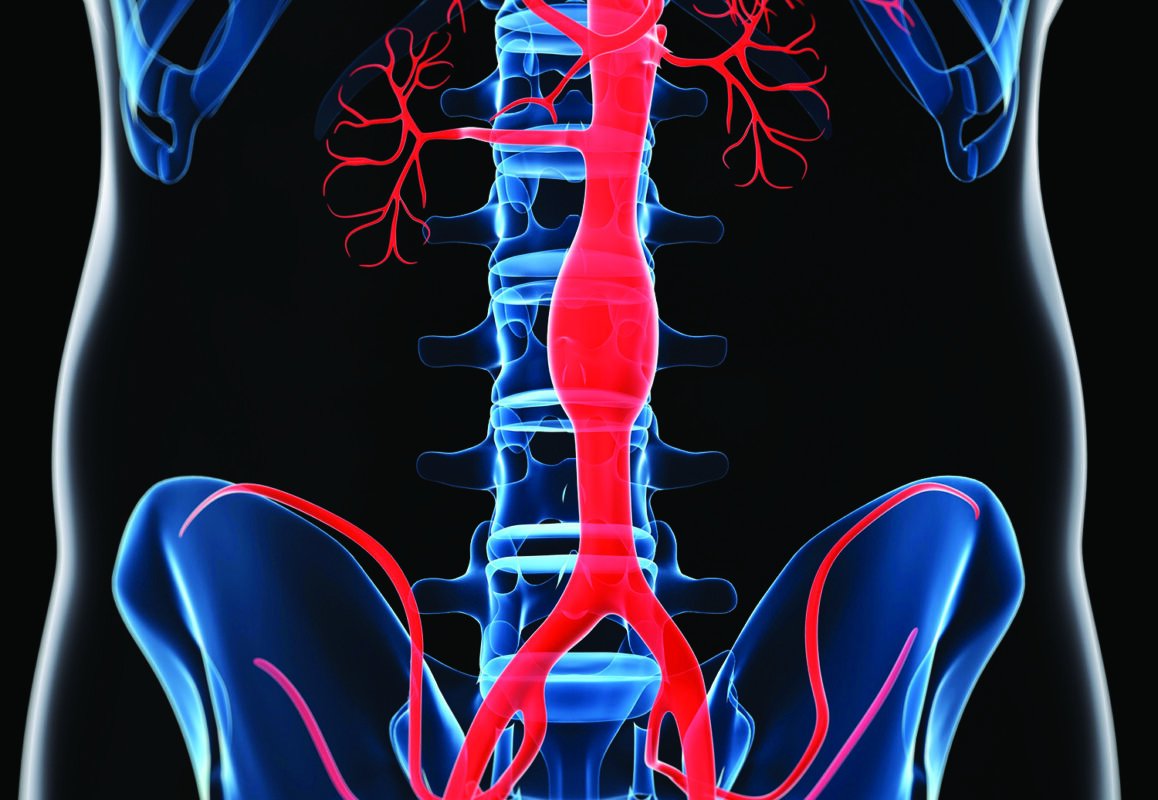
If you have smoked more than 100 cigarettes in your lifetime, you are at increased risk for an abdominal aortic aneurysm. This bulge in the body’s largest blood vessel (the aorta) where it passes through the abdomen is likely to be asymptomatic, so you won‘t know it is there. But if it ruptures, the result can be lethal.
“We say that only 50% of those who suffer an abdominal aortic aneurysm rupture make it to the hospital, and only 50% of those people make it out,” says Cleveland Clinic vascular surgeon Francis Caputo, MD.
The key is to get screened for this silent killer if you have risk factors—and there are risk factors other than smoking.
What Is an Abdominal Aortic Aneurysm?
The aorta carries freshly oxygenated blood from the heart up toward the neck before turning around and running down the center of the body. Major arteries branch off the aorta, including the carotid arteries, which carry blood to the brain, the renal arteries, which feed the kidneys, and the iliac arteries, which travel down the legs.
The aorta is made of three layers of tissue that are tough enough to withstand the relentless pressure of blood flowing through the vessel. Occasionally, a weakness in the aorta wall will allow the tissue to balloon outward. The balloon grows over time as tension increases. When it reaches a certain size, it can burst, potentially causing catastrophic blood loss.
An abdominal aortic aneurysm is diagnosed when a segment of the aorta passing though the abdomen expands to 50% or more of its normal diameter.
Symptoms and Warning Signs
Abdominal aortic aneurysms grow silently. Most are discovered on tests taken for another reason, such as a screening CT looking for kidney stones. However, the following symptoms can occur in an aneurysm that is about to rupture:
- Relentless, deep pain in the lower back or belly
- Pain in a leg, groin, or pelvis
- A pulsing sensation in the belly that feels like a heartbeat
Causes and Risk Factors
Weakened artery walls are a characteristic of genetic connective tissues diseases such as Marfan, Loeys-Dietz and Ehlers-Danlos syndromes. “People with these disorders are at higher risk for aortic aneurysm and should be screened on a regular basis starting earlier in life,” Dr. Caputo says.
Aneurysms also can run in families. About 10% to 20% of people with a parent, child, or sibling with an abdominal aortic aneurysm develop one themselves. The association is particularly strong among male siblings.
However, these individuals comprise a minority of people with aortic aneurysms. Risk is mostly determined by lifestyle. “The number one risk factor is smoking,” Dr. Caputo says.
Smoking triggers inflammation, which causes immune cells to release enzymes that digest collagen, elastins, and other components of the aorta that give it strength. This process causes the aorta to become thin, weak, and vulnerable.
Other risk factors for aortic aneurysm include:
- High blood pressure (hypertension)
- High cholesterol
- Advancing age: men over age 50, women over age 65
“With age, you have reduced elasticity, but smoking, high blood pressure, and high cholesterol have a larger effect than aging,” Dr. Caputo says.
Screening and Diagnosis
Abdominal aortic aneurysms occur four times more often in men than in women. With each decade of life over age 65, the risk doubles.
According to the Society for Vascular Surgery (SVS), the following individuals should be screened once with an ultrasound:
- Men and women ages 65 to 75 with a history of tobacco use
- Men and women ages 75 and older in good health but with a history of tobacco use
- Men and women ages 65 to 75 who have a first-degree relative with an abdominal aortic aneurysm
Evidence to support screening in women who have never smoked is considered insufficient to recommend it. However, “I still do [screen], because abdominal aortic aneurysms in women have a higher risk of rupturing at a smaller size, as well as occurring in family members,” Dr. Caputo says.
Note: Medicare and many private insurers will pay for a one-time ultrasound screening for individuals at risk for abdominal aortic aneurysm.
Treatment Options
Once an abdominal aortic aneurysm has been diagnosed, it’s time to see a vascular surgeon, who will monitor its growth on a regular basis and with increasing frequency.
The SVS recommends men undergo elective repair of an abdominal aortic aneurysm when it reaches 5.5 centimeters (cm) in diameter (just over 2 inches)—5.0 cm (just under 2 inches) in women—or when an aneurysm grows more than 0.5 cm (one-fifth of an inch) in six months or 1 cm (two-fifths of an inch) in 12 months.
Two treatment options are available: open surgical repair (OSR) and endovascular aneurysm repair (EVAR).
EVAR is a minimally invasive procedure performed from the inside of the aorta. A Dacron tube with a metal frame, called a stent graft, is inserted through punctures in the groin and advanced through blood vessels with a catheter until it reaches the aneurysm, where it is positioned to reline the aorta and take pressure off the aneurysm.
“Today, 80% to 85% of abdominal aortic aneurysms are fixed with EVAR and the remainder with open surgery. When an aneurysm involves the arteries that supply the stomach or kidneys, open surgery may be preferred,” Dr. Caputo says.
In open aneurysm repair, Dacron fabric is sewn onto the aorta over the aneurysm. Arteries that branch off the aorta in or near the aneurysm may be severed and reattached to the Dacron fabric, in essence creating bypasses that will ensure excellent blood flow.
Prevention and Lifestyle Steps
You can help prevent abdominal aortic aneurysm if you:
- Quit smoking
- Keep your blood pressure and cholesterol under control
“If you are over age 65 and have ever smoked, ask your healthcare provider to order an ultrasound of your abdomen,” Dr. Caputo advises. “Identifying an abdominal aortic aneurysm before it ruptures could save your life.”
When to Seek Urgent Medical Care
Too often, rupture can be the first symptom of an abdominal aortic aneurysm. Ruptured aneurysms cause 150,000 to 200,000 deaths per year worldwide—about 10,000 of them in the United States. In the majority of cases, death is instantaneous.
In more fortunate individuals, the tissue surrounding the abdominal aorta prevents blood from being lost rapidly. “That’s when you have to get to the hospital fast,” Dr. Caputo emphasizes.
In any case, the signs of rupture can include dizziness or loss of consciousness from blood loss and back pain or abdominal pain often described as “the worst pain of your life.”
“If you have a known aneurysm or any time you have severe pain, call 911,” he says. “Time is of the essence.”