Pseudogout is a type of inflammatory arthritis caused by calcium pyrophosphate (CPP) crystals that form in and around joints. Although it can cause sudden attacks of intense joint pain, swelling, warmth, and redness that closely resemble gout, it is a different condition with a different underlying cause.
Today, healthcare providers often use the more accurate name calcium pyrophosphate deposition disease (CPPD) because it describes the condition itself rather than just the acute flare. You may also hear the term chondrocalcinosis, which refers to the calcium crystal deposits that can be seen in joint cartilage on imaging tests.
“The name pseudogout is an older term that best refers to the acute inflammatory response to calcium pyrophosphate crystals,” says John D. FitzGerald, MD, PhD, a rheumatologist at UCLA Health. “This is clinically similar to the inflammatory response to monosodium urate crystals that are seen in gout and hence the name pseudogout.”
What Is Pseudogout/CPPD?
Pseudogout, or acute CPP inflammatory arthritis, is caused by the buildup of CPP inside the joints. On x-rays, these crystal deposits often appear as calcification within cartilage, a finding known as chondrocalcinosis.
“There are three other types of clinical responses to CPP crystals,” Dr. FitzGerald says. “The first would be completely asymptomatic CPP deposition. The second is a more rapid progression of osteoarthritis. The third is a chronic inflammatory arthritis with something that looks like rheumatoid arthritis.”
In other words, some people have calcium crystal deposits without ever developing symptoms. Others experience accelerated joint degeneration that resembles osteoarthritis, while still others develop chronic inflammation affecting multiple joints. Because the disease can present in several ways, many rheumatologists now avoid the older “pseudo” terminology altogether and simply refer to the condition as CPPD.
How Pseudogout/CPPD Differs from Gout
When it comes to pseudogout vs. gout, one of the biggest misconceptions is that pseudogout and gout are the same disease. Gout develops when monosodium urate crystals form because of elevated uric acid levels in the blood. Pseudogout, on the other hand, occurs when calcium pyrophosphate crystals accumulate inside the joints. The problem is not having too much calcium in your diet or bloodstream. Researchers still don’t fully understand why these crystals develop, but CPP deposition is strongly correlated with age, aspects of calcium metabolism, and some genetic contribution.
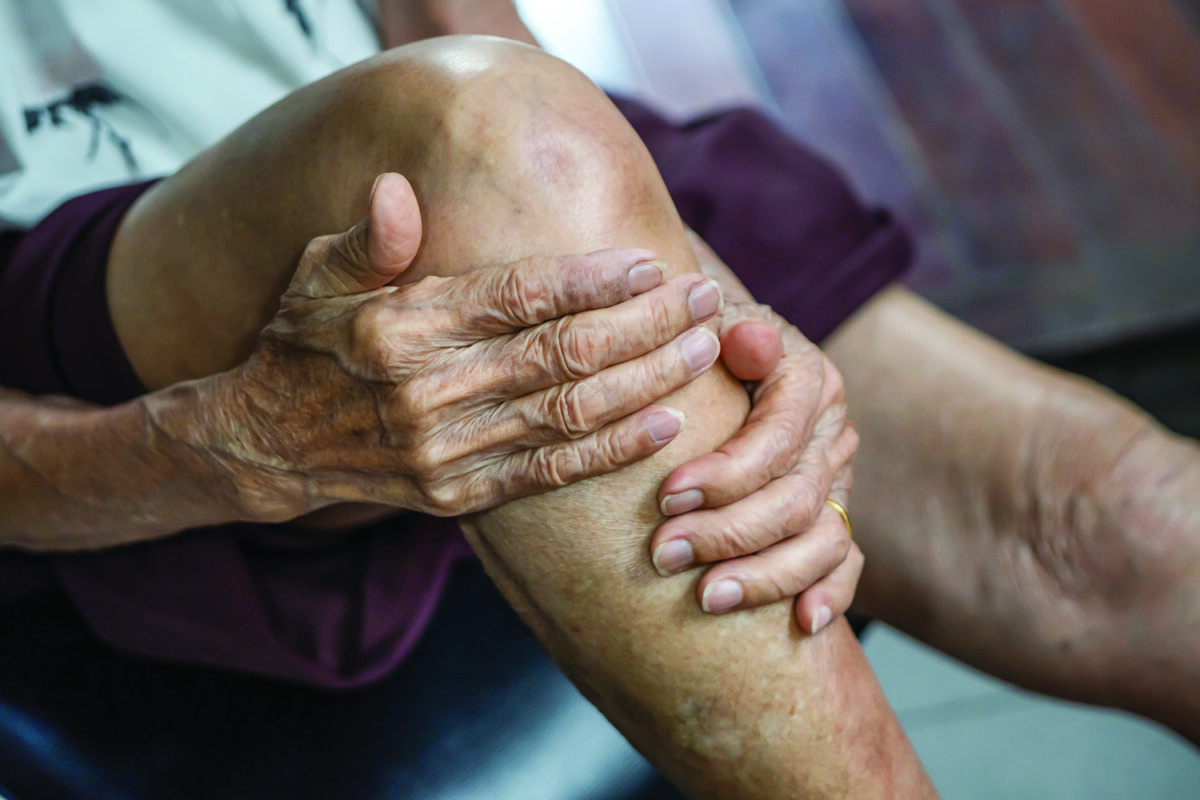
Both conditions can cause sudden joint pain, swelling, warmth, redness, and difficulty moving the affected joint, but the joints involved often differ. Gout most commonly affects the big toe, although it can also involve the ankle, foot, knee, wrist, or elbow. CPPD most often affects larger joints, especially the knees. The wrists, shoulders, ankles, elbows, and hips can also be involved.
The distinction matters because long-term treatment is completely different. While long-term treatments for gout lower uric acid and get rid of the monosodium urate crystals, a similar option is not available for people with CPP crystals, Dr. FitzGerald explains. Because medications can eliminate uric acid crystals in gout, correctly identifying gout has major implications for preventing future attacks.
Causes and Risk Factors
Unlike gout, pseudogout is not caused by eating too many purine-rich foods or by consuming too much calcium. Instead, CPP crystals develop within joint cartilage for reasons that remain only partially understood. Age is the strongest risk factor: CPPD becomes increasingly common after age 60 and is rare in younger adults. Several medical conditions also increase the risk of developing CPPD:
- Osteoarthritis
- Hyperparathyroidism
- Hemochromatosis (iron overload)
- Low magnesium levels
- Thyroid disorders
- Gout
Researchers believe that changes in aging cartilage make it easier for crystals to form. Genetics also may play a role, particularly in people who develop CPPD at a younger age.
Common Symptoms
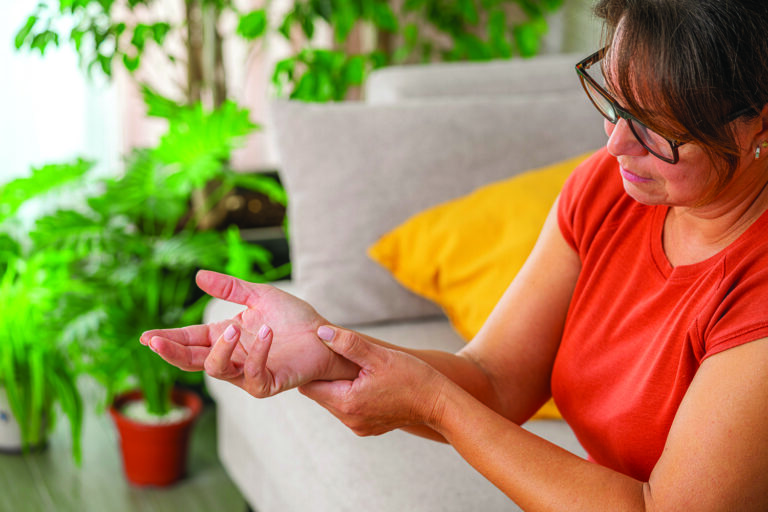
Pseudogout symptoms often appear suddenly, typically as severe pain and swelling in one joint. Many people wake up with symptoms or notice that a joint becomes painful over just a few hours. During a flare, the affected joint may be painful to move, swollen, warm to the touch, red or flushed, and stiff.
Symptoms can last anywhere from several days to several weeks before gradually resolving. Some people have only one attack, while others experience recurrent flares over many years or chronic ongoing inflammation.
Not everyone with CPPD develops acute attacks. As Dr. FitzGerald explains, CPPD can present in several ways, including no symptoms at all or a more chronic form of inflammatory arthritis. Over time, repeated inflammation may contribute to joint damage and worsening osteoarthritis in some patients.
How Pseudogout/CPPD Is Diagnosed
Because acute CPPD closely resembles gout, septic arthritis, and other forms of inflammatory arthritis, a diagnosis requires more than simply evaluating symptoms. A physician will begin by reviewing your medical history and performing a physical examination, paying close attention to which joints are involved and how quickly symptoms developed.
The most accurate diagnostic test is joint aspiration, also called arthrocentesis. During this procedure, a physician uses a needle to remove a small sample of synovial fluid from the affected joint. The fluid is then examined under a polarized microscope. Finding CPP crystals confirms the diagnosis of CPPD. At the same time, the fluid can be tested for bacteria to rule out a joint infection, which is a medical emergency.
Imaging studies also play an important role. X-rays may reveal chondrocalcinosis, or calcification within cartilage, which strongly suggests CPPD. Ultrasound can often detect crystal deposits and inflammation, while computed tomography (CT) or magnetic resonance imaging (MRI) may be helpful in certain complex cases.
Because other conditions can contribute to CPPD, physicians also may order blood tests to look for disorders such as thyroid disease, parathyroid disease, hemochromatosis, or magnesium deficiency.
Treatment Options
Although there is no treatment to get rid of CPP crystals, certain pseudogout treatments can effectively reduce inflammation and relieve pain during acute attacks. “The treatments for the acute CPP inflammatory attack are similar to those used for gout,” Dr. FitzGerald says.
- Nonsteroidal anti-inflammatory drugs (NSAIDs). Medications such as ibuprofen or naproxen can reduce pain and inflammation during mild to moderate attacks. Because these medications may increase the risk of stomach bleeding, kidney problems, or cardiovascular complications, they may not be appropriate for everyone, especially older adults.
- Colchicine. Commonly used for gout, this anti-inflammatory medication can also help treat acute pseudogout attacks and may reduce the frequency of recurrent flares. “At this time, long-term colchicine is the main treatment to prevent recurrent flares,” Dr. FitzGerald says.
- Corticosteroids. If NSAIDs or colchicine aren’t appropriate, physicians may prescribe oral corticosteroids such as prednisone. For a severely inflamed single joint, injecting corticosteroids directly into the joint after aspiration often provides rapid relief while minimizing whole-body side effects.
- Joint Aspiration and Injection. Removing excess fluid from an inflamed joint can reduce pressure and pain while also helping to confirm the diagnosis. Joint aspiration is frequently performed before administering a corticosteroid injection.
- Emerging Treatments. Researchers continue to investigate better therapies for CPPD. Dr. FitzGerald notes that studies are evaluating biologic medications already used to treat rheumatoid arthritis. “There are trials looking at anti-cytokine agents, including IL-1 and IL-6 agents, that might help prevent recurrent or chronic CPP flares,” he says. While these treatments are promising, they are not yet considered standard therapy for most patients.
Living With Pseudogout/CPPD
Living with CPPD often means learning to recognize flares early and working with your healthcare provider to develop a treatment plan.
During an acute attack:
- Rest the affected joint.
- Apply ice packs for 15 to 20 minutes several times daily.
- Elevate the joint when possible.
- Take prescribed medications as directed.
- Avoid strenuous activity until inflammation improves.
Between flares, staying physically active can help preserve joint flexibility and muscle strength. Low-impact activities such as walking, swimming, cycling, and strength training may improve overall joint health without placing excessive stress on affected joints. Maintaining a healthy weight can also reduce stress on the knees and other weight-bearing joints.
Unlike gout, there is no specific diet that has been shown to prevent pseudogout because CPP crystals do not form as a result of dietary calcium intake or elevated uric acid levels. If you experience repeated attacks, your physician may recommend preventive colchicine or evaluate you for underlying metabolic conditions that can contribute to CPPD.
When to Seek Medical Care
Seek prompt medical evaluation if:
- You develop sudden, severe joint pain and swelling.
- Your symptoms are accompanied by fever.
- A joint becomes extremely red or difficult to move.
- Your symptoms don’t improve with treatment.
- You experience repeated attacks.
Because septic arthritis and gout can look almost identical to pseudogout, it’s important not to assume the cause of a swollen joint without a proper evaluation.
Although the name “pseudogout” suggests a lesser version of gout, CPPD is its own distinct form of inflammatory arthritis. Today’s treatments can effectively control inflammation, ease pain, and reduce recurrent attacks.