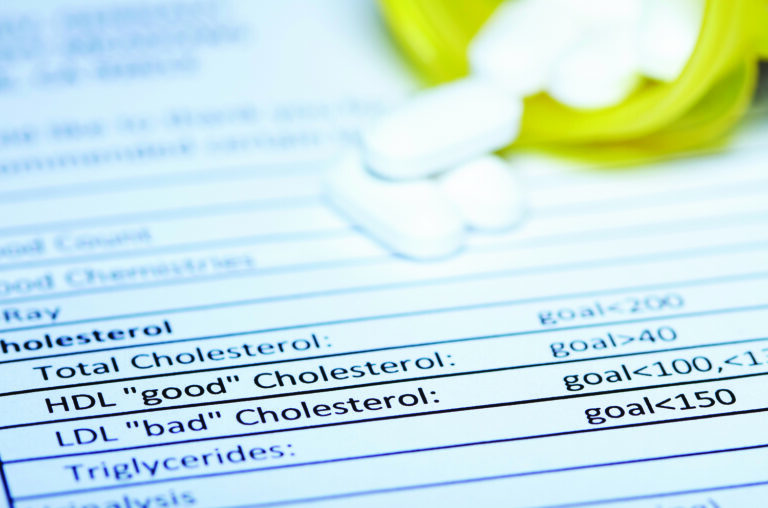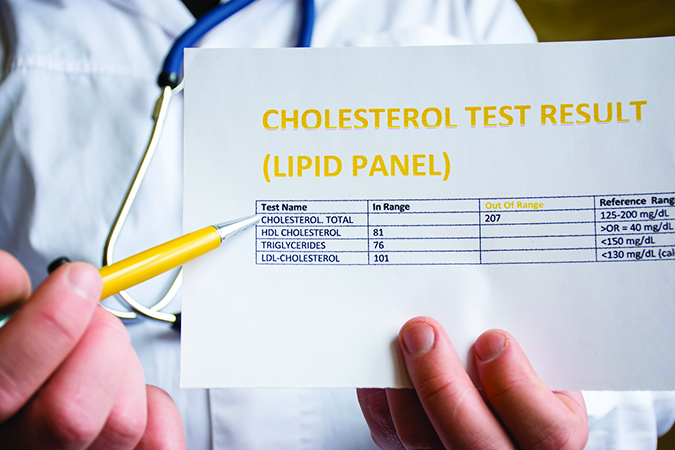
Cholesterol. You probably know it best by the assorted letters and numbers on the results of your blood work. And you know that when you see the words “high,” “abnormal,” or “out of range” on that report, you need to do something about it.
But what is cholesterol? And if it’s bad for you, why do you have it in the first place?
It might surprise you to know that this fatty substance in your bloodstream does more than clog your arteries, and not all cholesterol is bad.
“‘Cholesterol’ is a very broad term,” says Ashish Sarraju, MD, a Cleveland Clinic preventive cardiologist. “Saying ‘cholesterol’ is like saying ‘protein.’ Some proteins are healthy and some are toxic. In medicine and cardiology, when we talk about cholesterol, we’re talking about that subcomponent of cholesterol in the body that’s circulating in the blood and causing heart disease.”
It’s important to know what those letters and numbers on your cholesterol test mean. Recent guidelines for managing cholesterol can help you and your doctor keep your numbers where they need to be to minimize your risk of atherosclerotic cardiovascular disease (ASCVD).
What Is Cholesterol?
Cholesterol is a lipid, a type of fat found in your blood and tissues. Although cholesterol gets a bad rap, your body needs it to carry out an array of vital functions. It’s a key structural component of cell membranes, serves as a building block for several hormones, and it functions as a precursor to vitamin D and the bile acids your body uses to digest fats and important fat-soluble vitamins.
Where Does Cholesterol Come From?
Your liver is the key regulator of your lipid levels, producing all the cholesterol your body needs—about 80% of the cholesterol in your body. The remaining 20% comes from your diet. The liver also contains receptors on its surface that help to clear out excess cholesterol from the blood.
What Are LDL and HDL Cholesterol?
In order to reach the cells and perform its necessary functions, cholesterol binds with triglycerides (another type of lipid) and proteins to form spherical particles (lipoproteins) that travel from the liver through the bloodstream. They include:
- Low-density lipoprotein (LDL) cholesterol. It’s known as “bad” cholesterol because at high levels it can accumulate in the walls of arteries, forming plaques that narrow the blood vessels. This process, known as atherosclerosis, underlies ASCVD, the most common type of cardiovascular disease.
- High-density lipoprotein (LDL) cholesterol. This particle scavenges excess cholesterol in the blood and transports it back to your liver, which converts it to bile salts or removes it from the body in feces. Because of its cholesterol cleanup capabilities, HDL is often referred to as “good” cholesterol.
Another type of particle to be aware of is very low-density lipoprotein (VLDL), which carries cholesterol and (especially) triglycerides through the bloodstream. High levels of VLDL can contribute to ASCVD.
Problems can arise when these lipids are out of balance and LDL levels rise—a phenomenon known as dyslipidemia.
What Causes High Cholesterol?
An array of factors can drive up your cholesterol levels, and their effects can vary depending on the different types of cholesterol particles.
- Genetics. Your genes play a role in the amount of cholesterol, particularly LDL, that your body produces. Having a family history of high LDL cholesterol may increase your likelihood of developing it, too. Also, about one in every 200 to 250 people has a genetic condition known as familial hypercholesterolemia, which causes very high LDL levels at a young age.
- Age. Your cholesterol level tends to increase as you get older.
- Your eating pattern. Eating a diet high in saturated fat—found primarily in animal products like fatty red meat, processed meats, and full-fat dairy products—can contribute to increased LDL levels. Even more so than LDL, triglycerides are influenced by what you eat and drink. Saturated fat and, especially, high-carbohydrate foods like white bread, white rice, pastries, alcohol (particularly beer), and sugary soft drinks can drive up triglyceride levels.
- Other lifestyle factors. Being physically inactive can contribute to declines in HDL cholesterol, leaving less of these particles to remove LDL from the bloodstream. Tobacco smoking also can reduce HDL levels.
- Other medical conditions. People who are overweight/obese or have Type 2 diabetes are more likely to have higher LDL and triglyceride levels and lower HDL levels. Lipid abnormalities often accompany other medical conditions, including kidney or liver disease, obstructive sleep apnea, and hypothyroidism.
Why Does Cholesterol Matter?
ASCVD typically begins in childhood or adolescence and progresses over time. The smooth inner lining of the arteries becomes damaged, allowing cholesterol and other materials to enter the artery wall and trigger an inflammatory response that leads to the formation of an atherosclerotic plaque, or atheroma.
Over time, plaque buildup can narrow the artery, restricting blood flow. But the real risk occurs when a plaque ruptures and platelets respond by forming a blood clot to repair the damage. The clot can become large enough to fully obstruct an artery and cause a heart attack, ischemic stroke, or peripheral artery disease.
While cholesterol accumulates in your arteries, it typically offers no warning signs until you experience these events or heart-related chest pain, known as angina. Consequently, it’s crucial to keep tabs on your cholesterol and other lipids—as well as your blood pressure, blood sugar, weight, and other risk factors—and work to keep them in a healthy range.
“One of the challenges of treating high cholesterol is that it’s silent until it’s not, and once it’s not silent, you typically develop irreversible disease to a large extent,” Dr. Sarraju says. “Ideally, you want to be in a situation where you’re trying to prevent the risk factor itself. That’s really where you want to be because over time, that’s where you can probably make the most difference in terms of preventing a first cardiovascular event.”
How Is Cholesterol Checked?
Updated guidelines from the American College of Cardiology (ACC), American Heart Association (AHA), and other organizations (Circulation, April 28, 2026) recommend that adults begin cholesterol screening at age 19 and at least every five years thereafter, with more frequent screening recommended for people who have additional ASCVD risk factors.
So, undergo a lipid panel (or lipid profile), a simple blood test that measures your total cholesterol, HDL and triglyceride levels—in milligrams per deciliter of blood (mg/dL). Instead of being directly measured, your LDL and VLDL levels are calculated based on these other lipid results. The ACC/AHA guidelines also recommend that a lipid panel include a measurement of non-HDL cholesterol (total cholesterol minus HDL cholesterol) to assess your ASCVD risk and guide decisions about starting lipid-lowering therapy.
“When you look at the cholesterol blood test, the three numbers to focus on are LDL cholesterol, triglycerides, and non-HDL cholesterol,” Dr. Sarraju advises. “Use of non-HDL has grown because in most people, LDL cholesterol is the most common particle in the blood that is causing heart disease, but in some people, there are particles in addition to LDL that can also do that. Non-HDL captures not only the LDL, but all the particles that can cause heart disease.”
One of those particles is lipoprotein(a), or Lp(a), an LDL-like particle that’s determined primarily by your genes, not your lifestyle. A level of 50 mg/dL or 125 nanomoles per liter (nmol/L) or higher is considered an ASCVD risk-enhancing factor. The guidelines recommend that Lp(a) should be measured at least once, and since treatments to lower Lp(a) are still in development, the guidelines advocate “optimal early control” of LDL and other modifiable ASCVD risk factors.
“We have data showing that people with high lipoprotein(a) benefit from aggressive risk factor management,” Dr. Sarraju says. “In other words, you’re not chained to your cardiovascular risk just because of your genetics. If your lipoprotein(a) is high and we’re more aggressive with controlling your LDL, blood pressure, blood sugar, and lifestyle, we can mitigate a lot of that risk.”
Hit Your LDL Cholesterol Target
The ACC/AHA 2026 dyslipidemia guidelines outline these LDL targets to achieve in primary and secondary prevention:
|
CATEGORY |
LDL GOAL |
|
Primary Prevention: LDL ≥190 mg/dL
|
|
|
Primary Prevention: LDL 70–189 mg/dL
|
|
|
Secondary Prevention
|
|
Notes: Target non-HDL cholesterol goals should be within 30 mg/dL of each LDL goal. A triglyceride level below 150 mg/dL is usually considered normal, according to the AHA.
FH = heterozygous familial hypercholesterolemia
*Subclinical atherosclerosis is defined as early, silent plaque buildup or calcification in the arteries identified by imaging studies like coronary artery calcium scans.
Optimizing Your Lipids
The guidelines recommend lipid-lowering therapy for all adults with existing ASCVD (secondary prevention), as well as individuals ages 40 to 75 without established ASCVD (primary prevention) but at high risk, including those with diabetes, chronic kidney disease, HIV, or a 10% or higher 10-year risk of ASCVD, according to the AHA’s PREVENT risk calculator. Lipid-lowering therapy may be considered when an adult’s 10-year risk of ASCVD is 3% to less than 5% (borderline risk) and should be considered in individuals with a 5% to 10% (intermediate) risk, the experts recommend.
Statin medications—for example, atorvastatin (Lipitor) and rosuvastatin (Crestor)—remain the cornerstones of lipid-lowering pharmacotherapy. For individuals who cannot tolerate statin therapy or need additional LDL-lowering power, other options include ezetimibe (Zetia), bempedoic acid (Nexletol) and PCSK9 inhibitors—including injections of alirocumab (Praluent) and evolocumab (Repatha) and a recently approved once-daily oral medication, enlicitide (Lipfendra®).
The guidelines also reinstate specific LDL goals to achieve for individuals in primary and secondary prevention, based on their risk level (see “Hit Your LDL Cholesterol Target”).
“The guidelines put in writing what many people in the field have been doing for the last several years,” Dr. Sarraju says. “If we follow these guidelines, I think we stand to do a lot of good for cardiovascular disease prevention.”
- Undergo a lipid panel every five years, or more frequently if your doctor recommends it.
- Work with your healthcare team to address and optimize your lipids and other ASCVD risk factors, including blood pressure, blood sugar, weight, sleep disorders, kidney health, and (if applicable) smoking.
- Adhere to a heart-healthy diet, such as the Mediterranean eating pattern, emphasizing consumption of fruits, vegetables, whole grains, low-fat dairy products, and legumes and other lean protein sources, while minimizing/avoiding saturated fats, added sugars, and heavily processed foods.
- Stay physically active. Aim to get at least 150 minutes of moderate-intensity aerobic activity per week, and perform strength training on two to three nonconsecutive days per week.