To help lower cardiovascular risk, dietary guidelines recommend healthful eating patterns like the Mediterranean and Dietary Approaches to Stop Hypertension (DASH) diets partly because of their beneficial effects on cholesterol.
Certain foods that lower cholesterol can promote a more favorable lipid profile, helping you to optimize low-density lipoprotein (LDL “bad”) cholesterol, high-density lipoprotein (HDL “good”) cholesterol and triglyceride levels. If you have high cholesterol, including these foods in an overall healthy eating pattern—and, importantly, substituting them for foods that can send your lipids in the wrong direction—can help lessen your cardiovascular risk.
“Some of it’s about what foods you’re replacing,” explains Cleveland Clinic dietitian Kristin Kirkpatrick, MS, RD, LD. “We can say, ‘Here are all these great foods you should eat to help with better lipid levels,’ but that also means you’re using them to replace other, less healthy choices.”
Healthy Dietary Patterns
The Mediterranean diet is well established as one of the best eating patterns for improving cholesterol and cardiovascular health. Similarly, the low-sodium DASH diet has been proven to help lower blood pressure and lipids and is consistently ranked as one of the most healthful ways to eat.
Both eating patterns share several key components: They focus heavily on consumption of fruits, vegetables, and legumes, ample amounts of whole grains and fish, and healthy fat sources. They also emphasize limiting or eliminating red meat, sweets, or other sources of added sugars. The DASH pattern also leaves room for lean meats and poultry, moderate amounts of low-fat/fat-free dairy products and very limited quantities of sweets and added sugars.
“Most people get the general gist of the Mediterranean and DASH diets as being very good for your heart, but there are certain foods in those diets that can have specific benefits, like lowering cholesterol, that you can add into a lot of different dishes,” Kirkpatrick says.
Fiber to Fight High Cholesterol
Among the key foods that lower cholesterol are those rich in dietary fiber, especially soluble fiber. Diets high in fiber are associated with better cardiovascular health and lower cholesterol. Although they’re relatively low in calories, fiber-rich foods tend to be more satiating, so you feel fuller and eat less.
Soluble fiber dissolves in water and forms a gel that binds with and removes cholesterol through your digestive system, thereby reducing LDL and total cholesterol. Consuming 5 to 10 grams of soluble fiber a day can help lower total and LDL cholesterol by about 5–11 milligrams per deciliter, according to the National Lipid Association (see “What You Can Do”). Good sources of soluble fiber include legumes (beans, peas and lentils), whole grains (cereal, oatmeal, barley), fruits (berries, citrus fruits, apples, and pears with skin) and vegetables (Brussels sprouts, carrots, sweet potatoes, asparagus). If you have difficulty getting ample soluble fiber from foods, ask your doctor about supplements, such as psyllium fiber (Metamucil).
“One of the things I try to do every week in my house is have at least three nights where we have some sort of beans or lentils,” Kirkpatrick says. “When I make whole grains, I’ll add lentils. There’s so much opportunity for putting beans in recipes—soups are a great example, and you can pulverize beans and put them in burgers. And, you can mix steel-cut oats into many different things, like cookies.”
Insoluble fiber—found in foods like wheat, rye, potatoes, cauliflower, and broccoli—is beneficial for digestive health and combatting constipation, but Kirkpatrick says it also may be important for heart health: “Insoluble fiber doesn’t get all the accolades for heart health, but if we look at the studies, a combination of soluble and insoluble fiber is what is recommended for overall heart health.”
Fats and Phytosterols
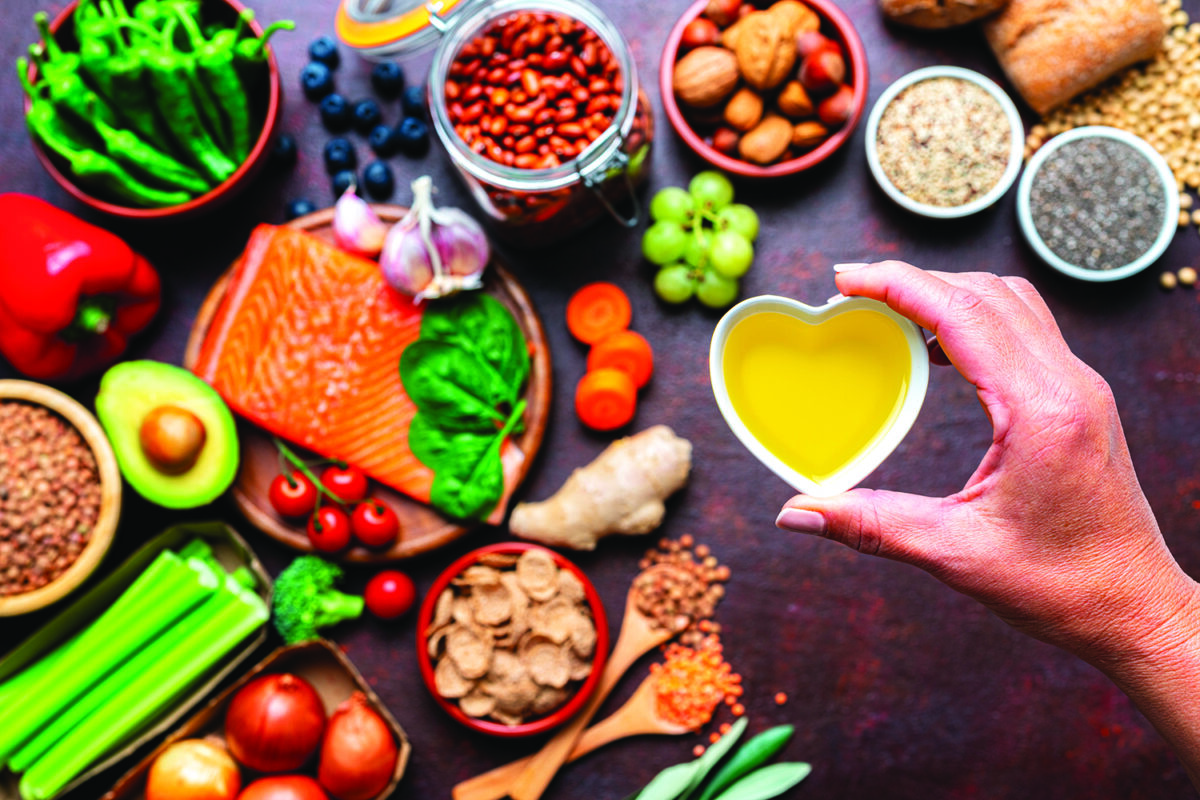
Monounsaturated fats can help you maintain a healthy cholesterol balance, especially when they replace unhealthy saturated and trans fats. Extra-virgin olive oil is an excellent source of monounsaturated fats and can be used in salad dressings and baked goods and to replace butter or margarine on vegetables. Avocados and nuts such as almonds, hazelnuts, pecans and cashews are other good sources of monounsaturated fats.
Likewise, omega-3 fatty acids, a type of polyunsaturated fat, can benefit your cardiovascular health by helping to lower triglycerides. Cold-water fatty fish, such as salmon, mackerel, halibut, trout, and tuna, are good sources of the two key omega-3s: eicosapentaenoic acid (EPA) and docosahexaenoic acid (DHA). If you’re not a fish lover, ground flaxseed, walnuts, chia, and soybeans (and their oils) are good plant sources of alpha-linolenic acid (ALA), which your body can convert in small amounts to EPA and DHA. Simply add a teaspoon of flaxseed or chia seeds to your oatmeal, Kirkpatrick advises.
Phytosterols are another dietary component that can improve your cholesterol. Also known as plant sterol esters and plant stanol esters, these natural compounds found in the cell membranes of plants mimic cholesterol and compete with it for absorption in the gut, thereby preventing LDL from being absorbed in the bloodstream and lowering LDL and total cholesterol levels.
The National Lipid Association notes that eating at least 2,000 milligrams (mg) of phytosterols a day may lower LDL cholesterol by 5% to 10%. Some phytosterols occur naturally in fruits, vegetables, nuts, legumes, and whole grains, but these amounts are too low to reduce cholesterol. So, you may have to combine these foods with a variety of phytosterol-fortified foods or supplements.
Foods that Lower Cholesterol: The Bottom Line
Use a heart-healthy eating pattern like the Mediterranean or DASH diets as the foundation for your eating habits, and then add certain foods that can help improve your lipid levels, Kirkpatrick advises.
“It’s very hard to beat a Mediterranean or DASH diet base, but then you need to take that base and choose the foods that meet your specific needs,” she says. “If lipid management is one of them, that’s where you can get more into specific foods, like flaxseed, steel-cut oats, and canned beans, that can have a benefit. It’s also about not having some of the foods that contribute to poor lipid management, such as saturated fats and sugars.”
What You Can Do
- Trim the saturated fat, found in beef, pork, full-fat dairy, and other animal products. The American Heart Association recommends consuming less than 6% of your total daily calories from saturated fat. For a 2,000-calorie-per-day diet, that amounts to 13 grams or less of saturated fat per day.
- Limit your intake of added sugars and simple carbohydrates (e.g., white pasta, breads, etc.), and alcohol (less than one or two drinks a day), all of which can increase triglyceride levels.
- Consider adding spices like turmeric (the Indian spice that gives curry its golden color) and/or ginger to your cooking. Some studies suggest these spices may offer some modest lipid-lowering benefits.
- Stay physically active. Get at least 30 minutes of moderate-intensity aerobic exercise (e.g., walking, biking, swimming) each day on at least five days a week. Regular exercise can help boost levels of beneficial HDL cholesterol.
- Find ways to manage chronic stress, which can contribute to increased LDL and triglyceride levels. Work with your healthcare provider on relaxation, meditation, and other stress-management strategies.
- Get seven hours of good-quality sleep each night, and report any sleep problems to your physician. Research has linked sleep deprivation with higher cholesterol and triglyceride levels, as well as increased blood pressure.
- Aim to get at least 10 grams of soluble fiber in your diet each day. Follow this sample meal plan from the National Lipid Association:
- Breakfast: 1 cup cooked oatmeal with berries and 2 Tbsp ground flax (3 grams soluble fiber)
- Lunch: 1 cup chili made with beans and a pear for dessert (4 grams soluble fiber)
- Snack: Half-cup raw carrots and quarter-cup hummus (2 grams soluble fiber)
- Dinner: 1 cup steamed cabbage, broccoli, carrots and/or green beans (2 grams soluble fiber)