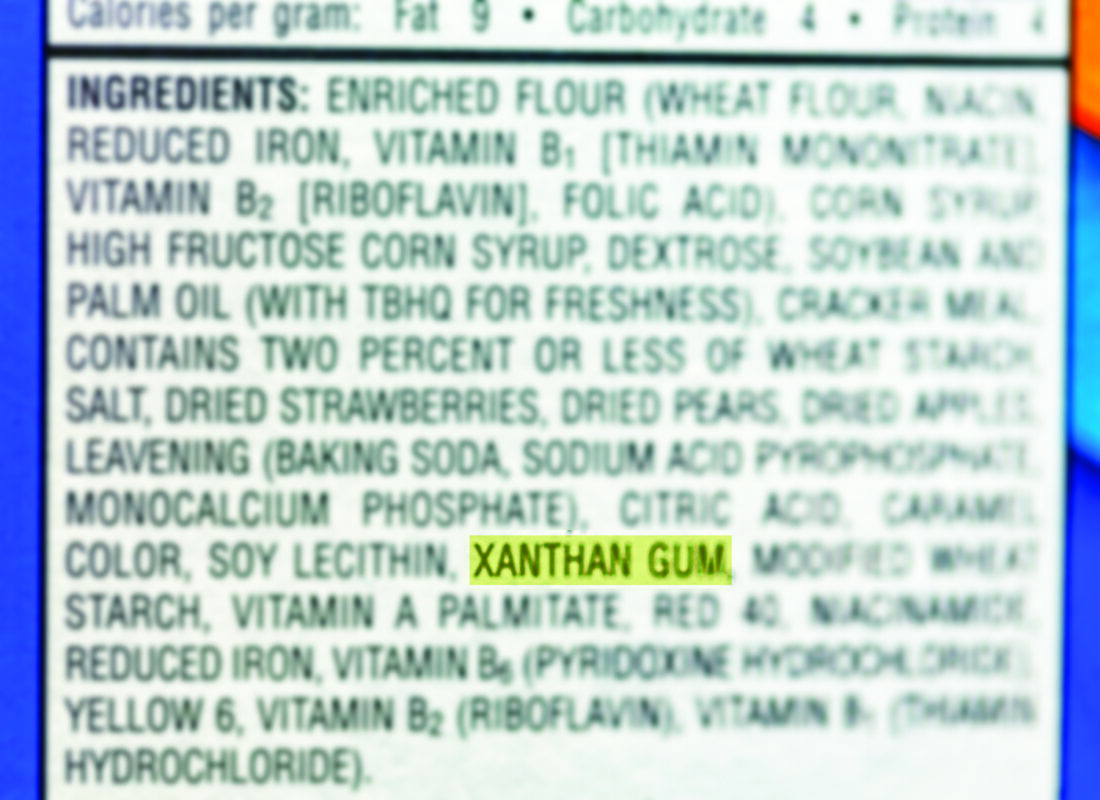
If you have ever read an ingredient list on salad dressing, gluten-free bread, or ice cream, you might have noticed an unfamiliar ingredient called xanthan gum. It may sound like a chemical, but xanthan gum is a common food ingredient used to improve the texture and thickness of many products.
For most people, the small amounts of xanthan gum found in foods are considered safe. However, eating larger amounts may cause digestive problems in some people. Here’s what to know about xanthan gum, its common uses, potential benefits, and possible side effects.
What Is Xanthan Gum?
A type of carbohydrate called a polysaccharide, xanthan gum is produced through fermentation using a bacterium called Xanthomonas campestris. Manufacturers feed the bacteria a source of sugar, such as glucose or sucrose. During fermentation, the bacteria produce a thick substance, which is then collected, purified, dried, and made into a powder.
When xanthan gum is mixed with water, it thickens and helps hold other ingredients together. A very small amount can make a noticeable difference in the texture of a food or drink.
Although xanthan gum is made through a manufacturing process, it is not a new ingredient. It has been used in foods for decades and has been studied for safety.
“It’s often used in gluten-free and vegan baking because it helps emulsify and bind ingredients,” explains dietitian Kristen Smith, PhD, RDN, LD.
What Is Xanthan Gum Used For?
Xanthan gum usesincludethickening,stabilizing,emulsifying,andimprovingthetextureof foodsandotherproducts.
Xanthan gum in food can be found in:
- Salad dressings
- Sauces and gravies
- Soups
- Ice cream and frozen desserts
- Fruit drinks and juices
- Baked goods
- Gluten-free breads and baked goods
- Syrups
- Low-fat foods
- Some dairy-free products
It is especially useful in salad dressings and sauces because it can help keep oil and water from separating. It can also help a product maintain a consistent texture during storage.
Xanthan gum is also used in personal care products, including toothpaste, shampoo, lotions, and creams. In these products, xanthan gum can help create the right thickness and keep ingredients evenly distributed.
Is Xanthan Gum Safe?
For most people, xanthan gum appears to be safe when consumed in the amounts normally found in food. The U.S. Food and Drug Administration (FDA) permits xanthan gum for use in food as a stabilizer, emulsifier, thickener, suspending agent, bodying agent, and foam enhancer.
Xanthan gum generally makes up only about 0.05% to 0.3% of a typical food product, and the average person consumes less than 1 gram per day. However, many of the studies examining possible digestive effects of xanthan gum have used much larger amounts than people would normally get from food.
“Consumed in moderation, these gums should be safe for most people to consume,” Smith says. She notes that problems are more likely to occur when people consume excessive amounts.
That doesn’t mean that everyone will tolerate xanthan gum in the same way. Some people may be more sensitive to added fibers and gums than others.
Potential Xanthan Gum Benefits
Although xanthan gum is primarily used to improve the texture and stability of foods, researchers have also studied a variety of potential xanthan gum benefits.
- May Help With Blood Sugar Control. Some research suggests that xanthan gum may slow the rise in blood sugar after eating. Because xanthan gum increases the thickness of food and digestive contents, it may slow digestion and the movement of glucose into the bloodstream. In one human study, adding xanthan gum to a nutrition drink lowered blood glucose levels after a meal, compared with the same drink without xanthan gum. Other research has found that xanthan gum added to rice may reduce the blood sugar response after eating. However, more research is needed to understand whether the small amounts found in everyday foods have a meaningful effect on long-term blood sugar control.
- Helps Thicken liquids. Xanthan gum can also be useful for people who have difficulty swallowing, a condition known as dysphagia. Thickening a liquid can slow how quickly it moves through the mouth and throat. Researchers have studied xanthan gum-based thickeners because they can create a stable texture and may help reduce the risk of liquid entering the airway in some people with swallowing problems.
- Improves Gluten-Free Foods. Gluten provides structure and elasticity to wheat-based dough. When gluten is removed, breads and other baked goods may become dry, crumbly, or difficult to shape, but adding a small amount of xanthan gum can help improve the structure, texture, and appearance of these products. For people who need to avoid gluten, xanthan gum , which is naturally gluten-free, can make certain baked goods more enjoyable.
Some people may prefer to use a xanthan gum substitute—alternatives include guar gum, psyllium husk, ground flaxseed, or chia seeds, depending on the recipe—but these ingredients do not always work in exactly the same way. Substituting one for another can change the texture and moisture of a recipe. If you are experimenting with a substitute, you may need to adjust the amount of liquid or other ingredients in the recipe.
Xanthan Gum Side Effects
Although most people tolerate the small amounts found in food, larger amounts may cause digestive symptoms, probably related to xanthan gum’s ability to hold water and its interaction with bacteria in the digestive tract.
“Many people have negative digestive side effects from xanthan gum, including diarrhea, gas, abdominal pain, and bloating,” Smith says. Other potential symptoms include softer stools and more frequent bowel movements.
Who Should Avoid Xanthan Gum?
Most people do not need to avoid xanthan gum. However, individuals with severe food allergies may want to learn how a particular xanthan gum was produced. Depending on the manufacturing process, the sugar used to produce xanthan gum may come from sources such as corn, soy, wheat, or dairy. If the source is unclear, people with serious allergies may want to contact the manufacturer.
People with digestive conditions or sensitive digestive systems may also want to pay attention to how they feel after eating products containing xanthan gum. If it causes repeated symptoms, limiting it may help.
Those with swallowing problems should not use xanthan gum-based thickeners without professional guidance. The right thickness depends on the person’s swallowing ability, and too much or too little thickening may create problems.
Is Xanthan Gum Bad for You?
For most healthy adults, there is little cause for concern about the small amounts of xanthan gum found in foods. If you tolerate it well, you generally have no reason to avoid xanthan gum simply because it appears on an ingredient label. However, people with food allergies, digestive sensitivities, or swallowing concerns may need to take additional precautions.
As with any ingredient, the bigger picture matters. Rather than focusing on a single ingredient, look at the overall nutritional value of the foods you eat, Smith advises.