Lotions, perfumes, skin oils, and even a dip in a swimming pool will make rings and necklaces look dull and lackluster over time. The good news is that most of this buildup or residue can be removed using simple cleaning methods.
“You really don’t need anything complicated to clean your jewelry at home,” says Steven Billig, co-owner of Billig Jewelers in Marlton, New Jersey, who has spent 40 years in the trade. The key is knowing what’s safe for your specific piece before you start—and what to leave to a professional.
Why Does Jewelry Get Dull?
According to Billig, the single worst offender is chlorine. Chlorine can damage certain metal alloys, affect finishes, and potentially weaken jewelry over time.
Lotion, perfume, and hairspray can cause a different kind of damage. Rather than attacking the finish itself, they build up as a film on top of it, which is why a piece can still look clean underneath once you properly wash it off.
“One of the best things you could do for your jewelry really doesn’t have anything to do with cleaning it. It’s taking your jewelry off before using cleaning products, swimming in a chlorinated pool, doing any type of work, or working with chemicals…things you could do to prevent it from getting dirty,” advises Billig.
What You Need to Clean Jewelry at Home
When thinking about how to make jewelry shine again, this short supply list is all you need for most everyday pieces:
- Warm water
- A small amount of mild dish soap
- A very soft toothbrush
- A soft, lint-free cloth for drying
Before you clean anything, though, Billig’s jewelry cleaning tips stress one rule above all others: know exactly what you’re cleaning. If you’re unsure how to care for a particular stone, consult a jeweler before cleaning it at home.
What Not to Use on Jewelry
There are a few products frequently mentioned—and worth noting—when discussing what not to use when cleaning jewelry.
|
What not to use |
Why they’re used |
Why not to use them |
|
Toothpaste: one of the most common at-home mistakes |
People assume that because it cleans teeth, it’ll make jewelry sparkle as well. |
Toothpaste is abrasive and can cause scratching on both metal and gemstones.
|
|
Bleach, chlorine, and ammonia |
Common household cleaning solutions whose cleaning abilities are assumed to be universal. |
These chemicals can discolor or remove metal plating and sterling finishes. They can also damage certain precious-metal alloys and potentially weaken prongs or settings over time. On delicate gemstones, harsh chemicals may damage, etch, discolor, or dull the stone. |
|
Ultrasonic cleaners, used carelessly |
These devices work by using gentle vibrations to get dirt and grime to loosen up. |
“If the stone is loose and you put it in that vibration, the stone will come out,” Billig warns.
Rings with many small accent stones, for example a “hidden halo” setting, are especially vulnerable, as the small amounts of metal holding each stone can be corroded or loosened over time. |
|
Natural home remedies: vinegar, baking soda, or lemon juice |
They have a reputation as being gentle alternatives to industrial cleaning solutions. |
They can be unsafe for opals, pearls, and other porous or delicate stones because acids and abrasives can damage, etch, discolor, dull, or scratch them. |
How to Clean Jewelry at Home
For solid gold, silver, and diamond pieces without delicate stones or flimsy settings, Billig’s basic method is simple:
- Add a few drops of mild dish soap to a bowl of warm water.
- Let the piece soak for 10-15 minutes.
- Gently brush around the stone with a very soft toothbrush to get underneath the setting and anywhere dirt and oils tend to collect.
- Rinse thoroughly.
- Dry with a soft, lint-free cloth, or lay it flat on a towel.
Practical safety note: close the drain completely and cover it before you start. If a stone or the piece slips out of your hands, this will prevent it from falling down the drain.
How to Clean Gold Jewelry
Whether 14k, 18k, or greater, solid gold can handle the soap-and-water method without requiring significant extra caution.
However, white gold is a slightly different story. What looks like and is marketed as “white gold” is actually yellow gold alloyed with metals like silver or nickel, which is then plated with rhodium to get that bright white “sparkly” finish.
Now, the rhodium plating is a chemical layer sitting on top of the metal, and that’s what makes white gold more sensitive to chlorine and harsh chemicals than plain yellow gold. The soap-and-water solution is still a safe jewelry cleaner for home use.
You just need to be extra careful about the chlorine in pools, sitting for long periods in hot tubs, and harsh cleaning products.
How to Clean Silver Jewelry
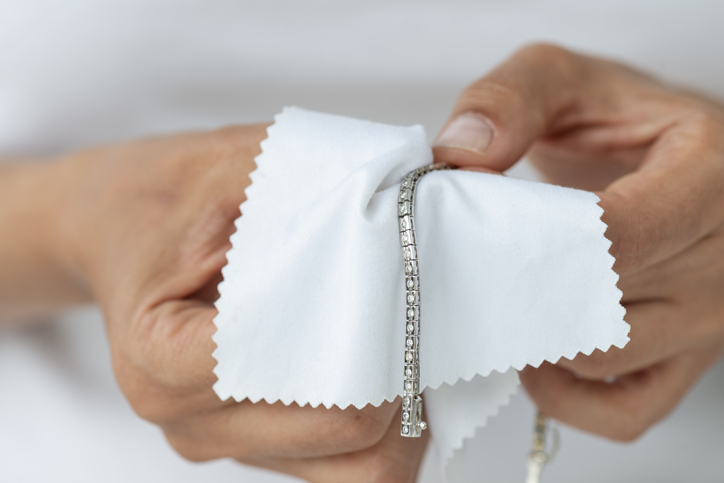
Similar to cleaning gold jewelry: the same water, soap, and toothbrush routine works for solid silver as well. If you come across a piece that’s tarnished or lost its luster, use a silver polishing cloth or a product specially approved for that particular piece.
Even if a piece of silver jewelry appears to be beyond saving, all hope may not be lost. For instance, if a chlorinated pool resulted in severe tarnishing of a metal-plated silver piece, bring it to a jeweler, and more often than not, they’ll be able to re-plate it back to its original glory.
How to Clean Diamond Rings
Diamonds are one of the safer stones to clean at home, but technique still matters. For rings with a single large stone in a simple prong setting, a brief soak in a soapy solution followed by gentle brushing is usually enough.
However, for rings that have many small accent diamonds, try being even gentler and steering away from the ultrasonic cleaner.
One detail most people miss when cleaning diamond jewelry at home is the underside of the diamond. “A diamond can be perfectly clean on the top, and it’s still going to look dull because the bottom of the stone is dirty,” Billig explains.
To illustrate this, think about how a diamond gets its sparkle: Light enters the stone, reflects off its bottom facets, and bounces back out, creating a brilliant shine. If oil, dirt, or grime is trapped underneath, it can interfere with that reflection, making the diamond look dull even if its surface appears spotless.
How to Clean Pearl Jewelry
Jewelry containing pearls and opals requires a higher degree of caution. They’re soft, porous, and absorb moisture and chemicals much more than solid metals and harder stones like diamonds.
This means that the standard method of soaking in a mild soap solution and brushing gently isn’t appropriate for these pieces.
Avoid soaking the pearls, and don’t use ultrasonic cleaners or harsh chemical products. The safest move is to gently wipe them with a slightly damp, soft cloth to remove surface residue.
How Often Should You Clean Jewelry?
How often you should clean your jewelry comes down to how often you wear it. An engagement ring or another daily-wear item can be lightly cleaned every 1-2 weeks using the basic soap-and-water method.
Occasional-wear pieces need far less attention. For example, only cleaning them before or after a special occasion may suffice.
Beyond at-home cleaning, Billig recommends bringing everyday pieces back to a jeweler at least periodically (see more below). In addition to professional cleaning, a jeweler will inspect your pieces for wear or damage and address problems in advance that could affect the jewelry’s value and brilliance.
When to Take Jewelry to a Professional
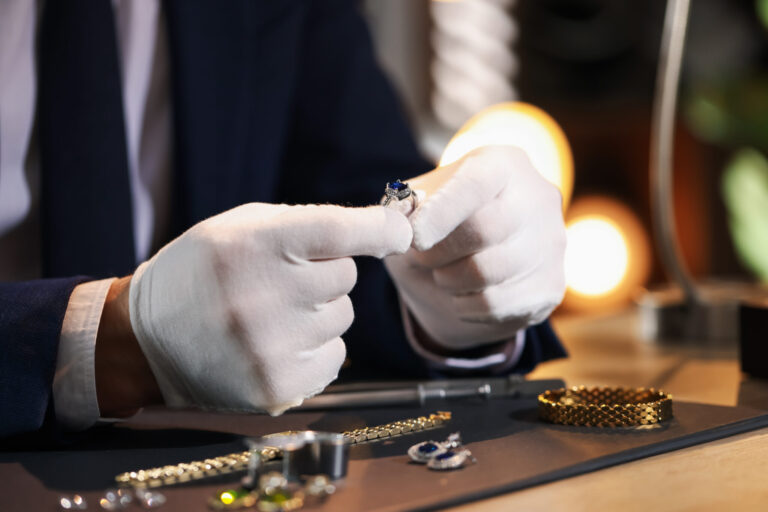
At-home cleaning following a simple jewelry care guide may keep jewelry looking good from day to day, but it’s not a substitute for professional inspection. Billig recommends a professional cleaning and inspection at least once or twice a year, especially for more sensitive or worn-out pieces.
“See a professional before trying to clean a piece of antique jewelry, an heirloom, or anything older where the prongs or the pieces could be worn out, because then the stones may pop out while you’re cleaning it,” Billig says.
Some pieces require extra care and may benefit from a professional evaluation:
- Jewelry containing pearls, opals, emeralds, or other delicate gemstones
- Antique or heirloom jewelry where the prongs or setting may already be worn
- Treated or particularly delicate pieces
- Any piece you’re not sure how to identify or safely clean
Billig paints a colorful, bigger picture: “Jewelry is meant to be worn and enjoyed every day. So don’t be afraid of wearing it, but a little common sense and regular maintenance can go a long way.”
Key Takeaways
- Know what your jewelry is made up of before you even think about cleaning anything. Solid gold, silver, and diamonds can handle a DIY cleaning solution of soap and water. But pearls, opals, emeralds, and other delicate gemstones require more careful cleaning and should not be soaked or exposed to harsh chemical products.
- Keep toothpaste in the bathroom and vinegar in the kitchen, both away from your jewelry. Also avoid ultrasonic cleaners on loose settings or small, adjacent stones and don’t reach for harsh chemicals at all.
- Take off your jewelry before getting into a pool or applying makeup, lotions, perfumes, and hairspray. Preventative care goes a long way in keeping precious pieces shiny.
- Cleaning goes hand in hand with inspection. Cleaning every week or two keeps daily-wear pieces looking shiny, but a professional check once or twice a year is essential to catch loose prongs and flimsy settings before they catch you off guard.