Muffled hearing, earache, and a sensation of fullness in your ears sometimes can indicate an earwax buildup, but should you see these symptoms as a reason to arm yourself with a cotton swab and go digging? No—in fact, that’s one of the worst things you can do, since you’ll probably just push the earwax farther into your ear.
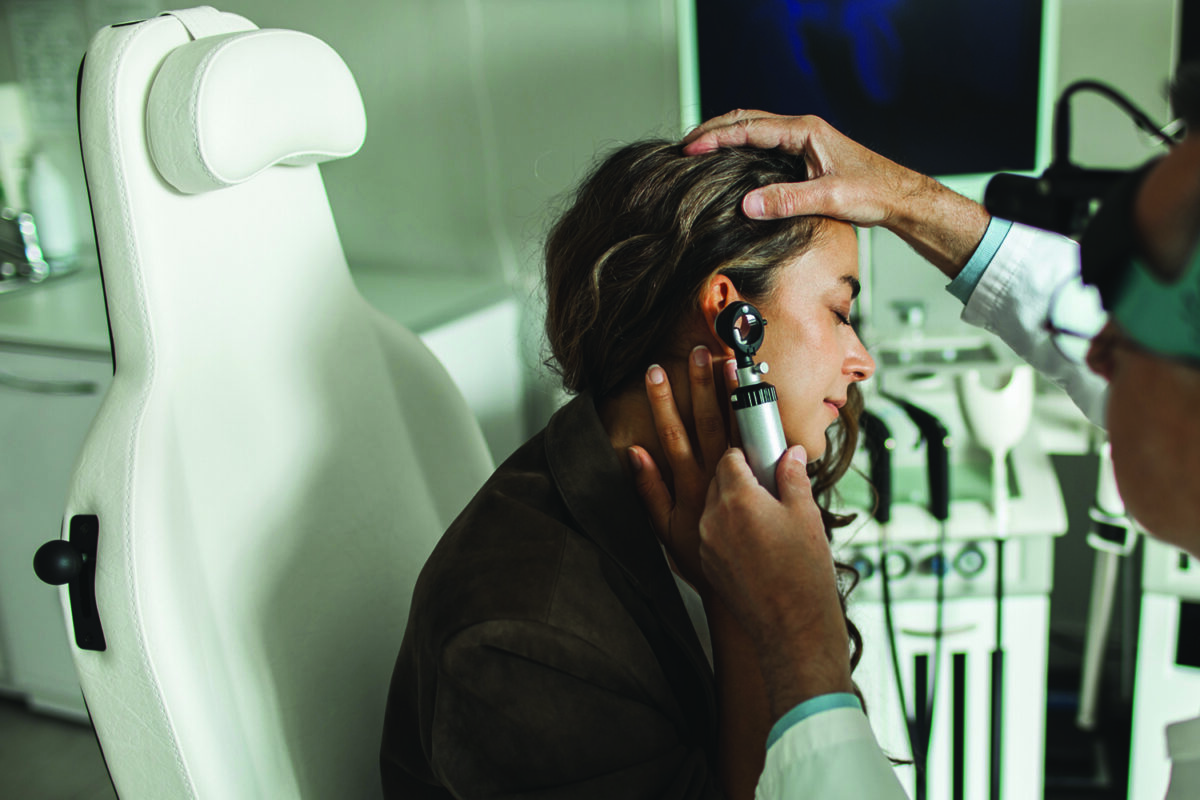
Instead, have your doctor examine inside your ears with an otoscope. “They will be able to confirm whether an earwax buildup is causing your clogged ear and provide advice on how to safely deal with the problem at home or refer you to an ear, nose, and throat specialist for safe ear cleaning,” says Mount Sinai geriatrician Patricia A. Bloom, MD.
How to Clean Your Ears Safely at Home
Earwax, known clinically as cerumen, is there for a reason. It helps trap dust and other debris (including inquisitive bugs) before they can reach your eardrum. It also helps moisturize the delicate skin that lines your ear canal and protects against bacteria and moisture that otherwise might contribute to fungal infections.
Moreover, the ear is designed to be self-cleaning, Dr. Bloom notes. “The motions that you make as you chew your food, talk, and yawn cause shed skin flakes and old earwax to move out of the ear canal to your outer ear, where they can be wiped away or washed away when you shower,” she explains.
That said, there may be times when you need to help this process along, particularly if you are an older adult. “The consistency of earwax changes as we age, becoming drier and harder, and some people—older men especially—also develop coarser hair growth in the ear canal, which can impede the movement of wax toward the outer ear,” Dr. Bloom says.
If you wear dentures you may chew food less vigorously, which also may slow down earwax migration. Hearing aids also can be an issue, as they can prevent wax from exiting the ear and push accumulating wax farther down the ear canal. “Eventually the earwax may become tightly packed in the ear canal,” Dr. Bloom says.
This impacted earwax can prevent your doctor from examining your eardrum during routine examinations. “It also can contribute to a greater risk for ear infections, since it may prevent water from draining out of your ears after swimming and trap debris in which bacteria may proliferate,” Dr. Bloom adds.
She emphasizes consulting with your doctor before making any attempt at earwax removal, since it is possible some other problem is causing your symptoms and/or that any earwax that is blocking your ear canal may be too deep to access safely. “People taking anticoagulant drugs and those who have a perforated eardrum—which may occur without you realizing—should be medically assessed before earwax removal, since they may have an increased risk of ear injury and bleeding,” she confirms. She adds that this advice also applies to people with diabetes and those with a history of head/neck radiation.
If your doctor gives you the all-clear, you can use over-the-counter earwax softening drops as directed on the product label to soften an earwax buildup so that the excess earwax can more easily exit your ear. “With your doctor’s permission, you can use a bulb syringe to gently irrigate your ear with warm water after using the drops,” Dr. Bloom adds.
While some people opt to use olive oil on a daily basis to prevent earwax buildup, the American Academy of Otolaryngology advises against this practice. “Some studies have suggested that daily oil use can cause a heavier earwax buildup due to the oil itself,” Dr. Bloom observes.
What Not to Use in Your Ears
Remember when your mother told you that you should never put anything smaller than your elbow inside your ears? She was right. Don’t poke around in there even if you are irritated by that clogged ear feeling. Here’s a shortlist of tools you need to back away from:
- Narrow objects, including hair pins, paperclips, toothpicks, the pointy end of your ballpoint pen’s cap, and your fingernails. Even cotton swabs for earwax can be problematic. “All of these will push wax closer to your eardrum and also may puncture your eardrum or scratch your ear canal,” Dr. Bloom warns. “They also may cause an ear infection by introducing bacteria to the ear.”
- Ear candles. Marketed as a “natural” way to clean the ears, these products are designed to have one end placed in the outer ear and the other end lit up. “The theory is that the heat from the candle produces suction that draws out excess earwax, but no study has confirmed this,” Dr. Bloom notes. “The candles also come with a very real risk of burns to the ear, face, and scalp.”
- Ear irrigation These products are widely available online, but you should avoid them. Forceful ear irrigation may be painful and can damage the eardrum. “Also, don’t use a water flosser, since even the lowest settings likely will be too forceful,” Dr. Bloom adds.
When Earwax Becomes a Problem
Muffled hearing and fullness or pressure in the ears aren’t the only symptoms that can point to impacted earwax. Other signs may include earache, tinnitus (noises such as ringing, buzzing, or chirping in the ears in the absence of any external sounds), itching in the ears, and dizziness (note that the latter is a symptom that immediately warrants a call to your doctor, since it places you at risk for falls).
If you wear hearing aids, you may notice that your hearing isn’t as amplified as it usually is, and you may experience feedback (whistling sounds) from hearing aids that previously were working perfectly. Your hearing aids also may become blocked by earwax buildup.
When to See a Doctor
Knowing when to see an audiologist can mean the difference between having an ear problem that can be easily managed in its early stages or having a much more serious threat to your hearing. Take the precaution of consulting your doctor if you are experiencing any ear discomfort or feel that your hearing isn’t as sharp as usual. Remember that your doctor knows how to remove earwax safely and effectively.
“It is important to get medical approval prior to using ear drops and/or bulb syringe irrigation, since these self-help strategies should not be used if you are experiencing ear pain or you have an ear infection or perforated eardrum,” Dr. Bloom advises.
Also call your doctor if you experience these symptoms:
- Sudden hearing loss.
- Severe ear pain or ear pain that is accompanied by a fever.
- Fluid or blood draining from the ears, particularly if these symptoms follow a fall.
- Pus or discharge from the ears.
If your problem is not solved by using ear drops for earwax at home, your doctor probably will refer you to an audiologist or ear, nose, and throat specialist for professional and safe ear cleaning. If the wax isn’t too excessive or deep inside the ear canal, treatment may involve careful ear irrigation or the use of a tiny curette (scoop) to manually remove the wax. “If the wax is very soft, close to the eardrum, or you have a perforated eardrum, the doctor may use a tiny suction device,” Dr. Bloom says. “Keep in mind that you will hear a brief but loud sucking noise during the procedure.”
How to Prevent Earwax Buildup
If you are prone to earwax buildup in your ears, your doctor may recommend you periodically use over-the-counter earwax softening drops to help prevent impaction. But don’t use these drops regularly without first consulting your doctor.
“Also avoid inserting anything into your ear that could push earwax deeper and, if you use hearing aids, schedule some time in your day when you take these out to let any moisture in your ear evaporate and allow the ear’s natural self-cleaning mechanism a chance to work effectively,” Dr. Bloom says. She also recommends taking the precaution of having your doctor examine your ears every six months so that earwax accumulation can be addressed before it causes symptoms.