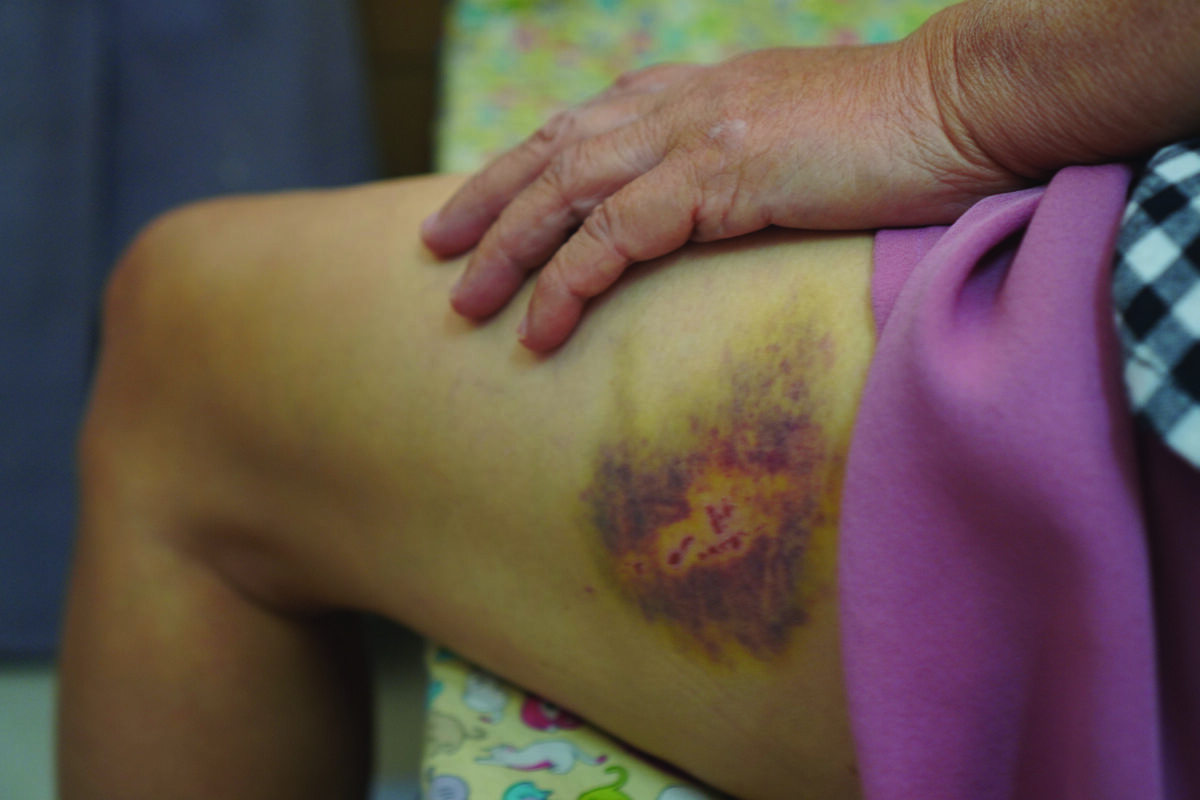
Most bruises are harmless reminders of bumping into a table corner or missing a step. They may look dramatic, but they usually heal on their own within a couple of weeks.
However, there some more dangerous types of bruises that can signal an underlying medical condition, medication side effect, or even a serious injury that requires prompt medical attention.
While bruising becomes more common as you age, it is important to know the difference between normal bruises and those that warrant a closer look.
What Is a Bruise?
A bruise, also called a contusion, occurs when a blow or injury damages small blood vessels beneath the skin without breaking the skin’s surface. Blood leaks into the surrounding tissue, creating the familiar blue, purple, black, or reddish discoloration. As your body gradually reabsorbs the trapped blood, the bruise changes color, often turning green, yellow, or brown before disappearing completely.
“Bruises, on average, will take about two weeks to resolve as the body breaks down and reabsorbs the trapped blood,” says Patra Sorod, DO, a geriatrician at UCLA Health. “Due to thinner skin and especially if you are taking blood thinners, bruises can appear often with minor trauma; however, they will demonstrate some type of healing within two weeks.”
Common Types of Bruises
Two of the most common kinds of bruises include:
- Surface Bruises. The vast majority of bruises are minor surface bruises that occur after everyday bumps, falls, or sports injuries. They typically cause tenderness and discoloration but improve steadily without treatment. Most people can safely manage these bruises at home with rest and ice during the first 24 to 48 hours, compression if appropriate, and elevation when possible.
- Deep Muscle Bruises. A deeper impact can injure muscles beneath the skin, causing blood to collect within muscle tissue instead of just beneath the skin. Deep muscle bruises are often more painful than surface bruises and may limit movement. Depending on the muscle involved, walking, lifting, or bending can become difficult. Recovery also tends to take longer. Although deep muscle bruise complications are rare, severe pain, increasing swelling, numbness, or difficulty using the affected limb should be evaluated by a healthcare provider because these symptoms can occasionally indicate compartment syndrome or other serious injuries.
Dangerous Types of Bruises
Not every bruise is created equal. Certain patterns, sizes, locations, or associated symptoms can point to a more significant health problem.
Hematomas: What They Are and Why They Matter
Dr. Sorod cautions that what initially looks like a bruise may actually represent another medical condition. Sometimes, it is a hematoma. The difference between a hematoma vs. a bruise is that a standard bruise involves a relatively small amount of blood leaking into tissue. A hematoma occurs when a much larger amount of blood pools outside a damaged blood vessel, creating a firm, swollen mass.
“Hematomas are large in size, raised, and firm, with an underlying pool of blood, and can be painful,” Dr. Sorod explains. “It is important to consider if there is an ongoing source of bleeding, especially if taking blood thinners, and if there is any recent trauma, which can indicate an urgent underlying condition such as a broken bone.”
In some cases, spontaneous or repeatedly occurring hematomas may suggest an underlying bleeding or clotting disorder that requires medical evaluation.
Purpura and Petechiae: Signs of Underlying Conditions
Petechiae and purpura are often mistaken for bruises, especially when they first appear as clusters of flat reddish-purplish spots. Both are caused by leakage of capillaries and small blood vessels due to an underlying cause. Petechiae are smaller than 3 millimeters (mm), while purpura are 3 mm to 1 centimeter in size and can appear together.
“These should always be medically evaluated, as underlying factors can be as simple as from physical strain and medication side effects to concerning low platelets, infection, autoimmune and blood disorders,” Dr. Sorod says. “It is considered an emergency when these spots spread rapidly and involve systemic symptoms such as high fever, trouble breathing, changes in mental state, and bleeding elsewhere.”
Bruises From Blood Disorders
Occasional bruises are usually nothing to worry about, but bruising that develops frequently, appears without any known injury, or is unusually large may point to a blood disorder. Your body depends on platelets and clotting proteins to stop bleeding after blood vessels are injured. When either system is impaired, blood can continue leaking into surrounding tissues, resulting in bruises that seem to appear out of nowhere or grow larger than expected.
Several conditions can increase the risk of abnormal bruising, including:
- Low platelet counts (thrombocytopenia)
- Von Willebrand disease
- Hemophilia
- Leukemia and other blood cancers
- Certain bone marrow disorders
Unexplained bruising accompanied by frequent nosebleeds, bleeding gums, prolonged bleeding after minor cuts, or blood in the urine or stool should always be evaluated by a healthcare provider.
Bruises Linked to Medication or Medical Conditions
Many medications make bruising more likely by reducing the blood’s ability to clot or by making blood vessels more fragile. Common culprits include:
- Blood thinners, such as warfarin (Coumadin), heparin, apixaban (Eliquis), rivaroxaban (Xarelto), and dabigatran (Pradaxa)
- Antiplatelet medications, such as aspirin and clopidogrel (Plavix)
- Long-term corticosteroids, which thin the skin and weaken connective tissue
- Some antidepressants, including selective serotonin reuptake inhibitors (SSRIs), which may slightly increase bleeding risk
Certain medical conditions can also make bruising more common, including liver disease, kidney disease, vitamin C deficiency, vitamin K deficiency, and connective tissue disorders. While these conditions don’t necessarily make bruises dangerous, they can increase both the frequency and severity of bruising. If you notice a sudden increase in bruises after starting a new medication, let your healthcare provider know. Never stop taking a prescribed blood thinner without medical guidance.
Warning Signs: When Is a Bruise Dangerous?
Although most bruises heal without treatment, some require prompt medical attention. According to Dr. Sorod, bruises should show signs of improvement within about two weeks: “If bruises are not improving for more than three weeks, with additional symptoms of severe pain, swelling, increase in size, and development of systemic signs (such as severe fatigue, fever, or unexplained weight loss), these are signs to seek further medical evaluation.”
To know when to seek medical attention, consider if the bruise:
- Continues growing instead of shrinking
- Is extremely painful or causes significant swelling
- Develops after a major fall or car accident
- Appears with no obvious injury, especially if it happens repeatedly
- Lasts longer than three weeks without improving
- Is accompanied by fever, unexplained weight loss, severe fatigue, or other concerning symptoms
- Is associated with numbness, weakness, or difficulty moving the affected limb
A bruise that won’t heal also warrants medical attention. The location of a bruise also matters. Bruises involving the head, particularly after a fall or blow to the head, deserve prompt evaluation because they may signal a concussion or bleeding inside the skull. Bruises over the abdomen or chest can occasionally indicate injury to internal organs, especially after significant trauma.
Dr. Sorod notes that physicians also pay close attention to bruising patterns that may indicate elder abuse. “The size of bruises in elderly abuse tends to be large (greater than 5 centimeters), and the location is most important,” she explains. “Normal accidental bruises are often on the extremities, while elderly abuse occurs in sensitive areas such as the head, face, neck, inner thighs, chest, back, buttocks, and even the genital area. Sometimes finger-shaped bruises can be noted on the wrists or ankles.”
Another important consideration is skin cancer. Dr. Sorod explains that melanoma can sometimes resemble a dark bruise but does not heal normally. Unlike a bruise, melanoma often has irregular borders, an uneven shape, and persists instead of fading over time.
Who Is at Higher Risk for Dangerous Bruises?
Some people naturally bruise more easily than others. Bruising in older adults can be caused by age-related changes in the structure of the skin. Over time, the skin becomes thinner, collagen decreases, and the protective fat layer beneath the skin shrinks.
“Aging of the skin consists of deterioration of all three layers of the skin,” Dr. Sorod explains. “With age, connective tissue, collagen, and the fat layer decrease, deteriorating the overall structure and leading to thin skin that is easily torn and bruised. Blood vessels become fragile because they are less supported and cushioned by the skin layers.”
Other people at increased risk of bruising include:
- Adults taking blood-thinning medications
- People with inherited bleeding disorders
- Individuals with liver disease
- Those with vitamin C or vitamin K deficiencies
- People taking long-term corticosteroids
- Anyone with certain blood cancers or bone marrow disorders
For these individuals, even relatively minor bumps can produce significant bruising.
Most bruises are harmless and fade on their own within a couple of weeks. However, it’s important to recognize the dangerous types of bruises that may signal a more serious problem. Large hematomas, bruises that appear without injury, petechiae, bruises that continue to enlarge, or bruising accompanied by pain, fever, fatigue, or unexplained weight loss all deserve medical attention.