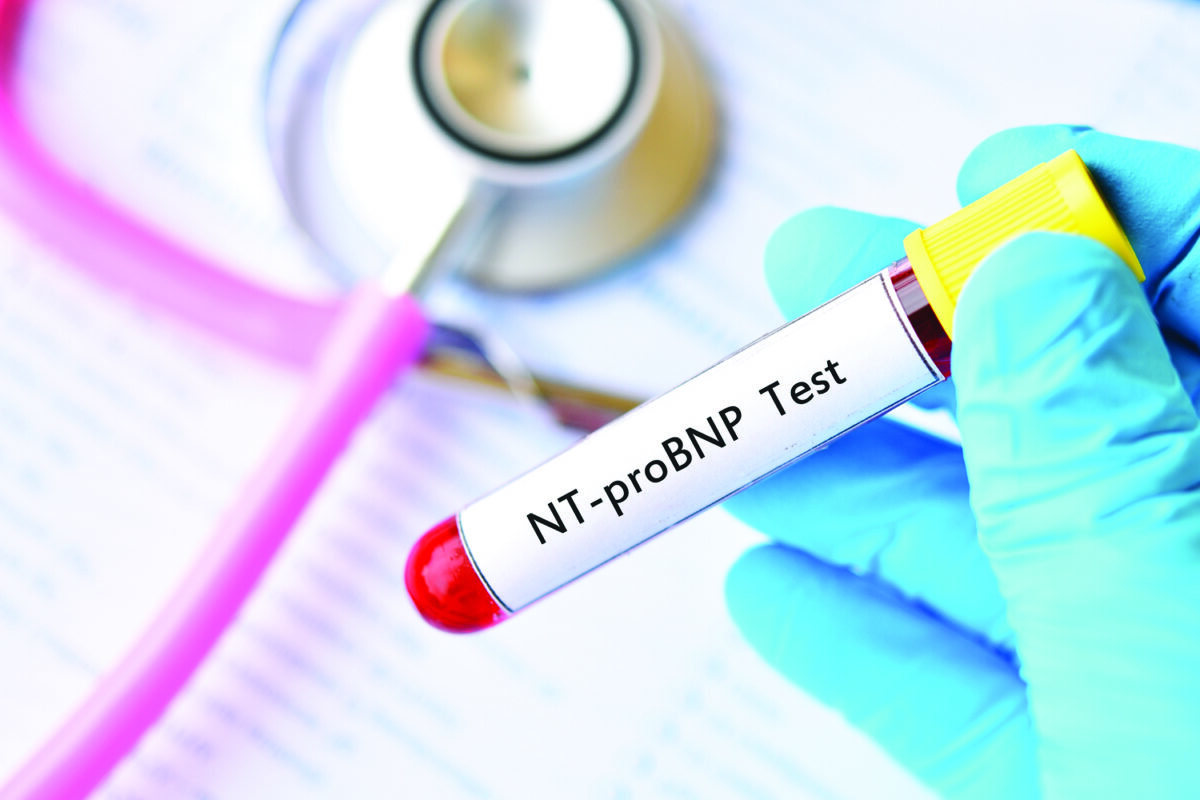
If you have heart failure, you probably have regular blood tests for brain natriuretic peptide (BNP) or N-terminal pro B-type natriuretic peptide (NT-proBNP). The physician treating your heart failure uses the information to help manage your condition.
However, there’s good chance you don’t know what BNP is or what role it plays in your heart health. And, importantly, what is a dangerous BNP level?
What Is BNP, and Why Does It Matter?
BNP and NT-proBNP are biological substances (biomarkers) that, when measured, can diagnose or confirm a disease, predict the course or outcome of a disease or indicate how well an individual is responding to a specific treatment.
“BNP and NT-proBNP are protein biomarkers that are released by heart muscle cells in response to cardiac wall stress and stretch, which we correlate to increased heart filling pressure and volume,” explains Cleveland Clinic heart failure cardiologist Arianne Agdamag, MD. “A BNP or NT-proBNP level provides information about the trajectory of heart failure in an individual.”
How Is BNP Measured?
A BNP blood test or NT-proBNP blood test is the only way of measuring these peptide levels. Some labs offer only BNP testing, but that situation is starting to change.
“There is a shift toward using NT-proBNP because it is not affected by sacubitril/valsartan (Entresto), a heart failure medication that increases BNP,” says Dr. Agdamag. “NT-proBNP in blood samples also remains stable much longer than BNP and is more sensitive in detecting early heart failure.”
What Is a ‘Dangerous’ BNP Level?
A normal NT-proBNP level is 300 picograms per milliliter (pg/ml). For BNP, normal is 100 pg/ml. However, levels continually fluctuate. “They can drop or rise daily and are affected by blood pressure, fluid levels, and other issues,” Dr. Agdamag says.
When blood pressure and fluid levels in the body are controlled, levels of BNP or NT-proBNP will be close to normal. Rising levels can indicate a problem is brewing.
“High levels of BNP or NT-proBNP correlate with heart failure hospitalization, decompensation and mortality. However, there is no cutoff point above which we say a level is high or dangerous,” says Dr. Agdamag. “Nevertheless, a level in the thousands will be followed closely.”
What Causes High BNP Levels?
The amount of BNP and NT-proBNP in the body can be affected by multiple cardiac and noncardiac issues.
In addition to heart failure, heart-related issues that can raise BNP and NT-proBNP levels include heart attack, arrhythmias, inflammatory conditions such as pericarditis and myocarditis, heart procedures, and acute coronary syndrome, which is a group of conditions (including heart attacks and unstable angina) that result in sudden reduced blood flow to the heart.
Noncardiac issues that can increase BNP and NT-proBNP levels include kidney disease, dialysis, sepsis and other acute illnesses, burns, pulmonary embolism (a blood clot in the lungs), pulmonary arterial hypertension and advanced age.
“Levels can be 50,000 or 60,000 pg/ml in someone on dialysis, and they will be fine. Conversely, levels can appear lower in an obese individual, but it doesn’t mean the person does not have heart failure,” Dr. Agdamag says.
That’s why BNP or NT-proBNP is only one piece of the puzzle when evaluating someone for heart failure. “If levels are trending upward, we investigate what is driving it to determine whether the cause is heart failure or something else,” she says.
What to Do If Your BNP Is High
After the cause of your high BNP or NT-proBNP level has been identified, your doctor will figure out the best next step. If it’s worsening heart failure, your medications may need to be adjusted or excess fluid eliminated through diuresis.
“The decision to change course or treatment is not based solely on BNP or NT-proBNP levels,” Dr. Agdamag says. “Nevertheless, it’s a valuable test that is in every heart failure doctor’s toolbox.”