The first few hours after a house flood are critical. What you do—and how fast you do it—determines whether you’re dealing with a quick cleanup or months of mold remediation and structural repair.
Alex Wilson, founder of BuildingGreen and the Resilient Design Institute, has spent years researching how homes can be built to fight environmental challenges. He shared his advice on flood cleanup, drying, and repair, starting with what to do in the first 24 hours.
What to Do First After a House Floods
When a flood hits your home, there are several things you should do before cleanup or making repairs. First:
Make Sure It’s Safe to Return
Floodwater can create real risks that might not be obvious at first, so check that your property is safe before going back inside.
One of the biggest dangers? Gas leaks. If you smell anything resembling rotten eggs in your home, get out right away and contact your gas provider—they’ll tell you what to do next.
Another problem is structural damage, which may be noticeable from outside. Look out for things like cracks in the walls and windows that don’t close properly. These are signs that something’s not quite right. “Be extra careful if the house has shifted on its foundation due to the risk of structural failure,” says Wilson. “If unsure, wait for a structural evaluation before entering.”
Check for other hazards, too. If there’s any standing water in your home, don’t touch electrical appliances that have been in contact with it, as they might be dangerous.
Also, make sure water is safe to drink and cook with. You might have to boil water for a while.
Turn Off Power, Gas, and Water if Needed
If water has reached wiring, gas lines, or water pipes, turn off your home’s utilities until you know everything’s OK. Contact a professional if you’re not sure how to do this—Wilson doesn’t recommend figuring things out yourself.
Your home should be inspected before turning anything back on. It might be irritating not to have power or water for a while, but you risk bigger problems like electrical shocks if you don’t wait.
Document the Damage Before Cleaning Up
The first thing you’ll probably want to do after a flood is get all that water out. Before you start, take photos and videos of the damage. You can send these to your insurance company when making a claim.
Document any of the following:
- Water levels and stains on walls
- Damaged furniture
- Damaged floors and drywall
- Signs of structural damage, such as cracks and rotting wood
It’s also a good idea to create a written record of everything that happened, which can also help with your insurance claim. Note down when the flood started, what was damaged, and what steps you took in the aftermath.
How to Start Cleaning Up a Flooded House
When it’s safe to do so, you can start the cleanup. Your goal? To remove water as quickly as possible and prevent further damage to your home.
Remove Standing Water
The longer water just sits in your home, the more issues it can cause. So, you’ll want to move fast. Leave things too long, and water might soak into floors and furniture, potentially leading to mold.
“Use care if entering a house that had flooded more than a few days earlier, as mold growth can be a health hazard,” says Wilson. “As a precaution, wear a face mask.”
How you clean a flooded home depends on how much water there actually is. A bucket and mop might be fine if it’s just a small amount. However, you may need a flood pump and a wet/dry vacuum if that’s not enough.
If the flooding was more serious, it could be time to call in a professional. They’ll have special extraction equipment that removes larger amounts of water, though this can be an expensive job.
Wear Protective Gear
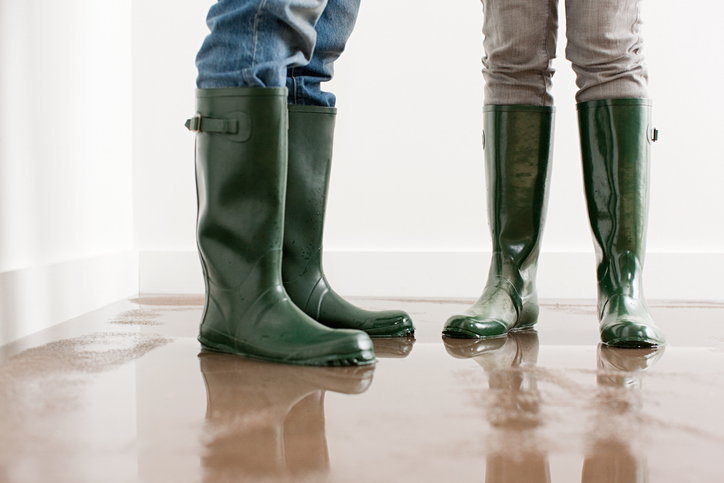
Exposure to contaminated floodwater can cause you to get sick. So, you’ll want to wear protective gear when cleaning your home. This includes rubber gloves, boots, safety glasses, and even a respirator in some situations.
Whatever you do, don’t touch anything that’s been infected with floodwater with your bare hands. If you spot sewage in your home, you might want to hire a professional rather than remove it yourself.
Take Out Wet Furniture, Carpet, and Belongings
Wet items should be removed from your property and left outside to dry. Otherwise, they’ll stay damp, start to smell bad, and create an environment for mold to grow, which is the last thing you want.
This might not be something you can do on your own with larger items like carpet, so you may have to ask someone for help.
How to Dry Out a Flooded House
Water is just one of the annoying problems you’ll encounter after a flood. Moisture, for example, can linger long after it’s gone, hiding behind walls and under floors.
Here are the easiest ways to remove moisture from your home:
Open Windows and Doors if the Weather Allows
Opening windows and doors can help humid air escape and speed up drying, especially if it’s dry and sunny outside. Wilson says this also improves cross-circulation, allowing air to flow through your home rather than stagnate in one area.
Just be careful if it’s too humid outside, as this might introduce more moisture to your home and make it difficult for everything to dry.
Use Fans and Dehumidifiers
Fans move air across wet surfaces, while dehumidifiers remove moisture from the air. Using both can help dry your property after a flood.
For the best results, place fans in areas where they blow air over the dampest spots in your home rather than by a wall or corner. This can allow moisture to evaporate better.
When it comes to dehumidifiers, try to run them continuously if you can. The longer you run them, the quicker they can dry out your home.
Check Hidden Spaces for Trapped Moisture
Even after flood cleanup, there might be water in places where you can’t see it, such as behind walls or beneath insulation. Water can also get trapped inside cabinets and around windows and baseboards.
A moisture meter is a neat piece of equipment that lets you identify water damage after a flood, so you know which areas to clean up next.
What to Salvage and What to Throw Away
One of the most heartbreaking things after a house flood is throwing out belongings that have been damaged.
“The priority is usually to salvage items of sentimental importance and value,” says Wilson. However, what you can recover depends on how much water there was and how long an item stayed wet.
Items That May Be Saved
There will be some things you can dry and clean, especially if you remove them from the flooded area quickly. Items made from metal, glass, plastic, and other non-porous materials are less likely to trap water. However, you may still want to get them professionally cleaned if they’re valuable.
“If you get in right away and can eliminate any standing water, it’s sometimes possible to dry the house out and keep materials that got wet, though carpeting and drywall are usually damaged beyond salvageability,” notes Wilson. Porous materials like these can hold onto moisture for a long time, even when their surfaces seem dry.
Materials That Usually Need Replacement
Unfortunately, you might have to replace items made from materials that easily absorb water. These include laminate, fabric, and some woods.
“Materials that can dry out after getting wet without growing mold are really important in homes that are prone to flooding,” says Wilson. Examples include tiled floors, fiberglass-faced drywall, and steel partition-wall studs.
When to Discard Food and Medicine
Food and medicine exposed to floodwater can contain toxins or germs that cause illnesses like gastroenteritis. If you’re in doubt, it’s probably better to throw it out.
How to Prevent Mold After a Flood
Mold colonies start to grow on damp surfaces in as little as 24 hours, leading to health issues such as coughing and skin rashes. Those with asthma and immune conditions are at risk of more severe reactions.
Here’s how to prevent mold:
Clean and Disinfect Affected Surfaces
After removing water, clean surfaces with a good disinfectant as quickly as possible. Get rid of any dirt and debris first, and then use an EPA-registered product to kill mold spores and stop any further growth. The Environmental Protection Agency (EPA) approves certain disinfectants that meet safety standards.
Mold may already be present in your home after a flood, and Wilson says the risk isn’t always obvious. “Wear a mask,” he advises.
Watch for Mold Growth in Walls and Floors
Mold is sneaky and can hide under floors and in other places. Check these areas for signs of moisture damage, such as musty smells and damp spots.
Know When Professional Help is Needed
Contact a professional if flood damage was extensive in your home or moisture is trapped in hard-to-reach areas. They have advanced tools that can prevent mold from spreading.
Flood Insurance and Repair Next Steps
Here are some ways to move forward and restore your home after a flood:
Contact Your Insurer
Tell your insurance company what happened and start the claims process. They’ll tell you what to do next and what evidence you need.
Keep Records of Repairs and Expenses
Store bills, invoices, and other paperwork that’s related to your flood in a safe place. Your insurer might need this information when processing your claim.
Hire Licensed, Insured Contractors
Only work with flood restoration experts, plumbers, and other contractors who are licensed and insured. You can always ask for references before hiring them.
If you need to rebuild, Wilson says there may be funding available to cover the costs.
“It’s a huge financial hardship,” he says. “For example, you may need bigger roof overhangs that keep rainwater further from the house walls.”
How to Prepare for Future Floods
Almost 21 million properties in the U.S. have an 80% or better chance of flooding by 2053. While you can’t control Mother Nature, you can certainly make your home more prepared for the future:
Build an Emergency Kit
Purchase supplies you might need for a flooded house, such as a flashlight, spare batteries, and a first-aid kit. Store them in a waterproof container, preferably in a higher area of your home.
Make a Home Inventory
A home inventory can help you identify lost or damaged items after a flood, which is useful if you need to claim on your insurance. Take photos of furniture, electronics, and other belongings and keep them somewhere safe.
Review Flood Insurance Coverage
Standard homeowners’ insurance typically doesn’t cover water damage from flooding, so consider taking out a flood policy if you live in an area that’s susceptible to these events.
If you already have flood insurance, review your coverage regularly to know what’s covered and what’s not.