Psilocybin is a chemical found in certain types of mushrooms. Historically it’s been used in sacred traditions, as a recreational drug, and in recent years as a treatment for mental health conditions such as depression, anxiety, and post-traumatic stress disorder (PTSD), among others.
The medical use of psilocybin is an active area of research, with studies in recent years suggesting it may be a safe and effective treatment for many people.
What Is Psilocybin?
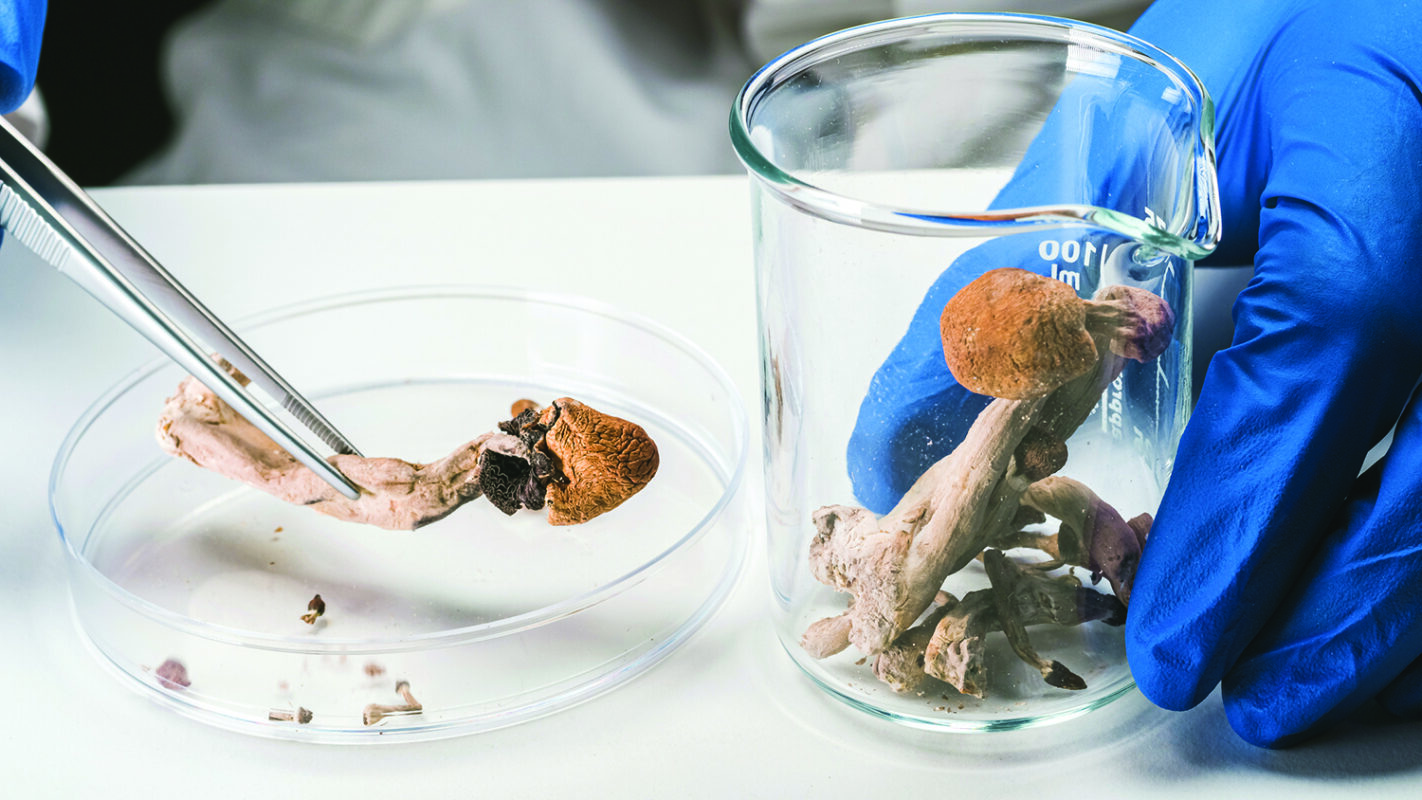
Psilocybin is a psychedelic drug that affects how the brain processes certain chemicals, particularly serotonin. Because its effects can involve an individual’s mood, thoughts, memories, and sensory perceptions, psilocybin is sometimes referred to as magic mushrooms.
For thousands of years, certain indigenous people in Central America, Mexico, and elsewhere used psilocybin as part of religious ceremonies. In the 1960s, psilocybin and other psychedelics were advocated by people such as Timothy Leary and Aldous Huxley as ways to expand consciousness and look at the world in new ways. Around that time, medical researchers started taking a closer look at how psilocybin might be a useful treatment for certain mental health disorders.
When used as a recreational drug, psilocybin is often consumed as fresh or dried psilocybin-containing mushrooms. In medicine, the chemical is part of a capsule that is taken orally.
How Psilocybin Works in the Brain
Psilocybin itself is converted in the body to psilocin, which acts primarily on a particular serotonin receptor called the 5-HT2A receptor, explains Massachusetts General Hospital psychiatrist Franklin King, MD.
“Psilocybin belongs to the group we generally call the ‘classic psychedelics,’ along with LSD, mescaline, and DMT,” Dr. King says. “They share 5-HT2A receptor activity and produce broadly overlapping alterations in consciousness, although they differ considerably in duration, pharmacology, and the character of the experience.”
These receptors are especially abundant in parts of the cerebral cortex involved in perception, cognition, self-reflection, and the ability to integrate information, he says. “At the level of the brain as a whole, psilocybin temporarily changes the way different brain networks communicate with one another,” Dr. King says. “Networks that ordinarily maintain relatively stable patterns of activity become less rigid, while areas that do not ordinarily communicate as strongly may become more connected.”
Dr. King suggests that one way of thinking about this process is that the brain temporarily enters a more flexible and less constrained state. “There is also growing evidence, particularly from animal research, that psychedelics can promote neuroplasticity—the capacity of neurons and neural circuits to change and form new connections,” he adds. “How much this accounts for their lasting psychological or therapeutic effects in humans is still being worked out.”
Dr. King adds that psilocybin is quite different pharmacologically from drugs that are sometimes grouped loosely with psychedelics, such as ketamine or MDMA, which act through different primary mechanisms in the brain.
Common Effects of Psilocybin
Psychologically, psilocybin can produce profound alterations in perception, emotion, thought, sense of time, and sense of self. Effects vary based on psilocybin dosage, the potency of the particular mushroom, and the tolerance and response of the individual consuming it.
“Colors and visual patterns may become unusually vivid,” Dr. King says. “Music can feel remarkably affecting. Memories or emotions may emerge with unusual intensity. And at higher doses people sometimes describe a temporary dissolution or alteration of their ordinary sense of self. Experiences can range from joyful, meaningful, or even mystical to frightening and disorienting.”
One common misconception is that psychedelics simply cause people to “see things that aren’t there,” Dr. King says. “That can occur, but it is a poor description of the overall psychedelic state. The changes in emotion, autobiographical memory, meaning, self-perception, and interpersonal experience can be at least as prominent as the visual effects.”
He adds that another misconception, particularly given the current enthusiasm around psychedelics, is that a positive therapeutic outcome is somehow automatic. “It is not,” he says. “These are powerful alterations of consciousness, and their effects depend considerably on the individual, their psychological state, the environment in which the drug is taken, and the support available before, during, and after the experience.”
Therapeutic Uses and Current Research
Estimates vary about the percentage of people in the United States who use psilocybin for recreational and/or medicinal purposes. A 2026 report in the American Journal of Psychiatry suggests that in 2024, 2.8% of Americans ages 12 and older used psilocybin in some form.
In clinical settings, psilocybin therapy has been used primarily to treat mental health disorders, though there have been studies exploring the chemical’s use in treating chronic pain and other health concerns. Dr. King suggests that psilocybin therapy is showing the most promise in the areas of depression, anxiety, and substance use disorder. For example, an August 2026 study in The Lancet found that psilocybin holds promise as a potential option in helping people with treatment-resistant depression. And in a separate study published in JAMA Network Open (May 15, 2026), researchers found that a single dose of psilocybin was associated with a rapid reduction in major depression symptoms.
“Depression currently has the strongest clinical evidence,” Dr. King says. “Several randomized trials have found substantial and sometimes rapid reductions in depressive symptoms after one or two administrations of psilocybin, including studies of major depression and treatment-resistant depression. There has also been encouraging research in people experiencing depression and anxiety in the setting of serious illnesses such as cancer.”
He adds that addiction is another particularly interesting area. Small clinical studies have reported promising results in alcohol use disorder and tobacco dependence, and larger studies are underway.
“Psilocybin is also being investigated in a wide range of other conditions, including obsessive-compulsive disorder, eating disorders, chronic pain, headache disorders, and disorders involving the interaction between the brain and the body,” Dr. King says. “My own research has included studying psilocybin-assisted therapy for irritable bowel syndrome, a disorder of gut-brain interaction, as well as fibromyalgia, a pain disorder. That is a good example of how the field is beginning to ask whether psychedelics might have applications beyond traditional psychiatric diagnoses.”
As encouraging as various study findings are, Dr. King cautions that psilocybin therapy is a complicated and challenging treatment to study compared with more conventional medications. “I think it is important not to get ahead of the evidence,” he says. “The results are genuinely promising, but psychedelic trials are unusually difficult to blind: People generally know whether they received a psychedelic. Expectations are also often high among research participants. Both factors can inflate apparent treatment effects and make conventional placebo-controlled trials difficult to interpret. So, I would characterize psilocybin as a very promising experimental treatment rather than an established treatment for most of these conditions.”
Risks and Side Effects
Potential psilocybin risks include both long-term concerns and immediate side effects.
In the short term, possible psilocybin effects include transient increases in blood pressure and heart rate, along with effects such as nausea, headache, dizziness, or fatigue, Dr. King says. In medically screened individuals, psilocybin side effects have generally been manageable in clinical research settings, he adds.
“The psychological experience itself can also become intensely frightening,” Dr. King explains. “People can experience panic, paranoia, confusion, a sense that they are dying or losing control, or extremely difficult emotions and memories. In a well-run clinical study, participants are screened beforehand and monitored continuously during the experience, which substantially changes the risk environment compared with unsupervised use.”
Serious long-term psilocybin risks are rare. They include conditions such as hallucinogen persisting perception disorder (HPPD), in which someone can experience recurring visual disturbances, such as halos around objects. Heavy, repeated, unmonitored use of psilocybin and other psychedelics also can lead to problems ranging from sleep disruption to anxiety and depressive episodes.
There is a low risk for psilocybin addiction, as it doesn’t activate the brain’s reward centers in the same way as substances such as nicotine and cocaine do.
Safety Considerations and Legal Status
Because psilocybin effects can vary so greatly from one person to another, careful screenings are recommended for anyone using the medication or participating in a clinical trial.
Dr. King emphasizes that psilocybin does not produce the sort of compulsive use or physical dependence associated with drugs such as opioids, alcohol, or nicotine, and its direct physiological toxicity appears relatively low.
“That does not mean it is harmless,” Dr. King says. “There are uncommon but potentially serious psychiatric risks, including prolonged psychological distress, mania, or psychosis in susceptible individuals, and persistent perceptual symptoms have occasionally been reported. This is one reason clinical studies generally exclude people with certain psychotic or bipolar disorders or with strong risk factors for them.”
For older adults, cardiovascular screening becomes particularly relevant because psilocybin can temporarily increase heart rate and blood pressure. “Medication use and other medical conditions also become more common with age, so an older adult considering participation in a clinical study should have their medications and medical history carefully reviewed,” Dr. King recommends. “We also simply have less data in older and medically complex populations than we do in otherwise healthy adults.”
Recent findings from psilocybin research are influencing its legal status and its perception in the medical community and the general public. Issues surrounding psilocybin legality vary from region to region. Some states have decriminalized it, while others are developing strict regulations regarding its production, sale, and use. Psilocybin remains a Schedule I controlled substance under federal law and is not currently approved by the U.S. Food and Drug Administration (FDA).
Dr. King explains that psilocybin can legally be administered in federally authorized clinical research, and the FDA has granted breakthrough-therapy designations to psilocybin programs for depression, reflecting the agency’s interest in accelerating development where preliminary evidence suggests substantial potential benefit.
“At the same time, state and local policy has begun moving in a different direction,” Dr. King notes. Oregon has established a regulated system in which adults can receive psilocybin at licensed service centers with licensed facilitators. This is a state-regulated health and wellness model rather than FDA-approved medical treatment. Colorado has also developed a regulated framework for psychedelic services, and a number of cities and jurisdictions have reduced criminal penalties or made enforcement against personal psychedelic use a low priority.
“I suspect we will continue to see these two pathways developing simultaneously: conventional pharmaceutical development through FDA clinical trials, and state-level experimentation with regulated access outside the conventional medical system,” Dr. King says. “Whether psilocybin ultimately becomes an FDA-approved treatment will depend on the results of ongoing clinical development and regulatory review.”