Studies suggest that low-dose aspirin can help protect against heart attack and stroke. Given that these serious events are common in people ages 65 and older, it would seem to make sense that they all should take the drug as a protective strategy.
For years, older adults were advised to do just that, but more recently, the advice on daily aspirin therapy has changed due to research highlighting the drug’s side effects, which include a significant risk of internal bleeding. Mount Sinai cardiologist Bruce J. Darrow, MD, PhD, says that if your doctor has already told you that it is safe for you to take aspirin for heart health you shouldn’t stop taking the medication without first consulting your physician.
“But if you ‘self-prescribed’ daily aspirin therapy and have not told your doctor, it is important to let them know,” he cautions.
What Is Low-Dose Aspirin?
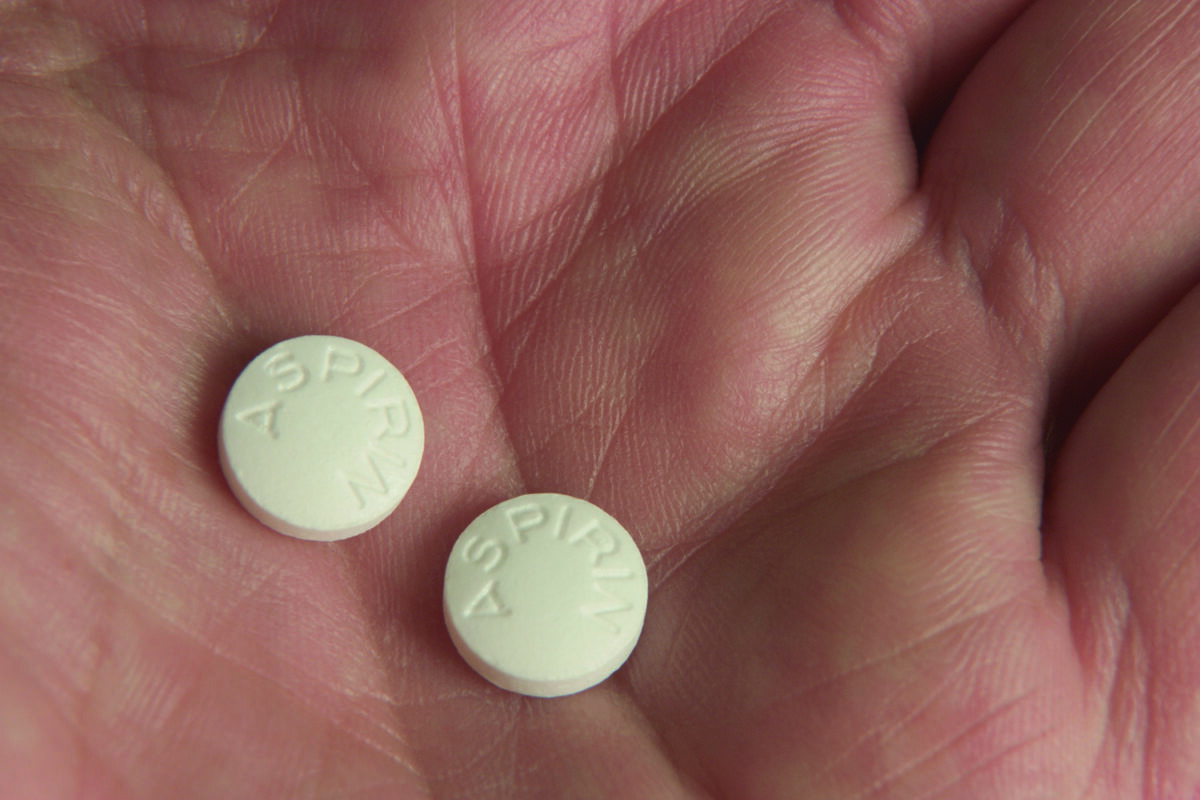
Low-dose aspirin therapy generally refers to taking 75 to 100 milligrams (mg) of the drug each day. In the United States, “baby aspirin” fulfills these criteria, with a dose of 81 mg per pill. It is important to adhere to that aspirin dosage if your doctor has recommended you take aspirin for heart attack prevention or aspirin to prevent stroke.
Keep in mind that aspirin may be an ingredient in other over-the-counter medications, including headache remedies and Alka-Seltzer. Check labels to ensure you are not inadvertently taking more than 81 mg per day. Aspirin may be listed on a medication label as acetylsalicylic acid, ASA, or salicylate.
What Is Low-Dose Aspirin Used For?
Daily aspirin therapy is no longer recommended for primary prevention, but it is recommended as secondary prevention for some people. So, what do these terms mean and who should take low-dose aspirin?
Primary prevention refers to a drug or other intervention that prevents a first occurrence of a serious medical issue. In 2016, the U.S. Preventive Services Task Force (USPSTF), an independent panel of health experts that evaluate the effectiveness of preventive healthcare, recommended daily aspirin therapy for primary prevention in people ages 50 to 59 who had a 10% or greater 10-year risk of cardiovascular disease and were not at risk for bleeding while taking the drug. “For people ages 60 and up, individualized decision-making was recommended based on their specific risk factors,” Dr. Darrow notes.
This advice was revised in 2022. At that time, the panel issued guidance recommending against initiating low-dose aspirin for the primary prevention of cardiovascular disease in adults ages 60 and older who had not been diagnosed with the condition. In those ages 40 to 59 with a 10% or greater 10-year risk of cardiovascular disease, the USPSTF recommended that the decision to start daily aspirin therapy should be individualized. The American Heart Association (AHA) and American College of Cardiology (ACC) advise a similar approach.
The recommendations for secondary prevention are different. “Secondary prevention is defined as an intervention that prevents a subsequent serious medical event in a person who has already suffered that event,” Dr. Darrow explains. “A previous heart attack or stroke, along with known cardiovascular disease, raise the risk of subsequent cardiac events.”
While the USPSTF has not made a recommendation about secondary prevention, the AHA and ACC state that low-dose aspirin benefits outweigh its risks when the drug is used for secondary prevention; however, some caveats still apply (see below).
Who Should Take Low-Dose Aspirin?
The guidance on daily aspirin therapy for secondary prevention applies to people who have suffered a heart attack or have been diagnosed with cardiovascular disease. But what qualifies as cardiovascular disease?
Significant narrowing of a major coronary artery (the arteries that supply the heart muscle with blood) does, along with angina, which manifests as pain in the heart due to narrowed or blocked coronary arteries. People who have undergone angioplasty (a catheter-based procedure to open up a blocked artery) and/or have had a stent (a tiny mesh tube) placed in one of their coronary arteries to keep it open also typically are advised to take daily aspirin therapy for secondary prevention. The same advice applies to individuals with peripheral artery disease (narrowed or blocked arteries in their extremities).
Daily aspirin therapy for secondary prevention also may be recommended for people who have suffered an ischemic stroke (the type caused by a blood clot), a transient ischemic attack (a temporary blockage of blood flow in the brain that also is known as a “mini-stroke”), and those who have been diagnosed with narrowing of the carotid arteries (the main arteries carrying blood to the head and brain) or have undergone surgical procedures of the carotid arteries.
Who Should Not Take Low-Dose Aspirin?
Even if you meet the criteria for secondary prevention, your doctor may recommend against taking daily aspirin therapy if you have an increased risk of bleeding. This recommendation applies to people who have or have previously had stomach ulcers and those who have ever experienced gastrointestinal bleeding. People who have suffered a hemorrhagic stroke (the type caused by bleeding) or are at high risk for one and those who have uncontrolled high blood pressure also may be advised to avoid low-dose aspirin. Low-dose aspirin risks also may be too great for people with kidney or liver disease and those who consume large amounts of alcohol.
Dr. Darrow notes that clinicians always weigh a person’s individual risk for a severe cardiac event. “If your risk is high, it may well outweigh the potential harms that accompany daily aspirin therapy,” he says. “In these cases, a proton-pump inhibitor, or PPI, will be prescribed to reduce the risk of gastrointestinal bleeding.” PPIs mitigate bleeding risk by reducing acid production in the stomach. Dr. Darrow adds that a person also likely will be tested for Helicobacter pylori (H. pylori), a bacterium that contributes to stomach ulcers. “If they test positive, a course of antibiotics can eliminate it and reduce the risk of stomach irritation,” he says.
Benefits Of Low-Dose Aspirin
Blood clots form when platelets—cell fragments that circulate within the blood—clump together (a process referred to as aggregation). “Antiplatelet agents like aspirin work by making platelets less likely to aggregate,” Dr. Darrow explains. “Aspirin achieves this effect by deactivating cyclooxygenase-1 (COX-1), an enzyme that helps platelets bind together. Without aspirin in the equation, a clot might cause a blockage that results in a heart attack, stroke, severe leg pain, and lack of circulation in the leg that could result in amputation.”
Risks and Side Effects of Low-Dose Aspirin
As noted previously, low-dose aspirin risks may outweigh the drug’s benefits for some older adults. These risks include:
- Bleeding due to the drug’s antiplatelet effects. Bleeding may occur in the gastrointestinal tract or brain. You also may experience nosebleeds and more prolonged bleeding from cuts. Easy bruising also is a side effect.
- Stomach irritation or ulcers due to deactivation of COX-1. “The enzyme creates prostaglandins, chemical messengers that play a role in the production of the mucus that coats and protects the stomach lining,” Dr. Darrow observes. “Without prostaglandins, this protective coating thins, exposing delicate stomach tissue to corrosive stomach acid.”
- Allergic reactions. It is rare for an older adult to develop a new allergy to aspirin, but an existing allergy may worsen in older age.
- Drug interactions. Aspirin’s risk of bleeding increases if it is taken alongside other antiplatelet agents, anticoagulants, nonsteroidal anti-inflammatory drugs like ibuprofen (Advil, Motrin) and naproxen (Aleve, Naprosyn), and corticosteroids such as prednisone (Rayos, Sterapred). “If your doctor suggests initiating daily aspirin therapy, be sure they are fully aware of any other medications you use,” Dr. Darrow says. “It is possible you may be advised to go ahead and take aspirin, too, but if so, you will be closely monitored. Also, tell your doctor about any dietary supplements you take, since these often interact with conventional drugs.”
Another safety concern to keep in mind is that aspirin can cause a very serious condition called Reye’s syndrome in children under 19. “As with other drugs you take, you should store aspirin well out of reach of any grandchildren,” Dr. Darrow warns.
What Is the Usual Dose?
Low-dose aspirin specifically refers to 81 mg per day, which is a much lower dose than that contained in full-strength aspirin (325 mg). The latter is not recommended for daily aspirin therapy, and it is inadvisable to double up on your recommended dose in the hope of deriving a greater benefit from it.
“Long-running studies have shown that there is no difference in the rate of heart attacks, strokes, or death between people taking low-dose aspirin and those taking full-strength aspirin,” Dr. Darrow says. He adds, though, that this advice changes if you develop sudden chest pain, accompanied by a sensation of pressure or squeezing in your chest.
“These symptoms can signal a heart attack and warrant calling 911 and taking a full dose of aspirin or four baby aspirin,” he says. “Chew the medication instead of swallowing it, to help ensure that its antiplatelet effect takes swift action against any clots.”
When to Talk to a Doctor
A 2025 study suggested that one in six older Americans takes daily aspirin therapy to protect their cardiovascular health even though they have no history of cardiovascular issues and should not be taking the medication for primary prevention. About one-quarter of them were taking the drug without having consulted their doctor.
“If you are taking daily low-dose aspirin without having informed your doctor, make an appointment so that you can clarify whether the drug is right for you,” Dr. Darrow urges.
Seek immediate medical attention if you are taking daily aspirin therapy and experience any symptoms that may indicate bleeding—including unusual bruising, bleeding that won’t stop, vomiting blood, and passing black or bloody stools—or signs of a possible hemorrhagic stroke, which may include sudden weakness or numbness on one side of your body, loss of balance, slurred speech, drooping on one side of your face, and confusion.