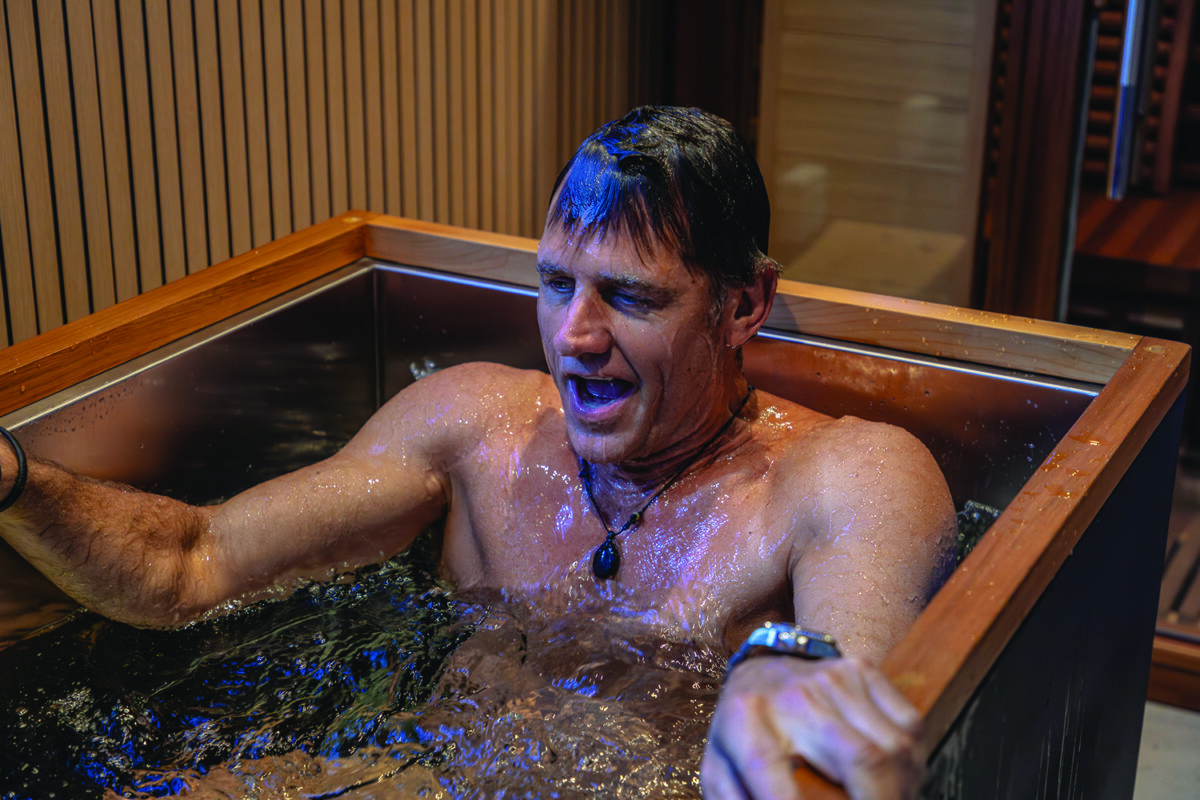
Submerging your body in cold water might seem like a nightmare, but the shock of taking a cold plunge might have benefits including inflammation reduction and improved mood and mental clarity.
“A cold plunge is a deliberate cold exposure,” says Cleveland Clinic physical therapist Mark Lundblad, PT, DPT. “There can be other ways of obtaining that besides water immersion, such as cold showers and exposure to environmental cold outside.”
Lundblad takes his own advice and intentionally takes 90% of his own showers cold, in addition to participating in group cold plunge events.
What Is a Cold Plunge?
“A cold plunge is a brief cold-water immersion of the body, typically around 45 to 59 degrees Fahrenheit,” Lundblad explains.
Ice baths are often colder, but even water temperatures in the 60s can feel cold enough to have the benefits of a cold plunge. Special cold plunge pools can be expensive, so Lundblad encourages people to think about simpler ways to get a cold plunge or cold exposure. Cold showers, baths and dips in cold lakes or the ocean can all be less expensive and provide the brief shock of cold water to obtain benefits from a cold plunge.
How Does a Cold Plunge Work?
Cold exposure activates the sympathetic nervous system and neurochemical cascades, affecting circulation and hormones, which can lead to increased alertness, pain modulation, reduced swelling, better sleep, and improved sense of well-being.
Physiologically, cold exposure is a form of hormesis, a low‑dose, controlled stress that triggers cellular repair processes, similar to exercise, heat exposure, and some forms of fasting.
“We often live very comfortable lives in today’s society,” Lundblad says. “Our temperature is controlled most of the time with heat and air conditioning. The body actually benefits from a little stress to trigger cellular repairs through exercise and brief exposures to more extreme temperatures.”
Potential Cold Plunge Benefits
After exercising, cold plunges offer muscle recovery and inflammation reduction. “Cold plunges have restorative properties for the individuals who are training. There can be hormonal and circulatory responses that are helpful, including reducing swelling, pain, and muscle soreness,” Lundblad adds.
A February 2026 study published in Frontiers in Sports and Active Living systematically evaluated the effect of cold-water immersion applied to different parts of the body. The researchers identified 30 high-quality randomized clinical trials comparing cold-water immersion to seated passive rest.
Cold-water immersion was associated with biochemical and subjective recovery, and muscle strength and explosive power were immediately reduced. The study found no difference between the effects of whole-body immersion and partial immersion, so the authors recommend partial immersion to balance efficacy and safety.
Lundblad offers a word of caution for those trying to build muscle: “If somebody’s main goal is strength, and particularly building big muscles, doing a cold plunge within two hours of training that’s focused on building strength or big muscles could blunt muscle building.” For endurance exercise like running or biking, a cold plunge can follow the training at any time.
Studies also suggest improved immune system support, mood and mental clarity, and maybe even fewer missed days of work with cold-water immersion. In addition, Danish researchers found deliberate cold exposures caused small increases in brown fat, a metabolically active fat that is beneficial for several body processes, including keeping your organs warm. (This fat is different from subcutaneous fat, the stuff many of us carry around our bellies that is typically yellow and doesn’t have the benefits of brown fat.)
Lundblad also experiences social benefits from group cold plunges to raise money for good causes. Organized group cold plunges can be a good time and offer camaraderie as you plunge together in a cold lake.
“Any time I convinced somebody to participate in one of our plunges that we do as a group, we get more and more people every year, and nobody that’s ever done it didn’t do it again,” Lundblad says.
Risks and Safety Considerations
Lundblad recommends that anyone who is considering starting cold plunges talk to their healthcare provider first. People who could be at higher risk of complications from a cold plunge include those with a history of cardiac disease, poor circulation, or Raynaud’s disease; people with decreased sensation; anybody with a history of cold-related injury like hypothermia or frostbite; and those with a rare cold allergy. The risks may outweigh potential benefits for these groups.
The biggest risk associated with a cold plunge is hypothermia. When the body spends too long exposed to the cold, it can no longer regulate body temperature, which can cause death. For this reason, cold plunges should be brief, lasting only a minute or two. Brief cold plunges can also cause discomfort.
“If you find it a little unpleasant, your breathing might be impacted because that’s where you see the stress, but it shouldn’t be so impacted where you feel it’s difficult to breathe and you don’t feel safe,” Lundblad cautions.
Natural bodies of water offer some hazards, such as currents and waves. Lakes and rivers can have hidden dangers. And entering water alone always presents a risk.
Lundblad’s first suggestion for beginners to cold plunge is, “Don’t be competitive. It should be shorter duration. A little bit of shock is what drives the benefits.” A minute or two in cold water is plenty.
For many people, cold plunges can be a good addition to otherwise healthy habits. “People need to be dialing into their diet, their sleep, exercise, and hydration first,” Lundblad suggests.
How to Do a Cold Plunge Safely
Follow these tips for how to perform a cold plunge:
- Where to go? Find a safe, cold, source of water—it could be a specially designed cold plunge pool, a backyard pool, a lake, or a bathtub.
- How far to go? Immerse your body as far as you want. If you have pain in your knees, for instance, you could get into the water until it’s just above your knees. Others will submerge fully for the full shock of cold.
- How cold? A typical cold plunge is done at temperatures of 45 to 59 degrees Fahrenheit, but colder or warmer water is possible. Starting warmer is easier. Even temperatures in the 60s feel quite cold for most people.
- How long? Start with just a minute to avoid hypothermia risks.
- With whom? Do not cold plunge
Cold Plunge vs. Other Recovery Methods
Other intentional cold exposures from cold outdoor air, ice packs, or cold showers can have similar benefits. Some people combine heat exposures, like from a sauna or hot tub, with cold plunges—a practice sometimes called a contrast bath that alternates hot and cold.
“For people alternating between hot and cold, research suggests ending with the cold,” Lundblad says. “That forces the body to warm itself and supports metabolic changes.”