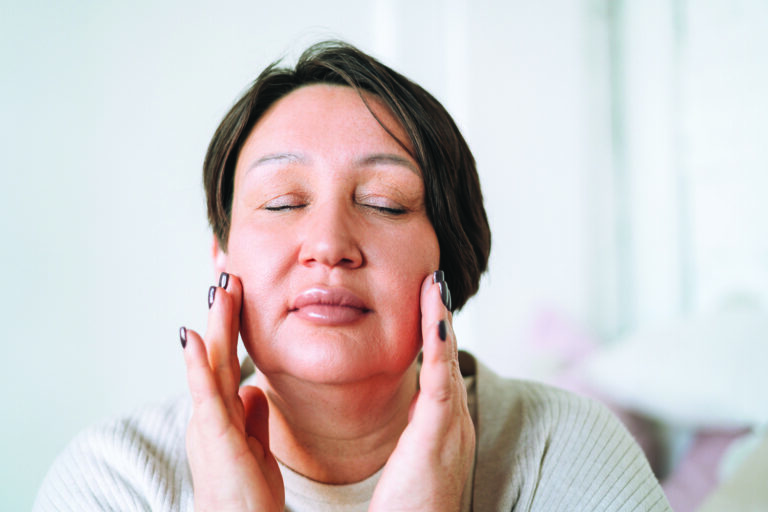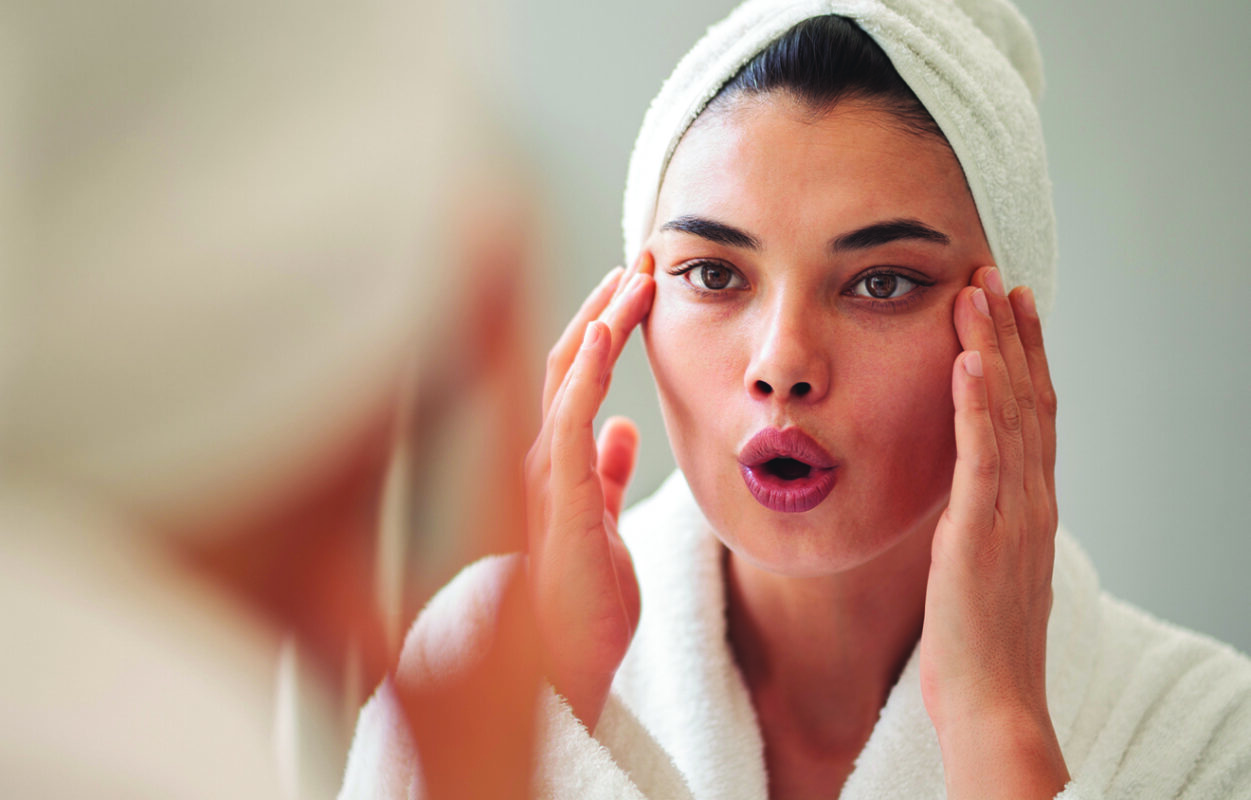
Facial yoga, face exercises, and other facial workouts have become popular as low-cost, at-home alternatives to cosmetic treatments. The idea is simple: Just as exercising your body can strengthen muscles, exercising the muscles in your face might improve tone, lift sagging areas, or smooth wrinkles.
But do facial exercises work? The answer is complicated. There is some evidence that certain facial exercises may modestly improve cheek fullness, but research is limited, and experts disagree about whether repeatedly moving facial muscles could actually contribute to wrinkles.
“It’s more realistic to think of these practices as a way to gently work with movement awareness and muscle tension, rather than as a replacement for medical or cosmetic treatments,” says Ales Ulishchenko, MD, PhD, founder of the MindBodyFace Academy.
What Are Facial Exercises?
Facial exercises are movements designed to deliberately contract, stretch, or relax muscles in the face, neck, and jaw. They can include cheek exercises, exaggerated facial expressions, resistance exercises, and movements intended to target areas such as the jawline or forehead. Some people hope to build facial muscle tone or make the cheeks look fuller, while others use face yoga exercises in an attempt to slim the face, define the jawline, or reduce wrinkles. Unlike injectable treatments or procedures performed by a medical professional, facial muscle exercises can generally be performed at home without special equipment.
Do Facial Exercises Actually Work?
There isn’t enough evidence to say that facial exercises reliably rejuvenate the face or erase wrinkles. The most frequently cited study, published in 2018, found that middle-aged women who performed facial exercises for 30 minutes daily or every other day for 20 weeks experienced a modest increase in fullness in their upper and lower cheeks. Independent raters also perceived the participants as looking younger afterward. But the study was very small: Only 16 participants completed it. That makes it difficult to know whether the findings would apply to a broader population or whether similar results would occur in other parts of the face.
“It’s still quite limited, so it would be misleading and inaccurate to promise guaranteed rejuvenation or wrinkle-smoothing,” Dr. Ulishchenko says.
Potential Benefits of Facial Exercises
That doesn’t necessarily mean facial exercises are useless. Some research and clinical experience suggest they may have modest benefits.
- They may improve cheek fullness. The 2018 study cited by Dr. Ulishchenko found a modest increase in upper- and lower-cheek fullness after a 20-week facial exercise program. However, the small number of participants means the finding needs to be interpreted cautiously.
- They may increase circulation and reduce puffiness. Aalaa Ahmad, MSN, APRN, FNP-BC, a board-certified nurse practitioner at Loveland Medical Spa in Aventura, Fla., says some people may notice a different type of benefit: “The legitimate benefit people often experience is enhanced blood flow and lymphatic drainage, which reduces puffiness and brings vital oxygen and nutrients to skin cells.”
- They’re inexpensive and convenient. One practical advantage of a facial exercise routine is that it can be done at home without the expense of professional cosmetic treatments or specialized equipment. That makes facial exercises accessible to people who simply want to experiment with a gentle routine. Still, a low-cost treatment isn’t necessarily an effective one. The evidence doesn’t show that facial exercises can reliably reshape every area that people commonly want to change.
Limitations and Risks to Know
One concern is that repetitive facial movements could contribute to lines rather than eliminate them.
Dr. Ahmad says continuous facial muscle movement “can accelerate the formation of static wrinkles by etching lines into skin that repeatedly folds.”
Aging skin loses collagen and elastin and becomes less elastic. The repeated movements involved in facial exercises can force skin to repeatedly move back and forth and may weaken existing elastin. As a result, they may create new wrinkles or deepen existing ones.
There are other potential downsides. Dr. Ulishchenko says strong skin pulling, aggressive rubbing, and repeated grimacing can cause temporary irritation, particularly in people with sensitive skin, acne, rosacea, or eczema. Exercises involving clenching, resistance or very wide mouth opening may also aggravate jaw symptoms.
“You have to be careful with exercises that involve clenching the teeth, working against resistance, or opening the mouth wide because these can aggravate pain, muscle fatigue, clicking, or other TMJ [temporomandibular joint] symptoms,” he says. Patients can experience facial muscle stiffness, jaw pain, and headaches, while frequent touching of the skin may aggravate acne or cause mild irritation.
How to Do Facial Exercises Safely
If you want to try facial exercises, experts recommend taking a gentle approach.
Dr. Ulishchenko advises starting with short, calm sessions and paying attention to how your skin, muscles and jaw feel afterward. Exercises shouldn’t cause pain, require heavy pressure, leave visible creases in the skin or trigger jaw clicking or tension. “Movements shouldn’t cause pain,” he says. “If they do, then stop.” He recommends focusing on relaxing the chewing muscles, gentle neck and posture work, and controlled cheek exercises rather than forceful jawline training.
Dr. Ahmad suggests “gentle, upward gliding motions on the mid-face and cheeks with a slippery facial oil to avoid tugging or deeply creasing the skin.”
How Often Should You Do Facial Exercises?
There isn’t enough evidence to establish an ideal frequency for facial rejuvenation. The 2018 study involved 30-minute sessions every day or every other day for 20 weeks, but that shouldn’t be interpreted as proof that everyone needs to follow that schedule, or that longer or more frequent workouts are better.
“If someone has jaw pain, limited mouth opening, joint locking, teeth grinding, or frequent headaches, it’s worth talking to a dentist or TMJ specialist before starting a program,” Dr. Ulishchenko says.
Facial Exercises to Try
Because evidence is limited, there isn’t a particular facial exercise routine that has been proven to lift or reshape every part of the face. If you decide to experiment, stick with gentle movements rather than forceful or repetitive ones.
Facial Exercises for Cheeks
Cheek exercises have the strongest preliminary evidence, because the small 2018 study found modest improvements in upper- and lower-cheek fullness. Controlled cheek movements may be reasonable to try, but don’t assume that more repetitions will produce greater results.
Jawline or neck exercises
There isn’t sufficient evidence that facial exercises can meaningfully change the jawline or jowls. Exercises that involve clenching, resistance, or exaggerated mouth movements may also cause jaw discomfort. If your goal is improving jaw function or treating pain rather than changing your appearance, Dr. Ulishchenko recommends getting an individual evaluation instead of following a generic online routine.
Forehead exercises
There’s no strong evidence that facial exercises can erase existing forehead wrinkles. Because repeated muscle movement contributes to expression lines, aggressive forehead exercises may not be the best strategy if wrinkle reduction is your primary goal.
Eye-area exercises
Likewise, there isn’t enough evidence to show that facial exercises can meaningfully change the eyelids or smooth wrinkles around the eyes.
The bottom line
Facial exercises may provide modest improvements in cheek fullness or muscle tone for some people, but the evidence is too limited to promise a younger-looking face. If you try them, keep movements gentle, stop if they cause pain or irritation, and don’t assume that an intense facial workout will deliver better results. For more predictable changes in wrinkles, skin laxity or facial volume, discuss evidence-based options with a qualified medical professional.