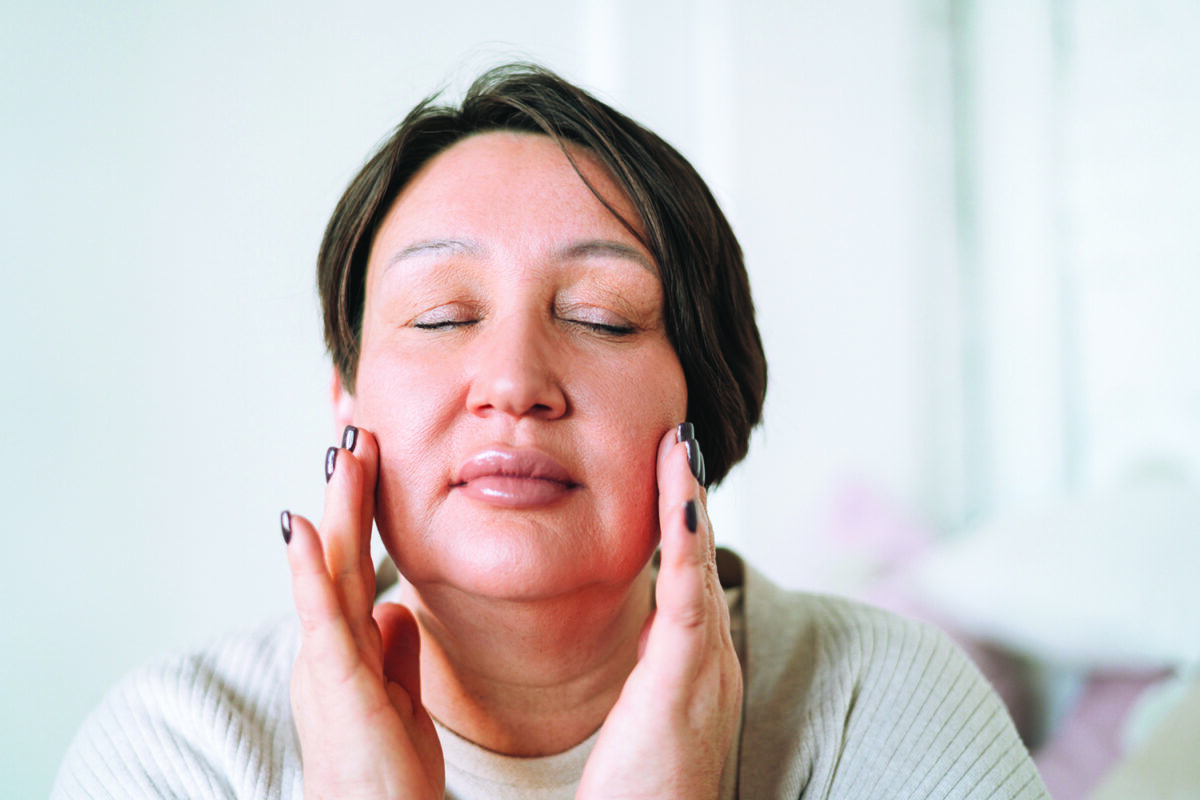
If you have fat accumulation on your cheeks, chin, or neck, you might be wondering how to lose face fat. You aren’t alone: Many people have this same question.
According to board-certified plastic surgeon Mark H. Schwartz, MD, people wanting to lose face fat are usually seeking a more “contoured, streamlined appearance to their face.”
Read on as Dr. Schwartz discusses reasons behind extra fat in the face, options for how to lose face fat, and when medical interventions might be an option.
Understanding Face Fat
The causes of fat accumulation in the face are multifactorial, Dr. Schwartz says. Your overall body weight has an impact on how much fat accumulates in your face. Typically, people who weigh more are going to have more facial fat.
Sometimes your face might appear puffier if you are retaining water or taking medications like corticosteroids, which can cause redistribution of fat cells and water retention. Hypothyroidism (an underactive thyroid gland) also can cause facial swelling.
Furthermore, genetics plays an important role in terms of how fat is distributed in the body. “There are certain people who are just born with more fat cells in certain areas of their face, or their face in general, and it can really have nothing to do with your overall body weight or your body mass index,” Dr. Schwartz explains.
Losing weight helps to slim your face at the same time it slims your body. But there are some cases where it falls short. “Some people are ‘blessed’ with more fatty tissue in their submental region under their chin or their cheeks, and no matter how much weight they lose, they really can’t change it,” Dr. Schwartz says.
As he points out, it’s important to consider how television, films, and social media feed you an “ideal” of what a beautiful face should look like, and these perfectly chiseled faces aren’t always achievable. He also emphasizes that facial fat isn’t always a bad thing.
“Something a lot of people don’t realize is that facial fat is an important aspect of youth,” he says. “If you close your eyes and think about what a really old person looks like, they’re volume-deficient, and it’s not just wrinkles, fine lines, and loose skin. I’ve come to see that volume actually equals youth.”
Can You Target Fat Loss in the Face?
If you are looking for nonmedical ways of losing face fat, there’s no real way to target facial fat on its own. And, there’s no such thing as “spot reduction” when it comes to how to lose face fat. Instead, you need to take a full-body approach.
Weight loss is the “single best noninvasive treatment” for shedding fat anywhere in the body, including the face, Dr. Schwartz says. Experts typically recommend a slow, steady weight loss of about 1 or 2 pounds a week, focusing on a healthy diet, calorie reduction, and exercise.
Of course, there are some exceptions to this rule. If you are experiencing edema (water retention), you might be able to reduce facial puffiness by managing your medications, changing your diet, or addressing a health issue. But this isn’t the same as losing fat in your face.
Effective Strategies to Lose Face Fat
In most cases, the best strategies for losing face fat are the lifestyle changes you are probably already familiar with. “A healthy, balanced diet and a good exercise regimen are important for anyone,” Dr. Schwartz says, and they can be especially helpful when it comes to reducing facial fat. Here’s a look at effective strategies for how to lose face fat.
A Balanced Diet for Reducing Face Fat
“I think that diet is really a superb way to start,” Dr. Schwartz says. There isn’t one particular eating pattern to reduce face fat, and there isn’t one best food for a slimmer face. Diets that encourage weight loss are what can make a difference in your overall body weight and, in turn, slim your face.
A 2021 study linked higher consumption of ultraprocessed foods with greater weight gain. As such, limit your intake or avoid soft drinks, hot dogs, premade frozen meals, chips and crackers, most commercial breads, and other ultraprocessed foods. Instead, focus on consuming fruits, vegetables, lean protein sources, and whole grains.
The Role of Cardio and Strength Training
Is cardio for facial fat loss a thing? Well, research has found that engaging in at least 150 minutes of aerobic exercise per week can reduce your waist circumference and overall body fat, including fat in your face. While strength training won’t necessarily target overall body fat, there’s evidence that losing fat in your belly can enhance your overall metabolic health, which may aid in weight loss.
Facial Exercises for Face Fat: Do They Work?
There’s some limited evidence that facial exercises can help with issues like droopy, aging faces, but not necessarily facial fat. In some cases, a gentle technique called lymphatic massage can move excess fluid buildup and reduce facial swelling. “If you have swelling from a procedure, sometimes lymphatic massage can temporarily help,” Dr. Schwartz says.
Hydration and Reducing Puffiness
Staying hydrated is important for your overall health, and studies suggest a link between drinking more water and weight loss. However, research has found that the weight loss may be due to replacing high-calorie beverages with water.
In terms of hydration and face bloating, your body retains more fluid when you’re dehydrated, which may contribute to facial puffiness. So, be sure to stay well hydrated, ideally by drinking water.
Limiting Sodium and Alcohol Intake
Sodium intake and facial swelling are linked because increased sodium consumption can cause you to retain fluids, which for some people may cause facial swelling. You are most likely to see that swelling show up as puffiness around your eyelids.
There’s also a connection between alcohol and facial bloating. In particular, heavy alcohol drinkers are more likely to be overweight, which can cause the face to accumulate more fat. Reducing alcohol consumption to a more moderate level can be helpful.
Sleep and Stress Management
Sleep and face fat are sometimes connected. People who don’t get enough sleep or who have poor-quality sleep often end up snacking more often and are more likely to crave foods high in fat and carbohydrates, which can cause weight gain and facial fat accumulation.
There’s a similar relationship between stress and weight gain. “Stress eating” is linked to higher weight gain.
Additional Tips for a Slimmer Face
When it comes to losing face fat, you’ll probably see a lot of “quick fix” ideas out there for how to do it. It’s important to use discretion, as many of the products on the market that promise face fat loss aren’t backed by medical evidence.
Take skincare products, for example. “If I went to Amazon now, I could look up 20 creams or lotions that would purport to help you lose face fat,” Dr. Schwartz says. “But there’s really nothing proven topically.”
Additionally, as is the case with facial exercises for face fat, there just isn’t sufficient research to support practicing posture exercises to slim your face. Your best bet is to talk to your healthcare provider about whether improving your posture might improve your face’s appearance.
When to Consider Medical Advice
If you’ve tried to tackle facial fat loss through lifestyle changes—and weight loss specifically—but you still aren’t satisfied, it may be time to seek medical advice.
Your doctor can discuss whether certain medications you’re taking or underlying medical conditions might be increasing facial fat or swelling. Sometimes, cosmetic procedures for face fat become options. Dr. Schwartz points to both noninvasive and more invasive procedures to consider.
Noninvasive Procedures
Botox can be injected into your masseter muscles, which are located at the side of the jaw and are important for jaw closing and chewing. “When you clench your teeth, some people’s muscle bulges on the side of their jawline, and it can give them the appearance of looking bulky in those areas,” Dr. Schwartz says. “Botox injections can help to slim that part of the face.”
Kybella is another option, he explains: “It’s kind of a fancy name for deoxycholic acid, which is basically the product found in soap. It can be injected in the area underneath your chin to help reduce some of the fat cells.”
Invasive Procedures
“For the fat that’s in your chin, my go-to is liposuction,” Dr. Schwartz says. “Liposuction is a surgical procedure where, through a very small incision, a very thin metal tube is placed underneath the surface, and the fat is literally suctioned out.”
Buccal fat pad removal is another option. “Buccal fat is a protruding fat pocket that makes the lower part of your face look very full, and removing that through a small incision inside the mouth can contour this area very well,” Dr. Schwartz describes.
Finally, facelifts may be indicated, primarily for aging adults who are witnessing fat and facial volume descending to the lower part of their face. In these procedures, “some of the facial fat is repositioned to a flattering area,” Dr. Schwartz explains.
The Bottom Line
Figuring out how to lose face fat isn’t totally straightforward, because you can’t target facial fat on its own. Instead, you have to reduce your overall weight and, in some cases, address other contributing factors. But it’s also important to consider medical causes of facial fat accumulation, and keep in mind that sometimes facial fat is genetic and not entirely within your control.
Above all, remember that everyone is different, and while it’s OK to want to decrease facial fat, it’s not a requirement for looking attractive.