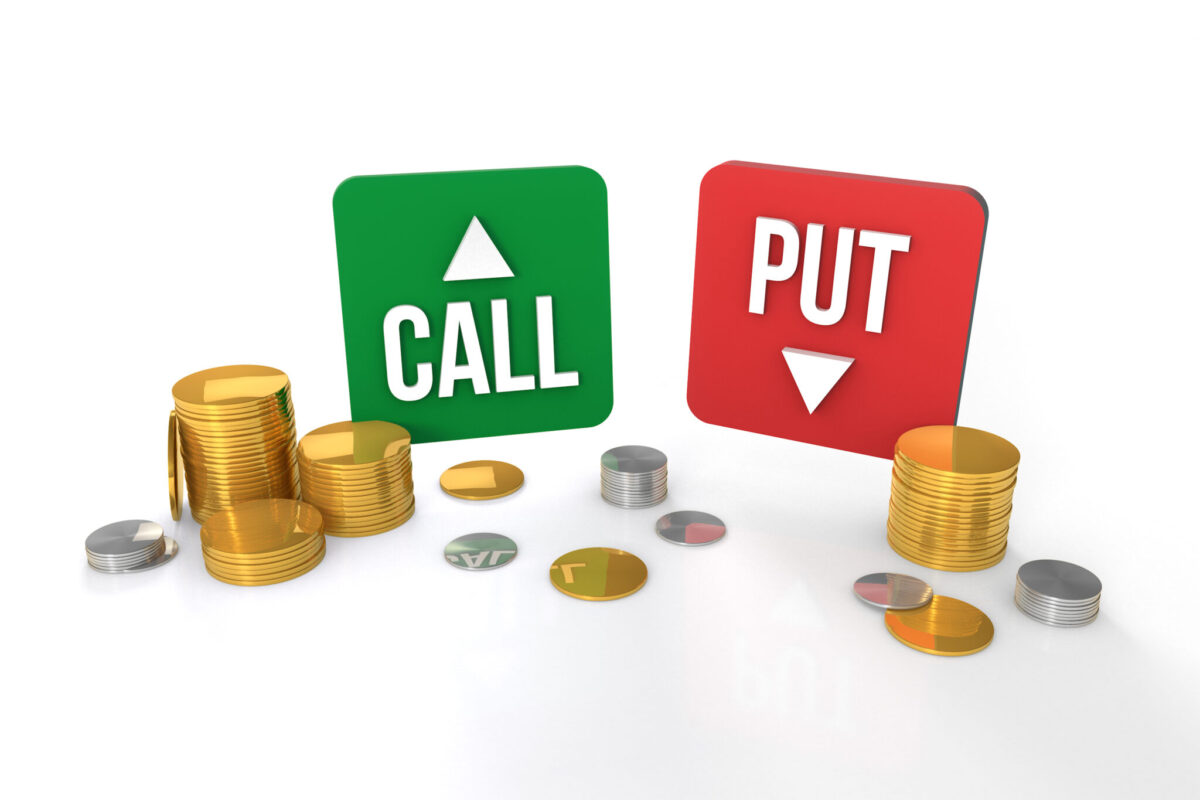
These days, you hear a lot about “call options” and “put options.” But are there differences? We asked Neena Mishra, CFA, research director for ETFs at Zacks Investment Research, to explain about call vs. put options, popular call and put option strategies, and why it’s a good idea to learn as much as you can before diving into this hot—but potentially risky—area of investing.
“Options are becoming very popular,” says Mishra. In fact, according to the leading financial exchange operator Cboe Global Markets, an average of 61 million options contracts were traded each day in 2025—that’s the sixth consecutive annual record.
What Are Options?
“Options are contracts that give an investor the right but not the obligation to buy or sell a certain stock in the future at a price that is decided today,” Mishra explains. But how do options work?
Example #1: Imagine a dream world in which you could purchase or sell a stock not at its current market value but at a price you found attractive last week or last month. Say a stock costs $80 per share today. Wouldn’t it be great if 30 days from now, you could buy 100 shares at today’s price even if the stock has shot up to $100 per share?
Example #2: Or flip it around. Imagine you’re holding 100 shares of that same stock, but you think it’s on the way down. Wouldn’t you like to be able to sell your shares two months from now for $20 more than they’re trading for at that time? Other sellers would be getting only $60 per share, but you would have an $80 share price locked in.
These things are possible…but they come with a cost. When you enter an options contract, you pay a fee called a premium that will detract somewhat from your gains.
Each contract also contains a strike price, the price of the underlying stock at which the holder may buy or sell it. For the first example above, the strike price is $100 per share…for the second, it would be $80 per share. And every contract has an expiration date after which the investor loses the right to buy or sell.
Options themselves have value and can be sold. The value of the option contract diminishes as the expiration date approaches. “Often, investors don’t actually exercise their options,” Mishra says. When a contract reaches expiration, if the price of the underlying stock has moved in your favor, you may simply sell the contract and book your profit without actually purchasing or selling the stock.
What Is a Call Option?
A call is an option to purchase a stock at a specified price…and it can act as a form of downside protection.
Example: You pay a premium of $150 to purchase 200 shares of a stock 90 days from now at $30 per share, but over the course of that 90-day contract, the share price falls to $25 per share. You can simply let the option expire and lose only the $150 premium. If you’d bought the shares outright for $6,000, your position’s value would have fallen to $5,000—a $1,000 loss. But because you purchased the call option, you’ve lost only the cost of the premium.
What Is a Put Option?
In contrast to a call, a put is the right to sell a stock for a specified price. “A put option is used by investors when they’re bearish on a stock,” Mishra says. “You’re speculating that the price will decline in the future.”
Example: You own 500 shares of XYZ company. Shares are currently sitting at $20. You’re worried that after XYZ releases its earnings report next month, the stock will lose value. For a $100 premium, you purchase a 30-day option to sell your 500 shares at $20 apiece.
Scenario #1: Contrary to your fears, the stock price rises to $22, so you let the contract expire. Thanks to the rise in stock price, your position’s value has increased by $1,000—to $11,000. Result: You lose the $100 premium, but you’re still $900 ahead…and at least you slept well during the interim.
Scenario #2: XYZ stock plummets, and by day 30, is worth only $16 per share—$8,000. Because you purchased the put option, you may now sell your position for $10,000, beating the market by $2,000 ($1,900 once you subtract the premium).
Call vs. Put Options: Key Differences
It can be difficult to keep straight the differences between call and put options. The following table should help…
| Call Option | Put Option | |
| Investor expects… | Stock price to rise | Stock price to fall |
| Gives the holder the right to… | Buy stock at the strike price | Sell stock at the strike price |
| Profits if… | Market rises above strike price | Market falls below strike price |
| Example | Right to buy at $50 when stock rises to $60 | Right to sell at $50 when stock price falls to $0 |
| Maximum loss for buyer | Premium paid | Premium paid |
| Potential gain | Theoretically unlimited | Limited (stock can only fall to zero) |
Common Strategies Using Calls and Puts
“Investors often use options to amplify their stock positions,” Mishra says. In a strategy known as buying calls for growth, the investor puts up only a modest amount of money in the form of a premium and, if the bet pays off, makes considerably more than if he/she had simply bought shares in the stock.
In a covered call, an investor who already owns a stock sells a call option on those shares in exchange for a premium. Example: A stock is trading at $200 per share, and you think it’s unlikely to rise above $220 over the next month. You sell a call option with a $220 strike price. If the stock stays below $220, the option is worthless and expires and you keep both the stock and the premium collected. If the stock rises above $220, the shares may be “called away,” meaning that you must sell them at the strike price. But you’ll still keep the premium. Investors often use covered calls to generate income and provide a modest cushion against small price declines.
Puts may be used for two very different purposes—either as protection (insurance for investors who already own stock)…or as speculation (a bet that a stock will fall).
Risks and Considerations
“One benefit of options is that it’s like using leverage,” Mishra says. “You can use a small dollar amount to buy a bigger exposure to a stock.” Indeed, she says, even the once ho-hum world of exchange-traded funds (ETFs) now includes options that let you magnify your gains by one-and-a-half or two times.
But the potential risks of call and put options are serious. Options can magnify both gains and losses. In some cases, downside risk is unlimited, meaning that you could lose much more than your original investment.
Despite the popularity of options, the entities that gain the most from them are the market makers and exchanges, not investors. Even if an options contract looked superior to a stock purchase, buying the stock could provide a better total return after you figure in costs.
Options are best for people with high risk tolerance who have done their homework. If you’re feeling uncertain, talk to an advisor about when to use call or put options. And remember that the most effective way to manage your wealth is still to invest long-term.