Most women who are diagnosed with breast cancer initially are treated surgically with lumpectomy (surgery to remove the tumor only) or mastectomy, which removes the entire breast.
Both surgical options can be lifesaving, but they exert an emotional toll, explains Hani Sbitany, MD, who specializes in breast reconstruction after mastectomy.
“Surgery that alters the size and shape of the breast may impact a person’s body image in a way that negatively affects their confidence and their peace of mind,” says Dr. Sbitany, a Professor of Plastic and Reconstructive Surgery at the Icahn School of Medicine at Mount Sinai. “Even though they are relieved to have their cancer treated, it is common for women to grieve the loss of their breasts.”
Dr. Sbitany notes that reconstruction can make a significant difference in a patient’s self-perception and emotional recovery after breast cancer surgery but emphasizes that is vital to have realistic expectations. “It also is important to keep in mind that there will be some scarring on the breast, although surgical advances can help ensure that this is minimal,” he adds.
What Is Breast Reconstruction After Mastectomy?
Both lumpectomy and mastectomy remove breast tissue. Breast reconstruction rebuilds the breast, either through the implantation of a prosthesis or through an approach that uses tissue from elsewhere in the body (known as autologous flap reconstruction). “The goal is to restore symmetry between the breasts if only one breast was operated on or restore both breasts with symmetry if a bilateral mastectomy was performed,” Dr. Sbitany says. “Surgeons aim to reconstruct breasts that look and feel as natural as possible.”
Most women who undergo breast cancer surgery are suitable candidates for reconstruction, although some health conditions—including diabetes, heart disease, and obesity—may raise the risk of slower healing or complications afterward. Smoking also may impede healing, so women who wish to have breast reconstruction typically are advised to quit smoking prior to their surgery.
Older age is not a limiting factor for breast reconstruction, and research suggests that older women who undergo reconstruction have similar complication and satisfaction rates as younger women, provided their general health is good. Even so, older women are less likely to undergo breast reconstruction. “This may be because they are more likely to have the chronic health conditions that make complications more likely,” says Dr. Sbitany. “Another factor is that older women may be more likely to prioritize recovering from their breast cancer surgery rather than having additional reconstructive procedures.”
When Can Breast Reconstruction Be Done?
Breast reconstruction can be carried out immediately after a mastectomy or lumpectomy, or later. Dr. Sbitany says that factors influencing the choice of immediate versus delayed breast reconstruction include personal choice, the type of mastectomy that is being performed, and whether or not radiation treatment is needed after surgery.
Immediate reconstruction—called direct-to-implant reconstruction—means a woman wakes after her cancer surgery with a reconstructed breast in place. This approach reduces the need for further surgeries and can ease the emotional impact of losing a breast or living, albeit temporarily, with a breast that may look and feel radically different from the other breast.
“Good candidates for direct-to-implant reconstruction are generally healthy women who do not need radiation therapy after their surgery and who wish their reconstructed breast to be the same size or smaller than their natural breast,” Dr. Sbitany says. “This option also is most suitable for women who have had a skin-sparing or nipple-sparing mastectomy, since both surgical approaches leave a ‘pocket’ of healthy skin into which an implant can immediately be placed.”
In women who do not have sufficient healthy skin remaining for immediate implant-based reconstruction, an empty implant called a tissue expander will be positioned in the chest once the mastectomy is completed. “Once the breast has healed, you will visit your plastic surgeon every week or two, to have saline injected into each tissue expander,” Dr. Sbitany explains. “This gradually stretches the skin, and once the desired size is achieved, a second surgery is performed to remove the expander and place the permanent implant under the pocket of expanded breast skin.”
Delayed reconstruction may be the best option if you need radiation treatment after your surgery, since radiation can increase complication rates after reconstruction as well as affect the appearance of the reconstructed breast. “In cases where reconstruction needs to be staged around radiation treatment, the plastic surgeon can start the reconstruction at the time of your mastectomy by positioning a tissue expander under the skin of the breast,” Dr. Sbitany says. “The implant surgery can then be scheduled after radiation treatment is complete.” He adds that a tissue expander also can be used for women undergoing delayed breast reconstruction after initially deciding to forgo reconstruction.
Types of Breast Reconstruction
Breast reconstruction options include implant-based reconstruction and autologous tissue reconstruction. Another type—oncoplastic breast reconstruction—may be considered by women who have undergone a lumpectomy.
IMPLANT-BASED RECONSTRUCTION
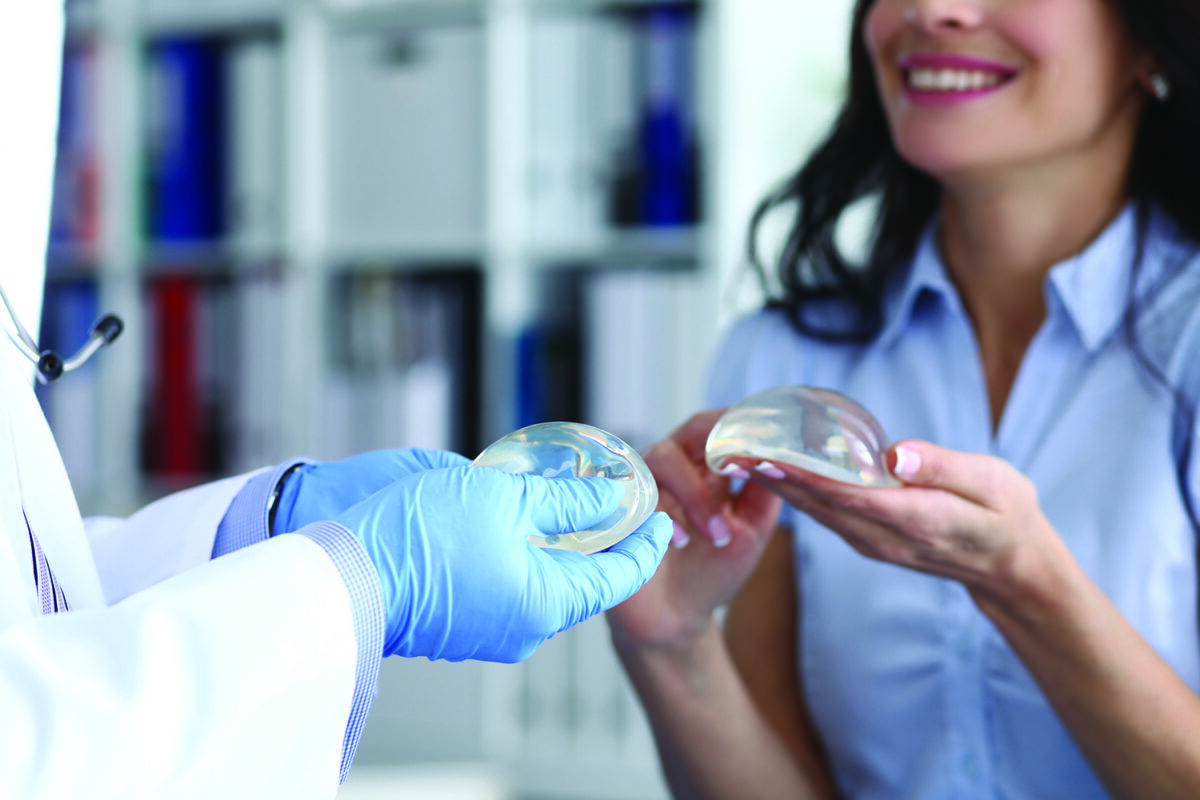
In implant-based reconstruction, a saline or silicone implant is placed under the skin or chest muscle. Implants consist of a flexible silicone outer shell that is prefilled with silicone gel or placed in the breast empty and then filled with sterile saline.
“Implants filled with silicone gel tend to give the reconstructed breast a more natural appearance,” Dr. Sbitany says. “Saline implants tend to feel less natural than silicone options, mainly because they have moving fluid inside. The also have to be filled to a high volume to prevent them from developing a rippled or wrinkled effect that might be noticeable in women with thinner skin, particularly if they are placed above the chest muscle.”
AUTOLOGOUS TISSUE RECONSTRUCTION
Autologous tissue breast reconstruction is carried out using a flap of tissue and blood vessels taken from elsewhere in the body (typically the abdomen, back, thighs, or buttocks). The flap is categorized as “free” or “pedicled,” depending on what part of the body it is taken from.
Dr. Sbitany says a free flap typically uses excess skin and fat from the abdomen and is detached from its original blood supply so that it can be transplanted in the chest area. The type of free flap most often used in breast reconstruction is the deep inferior epigastric perforators (DIEP) flap, with DIEP referring to the blood vessels that are moved along with their associated skin and fat.
“Once the flap is in place in the chest area, microsurgery is carried out to reconnect the blood vessels in the flap to the blood vessels in the chest so that the new breast will have a blood supply,” Dr. Sbitany explains. “Once blood flow is restored, the tissue is shaped to resemble a natural breast. For many patients, there is sufficient tissue to achieve the desired breast volume. If necessary, adjustments can be made later to ensure that the breasts match—for example, the opposite breast may be reduced, lifted, or enlarged.”
A pedicled breast reconstruction flap typically uses skin, fat, muscle, and blood vessels from the middle and side of the back and is known as a latissimus dorsi (LD) flap. “Instead of detaching the blood vessels in a pedicled flap, the surgeon essentially ‘tunnels’ the harvested tissue under the skin to its new location and shapes it into a mound,” Dr. Sbitany says. “No procedure is needed to reconnect the blood vessels.” He adds that if more volume is required, a combination approach in which a silicone or saline implant is positioned under the tissue mound, may be considered.
The TRAM (transverse rectus abdominis myocutaneous) flap can be either free or pedicled and includes abdominal fat and muscle.
In some cases, a woman may not have enough excess tissue to harvest a flap from the abdomen or back. Chronic conditions that make longer invasive surgeries risky and previous abdominal or back surgery, or medical treatments that have affected blood vessels in the area (such as radiation therapy), also may preclude transplanting tissue from these areas. In these situations, tissue may be taken from the buttocks (an IGAP or SGAP flap) or upper inner thigh (a PAP flap, which contains skin, fat, and blood vessels; or a TUG flap, which is similar to a PAP flap but contains muscle, too).
ONCOPLASTIC RECONSTRUCTION
Women who undergo a lumpectomy or partial mastectomy may be left with a breast that is smaller or misshapen compared with their other breast. In these cases, oncoplastic surgery is an option. “Once the tumor and surrounding tissue are removed, a plastic surgeon can rearrange the remaining breast tissue to fill the space where the tumor was and then reduce the size of the other breast to ensure symmetry,” Dr. Sbitany says. “If necessary, a free flap of tissue from elsewhere can be transferred into the breast to maintain volume.”
Nipple and Areola Reconstruction
A type of breast cancer surgery called nipple-sparing mastectomy leaves the nipple and areola in place. This option may be appropriate for women whose tumor is small, nonaggressive, and located a safe distance from the nipple and areola. But if the nipple and areola need to be removed, they can be reconstructed. “Many women undergoing breast reconstruction do have this additional step, as it can help them feel more like they have a fully restored breast,” Dr. Sbitany says.
The new nipple is formed several months after breast reconstruction, using the skin of the reconstructed breast or a small portion of the other nipple. “Skin from the surrounding breast surface may be used to form the areola, since its color usually bears a closer resemblance to the skin of a natural nipple and areola,” Dr. Sbitany explains. However, he adds that grafts are becoming less common with the advent of medical tattooing that can provide a more natural color and the illusion of a three-dimensional nipple even though the skin remains flat.
Women who would rather not undergo further surgery or medical tattooing after breast reconstruction can opt to use prosthetic nipples that adhere to the skin.
How to Choose the Right Reconstruction Option
Your choice of which type of breast reconstruction to have is best made in close consultation with your plastic surgeon. You’ll need to consider a range of factors in making your decision.
“For example, if you would prefer autologous tissue reconstruction, your body type needs to allow for using your own tissue to create the new breast, with more tissue required if your remaining breast is large,” Dr. Sbitany says. “On the other hand, if you are very lean, implant-based reconstruction may be the best method for you. Implants also may be indicated if you have undergone previous abdominal or back surgery.”
Another important factor to consider is your health status. Dr. Sbitany notes that autologous tissue reconstruction is a more complex surgery, with multiple surgical sites and longer recovery times.
“If you have health issues like diabetes or heart disease, you may be safer undergoing less complex implant reconstruction,” he advises. He adds that the amount of time you can take for your recovery also is a consideration. “If you are very active and would rather get back to that lifestyle sooner rather than later, the recovery time for implant-based reconstruction is shorter,” he says. “But also remember that implants may need to be replaced at some point in the future, whereas successful flap reconstructions do not.”
Be sure to ask your plastic surgeon about the ways in which your body type, tolerance for surgery, time you can set aside for recovery, and cancer treatment plan might affect your options for breast reconstruction surgery. Other questions you may want to ask include:
- What are the pros and cons of implant-based breast reconstruction and autologous breast reconstruction?
- Will my treatment plan allow for immediate breast reconstruction, or do you advise delaying the procedure?
- If implants are the most suitable option for me, which type do you recommend, and how long are they likely to last?
- What are the risks of complications during or after the procedure?
- How many breast reconstruction procedures do you perform annually, and how often do you perform the specific type of reconstruction you are recommending for me?
- What is your complication rate?
- Can you provide before-and-after photographs of women whose breasts you have reconstructed?
- How will my reconstructed breast look and feel?
- Will additional surgery be needed to ensure symmetry with my other breast?
- How will the surgery affect my strength, function, and mobility?
- When can I expect to be able to resume my normal activities after the surgery?
- What kind of follow-up care and monitoring is advisable after the procedure?
- How might my other health conditions affect my recovery?
Risks and Complications of Breast Reconstruction
All surgical procedures come with some degree of risk for complications such as excessive bleeding, blood clots, wound infections, scarring, and fluid buildup that needs to be drained. In autologous tissue reconstruction, you face a slight risk of flap failure if reconnected blood vessels do not recover and the blood supply to the reconstructed breast is interrupted. Complications also may occur in the donor-tissue site.
While implant-based reconstruction is less complex, it carries a slight risk of implant rupture and leakage. With silicone implants, leaks can go undetected for long periods because the body forms a natural “capsule” of scar tissue around the implant that keeps the leaking silicone contained. Over time, the silicone may cause the scar capsule to tighten and become hard (known as capsular contraction), which feels uncomfortable and may affect the shape of the reconstructed breast.
“For this reason, women who have silicone implants are advised to have an ultrasound or magnetic resonance imaging scan five to six years after their surgery and every two to three years after this, to monitor the implants for leakage,” Dr. Sbitany says. “Saline implants also can leak, but one advantage of these implants is that leaks are immediately apparent because the implant visibly deflates. If a leak occurs, the saline is absorbed by the body.” Some studies also have suggested that capsular contraction is less likely to occur with saline implants.
People most at risk of complications from breast reconstruction surgery include those with diabetes, smokers, and those who have previously undergone radiation therapy in the chest area. However, the overall risk of complications from breast reconstruction is low, and your surgeon can help you keep them in perspective.
Breast Reconstruction Recovery and What to Expect
How long you stay in the hospital depends on what type of breast reconstruction you are having. “Implant-based reconstruction is less complex, and women often are able to return home the next day or even the day of the procedure,” Dr. Sbitany says. “With autologous tissue reconstruction, you will need to stay in the hospital for two to three days so you can be monitored to ensure a good blood supply to the reconstructed breast.”
Once you return home, you may experience fatigue, swelling, and bruising at the surgical sites. You’ll have some pain, too, so you’ll probably be prescribed a short course of prescription painkillers and can use over-the-counter acetaminophen (Tylenol) or nonsteroidal anti-inflammatory drugs (NSAIDs) like ibuprofen (Advil, Motrin) or naproxen (Aleve). Be sure to follow your doctor’s guidance for safely using NSAIDs, since these drugs are associated with bleeding and other potentially serious complications in older adults.
You will be shown how to care for the surgical site or sites and informed about the symptoms that may indicate an infection (such as a resurgence of redness, pain, and swelling after the wounds had appeared to be healing normally). “You likely will have drains placed in the surgical sites to ensure drainage of excess fluid and will be shown how to care for these,” Dr. Sbitany explains. “Expect follow-up visits with your doctor, who will closely monitor your progress. If you had immediate reconstruction surgery, you likely will be referred for physical therapy to aid in your recovery from the cancer surgery.”
Some scarring is inevitable after breast reconstruction, and the reconstructed breast probably will have less sensation than a natural breast. “Remember too that if you have just one implant, any changes in the appearance of your natural breast—for example, if you lose or gain weight—could result in a mismatch,” Dr. Sbitany says. “This means that you may need to have further surgery to maintain symmetry between your breasts.”
Insurance Coverage and Costs
Health insurance providers in the United States are required to cover all types of breast and nipple/areola reconstruction after cancer surgery under the provisions of the Women’s Health and Cancer Rights Act (WHCRA). This coverage extends to procedures on the other breast to ensure symmetry, and to the management of complications that might accompany breast reconstruction.
The timing of breast reconstruction does not affect this coverage—if you initially opt out of reconstruction, you can change your mind later and the procedure will still be covered. You will be responsible for whatever deductibles and copayments are required under the terms of your insurance plan. Contact your insurance provider to verify your coverage before undergoing surgery, particularly if your plan stipulates a second opinion or prior authorization, or you intend on using a surgeon who is out of network.
Medicare enrollees are eligible for breast reconstruction after a medically necessary mastectomy. If you use Medicaid, check your options with your state Medicaid office.
Emotional Impact and Support
It may take time for you to come to terms with your reconstructed breast, especially if it is firmer than your natural breast and isn’t as sensitive. You also may feel self-conscious about scarring. Even if you feel grateful and relieved that your cancer was successfully treated, you may feel robbed of your natural breast. If you have implant-based reconstruction, you may be bothered by the fact your breasts are artificial. You may worry about how intimate partners will react to your reconstructed breast.
These feelings are normal and should ease with the passage of time. As you recover emotionally and physically, it can be helpful to talk through your feelings with other women who have lived with the emotional impact of breast reconstruction after mastectomy. Your surgeon probably can recommend local support groups, and you also can find online groups via the Cancer Support Community.
Alternatives to Reconstruction
Some women decide not to proceed with breast reconstruction after mastectomy (often referred to as “going flat”) or are unable to have reconstruction due to health issues. These women may opt to use an external prosthesis to mimic their breast. A wide range of prostheses is available, with some specifically designed to be used during swimming and sports participation. (Prostheses are covered under the terms of the WHCRA.)
If you are considering going flat or you have been advised against undergoing breast reconstruction for medical reasons, have a frank discussion with your doctor about how your chest will look and feel. Dr. Sbitany says it is important to understand that you probably will need surgery to remove any extra skin or fat that remains in your chest area. The surgery—called “flat closure”—can be performed during or after your mastectomy.
“Additional surgery may be required later if your chest wall takes on a sunken appearance or indentations develop,” he adds. “If you decide against reconstruction for personal reasons but change your mind later, delayed reconstruction may still be an option.”