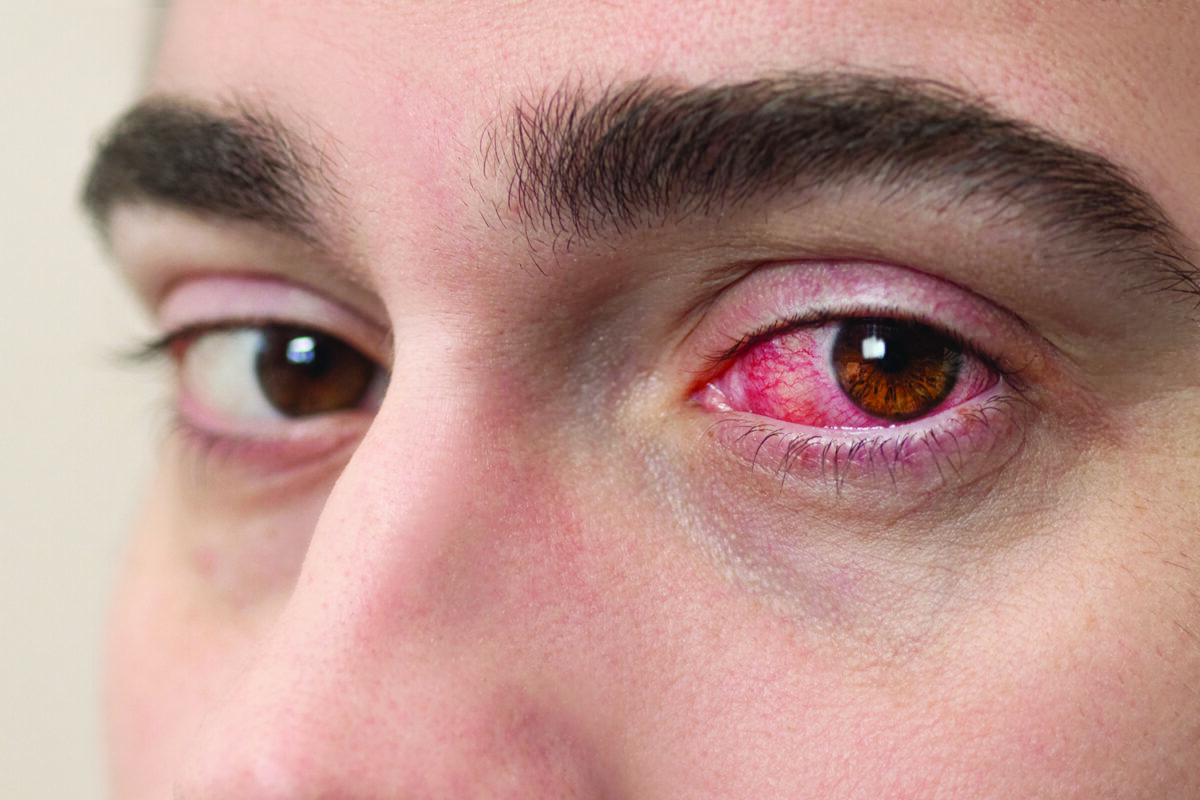
Do your eyelashes look as if they are suffering from dandruff? And are your eyes red, and do they feel gritty?
If those symptoms sound familiar, it’s possible that you have a condition called blepharitis. The bad news is that it’s almost impossible to cure blepharitis. The good news is that there are ways to manage the symptoms so that they are much less obvious and don’t cause you too much discomfort.
What Is Blepharitis?
Blepharitis is characterized by eyelid inflammation, and it’s fairly common—an American Academy of Ophthalmology survey of ophthalmologists and optometrists suggested that between 37% and 47% of Americans seen by eye doctors have the condition.
“Older people are most likely to develop it, and there also is some evidence that women may be more susceptible,” says Niki Mirzaei, OD, an instructor in ophthalmology at Mount Sinai’s New York Eye and Ear Infirmary. “The condition is not contagious.”
What Causes Blepharitis?
It is unclear what causes blepharitis, but it’s believed to be multifactorial. Bacterial infections of the eye often play a role, along with inflammatory skin conditions and an excess of demodex mites. “These microscopically tiny mites colonize the hair follicles and oil glands of mammals, including people,” says Dr. Mirzaei.
Risk factors for blepharitis include diabetes, dermatitis (inflammation of the skin that results in sore, itchy red patches on the skin) and rosacea (a condition characterized by redness, visible blood vessels, and red bumps and pimples, mainly on the face). Dr. Mirzaei says people with excessively dry eyes also are susceptible, as are those who are prone to developing chalazia, which are firm, cyst-like swellings on the inside of the eyelid that result from a clogged oil gland.
“Some research suggests that exposure to air pollution also increases the risk for blepharitis, possibly by clogging the oil glands,” she adds.
Types of Blepharitis
Blepharitis is categorized as either anterior or posterior. Many people have both blepharitis types, along with more than one contributing factor.
Anterior blepharitis tends to target the lash line and eyelashes and often is triggered by Staphylococcus aurea (S. aurea) bacteria. Colloquially known as “staph,” S. aureus is naturally present on the skin and in the nose of many healthy people.
“It typically causes no problems, but it can cause skin infections, such as boils, as well as more serious health issues if it gains access to the body via a cut or other wound,” Dr. Mirzaei notes. “It can cause blepharitis if it is present on the surface of the eye, though it is unclear exactly how the bacteria trigger blepharitis. Other bacteria, including herpes simplex and varicella zoster, also can cause blepharitis, but this is less common.”
Another common underlying factor for anterior blepharitis is seborrheic dermatitis. This type of dermatitis affects areas of the skin that have a large number of oil glands, like the scalp (where dandruff is the most obvious symptom), chest, and upper back.
“Many people diagnosed with seborrheic blepharitis develop other types of blepharitis, too,” Dr. Mirzaei says. “This is most commonly seen in the overlap between seborrheic blepharitis and staphylococcal blepharitis—the flakes of skin that accumulate along the lash line due to seborrheic dermatitis promote bacterial growth.”
Posterior blepharitis develops due to problems with the meibomian glands, tiny glands that lie along the edges of the eyelids. “The oil these glands produce helps prevent tears from evaporating too rapidly to lubricate the surface of the eye, but it is possible for the glands to become blocked,” Dr. Mirzaei explains. “Seborrheic blepharitis may contribute to posterior blepharitis because it causes a buildup of skin flakes along the lash line, and these may block the meibomian glands.”
An overpopulation of demodex mites is associated with both anterior and posterior blepharitis. Demodex mites tend to increase with age—more than 80% of people ages 60 and older have excess mites. “Not everybody with an overpopulation of these mites develops blepharitis, and in people who do, it isn’t clear whether excess mites trigger blepharitis or whether the inflammation that accompanies blepharitis makes it easier for the mites to multiply,” says Dr. Mirzaei. “These mites also play a role in rosacea and may be the reason why rosacea increases the risk for blepharitis.”
Symptoms of Blepharitis
Blepharitis symptoms include:
- Redness of the eyes
- Burning and irritation
- Dry eyes
- Blurred vision
- A feeling that something is in your eye
- Eyes that are crusty when you awaken in the morning
- Contact lenses that start to feel uncomfortable.
The flakes of skin that accumulate along your lash line may not easily come away. You may develop chalazia or styes (painful cysts that affect the oil glands at the base of the eyelashes).
People with blepharitis also often report eyelash shedding, and the lashes that grow into replace the lost lashes may curve down and in toward the eye instead of up and out, almost as if the eyelash is growing upside-down (a condition called trichiasis). Chronic inflammation due to blepharitis also can strip the eyelashes of pigment, so that they grow in white.
Symptoms like these warrant a visit to the eye doctor, particularly if you have not had an eye exam in some time.
“Apart from blepharitis, serious vision problems can develop in older age,” Dr. Mirzaei warns. “Getting these diagnosed as early as possible makes it more likely that you will avoid serious vision damage. Moreover, if your eye doctor diagnoses cataracts, a simple surgical procedure can replace these clouded lenses with clear artificial lenses.”
She adds that it also is possible your symptoms may signal a different condition, such as conjunctivitis (also known as pink eye). “Most cases of conjunctivitis are caused by viruses and bacteria that are highly contagious, and swift treatment is necessary to reduce the risk of infecting others,” she advises.
How Is Blepharitis Diagnosed?
Your eye doctor may be able to diagnose blepharitis by asking you about and/or checking for associated conditions, such as seborrheic dermatitis, rosacea, and chalazia. “They likely will check for eye redness and examine the base of your eyelashes for evidence of crusting and skin flakes that point to seborrheic blepharitis,” Dr. Mirzaei says. “Yellowish circular buildups, known as collarettes, around the base of the lashes typically indicates staphylococcal blepharitis, while a waxy cylindrical ‘sleeve’ at the base of the eyelash usually means demodex mites are contributing to your blepharitis.”
A special device called a slit lamp can be used to evaluate you for meibomian gland dysfunction if your eye doctor suspects that you have posterior blepharitis. The lamp magnifies the openings of the meibomian glands so that your doctor can check if they are blocked. “Your doctor also may check for dry eyes by applying a special dye called fluorescein to your eyes,” Dr. Mirzaei adds. “The dye can reveal whether swelling or abnormal eyelashes are damaging your cornea—the clear surface of the eye—and help your doctor evaluate how rapidly your tears evaporate.
Treatment Options for Blepharitis
Ongoing hygiene is the cornerstone of blepharitis treatment, so you will be advised to keep your eyelids clean. You can do this with an eyelid scrub like OCuSOFT, which you can purchase over the counter (OTC) at pharmacies, or with a dilute solution of baby shampoo and warm water. “If you opt for dilute baby shampoo, use a cotton swab or pad to gently rub the solution into the base of your eyelashes to loosen and wash away skin flakes, collarettes, or demodex debris,” Dr. Mirzaei says. “Then rinse with warm water before repeating the process on the other eye, using a fresh swab or pad.”
If your blepharitis symptoms persist, you might want to try an eyelid cleanser that contains tea tree oil. “The oil has anti-inflammatory and antibacterial properties that are particularly effective if you have demodex blepharitis,” Dr. Mirzaei notes. OTC options include Optase Tea Tree Oil Eyelid Cleansing Gel. Avoid using products that are not specifically formulated for use on the eyes, since they may cause irritation. Another helpful option is hypochlorous acid (HOCI) spray, which can be purchased OTC at pharmacies and online. HOCI has antimicrobial properties that make it effective against staphylococcal blepharitis.
Applying warm compresses to your eyelids can help relieve posterior blepharitis because the heat helps liquify material inside the meibomian glands so that it can drain more easily. You can use OTC artificial tears for lubrication if blepharitis makes your eyes feel dry.
Most people are able to successfully control blepharitis symptoms using these self-help methods. Keep in mind, though, that blepharitis is considered a chronic condition, and keeping up this regimen over the long term is the best way to prevent recurrence.
“If symptoms persist, your doctor may prescribe antibiotic eyedrops or ointment,” Dr. Mirzaei says. “If symptoms are especially tiresome, steroid eyedrops or ointment may be prescribed to help relieve inflammation.” Prescription eyedrops that treat dry eyes, such as cyclosporine (Restasis) also may be used. Controlling medical conditions that are associated with blepharitis, like seborrheic dermatitis and rosacea, is helpful.
Complications of Blepharitis
Complications that can arise from poorly managed or undiagnosed blepharitis include conjunctivitis and keratitis (inflammation of the cornea that causes eye pain and redness, and blurred vision).
“The eyelids also may develop scarring that impairs blinking and distorts the position of the eyelids,” Dr. Mirzaei says. “Styes and chalazia may recur, and the cornea may develop ulcers due to abrasion by misdirected eyelashes”
Preventing Blepharitis
Blepharitis complications can be avoided if the condition is detected as soon as possible and you are diligent about self-care. Above all, eyelid hygiene is vital. “Many people don’t have a dedicated eyelid cleansing regimen, especially if they do not wear eye cosmetics,” Dr. Mirzaei notes. “But thorough cleansing twice a day often is all that is needed to prevent blepharitis from recurring.”
Other preventive tips include using anti-dandruff shampoos if you frequently experience seborrheic dermatitis and following your doctor’s advice for managing medical conditions that are associated with blepharitis, such as rosacea and diabetes. Avoiding contact lens use if symptoms recur may help ensure any outbreaks are minor.