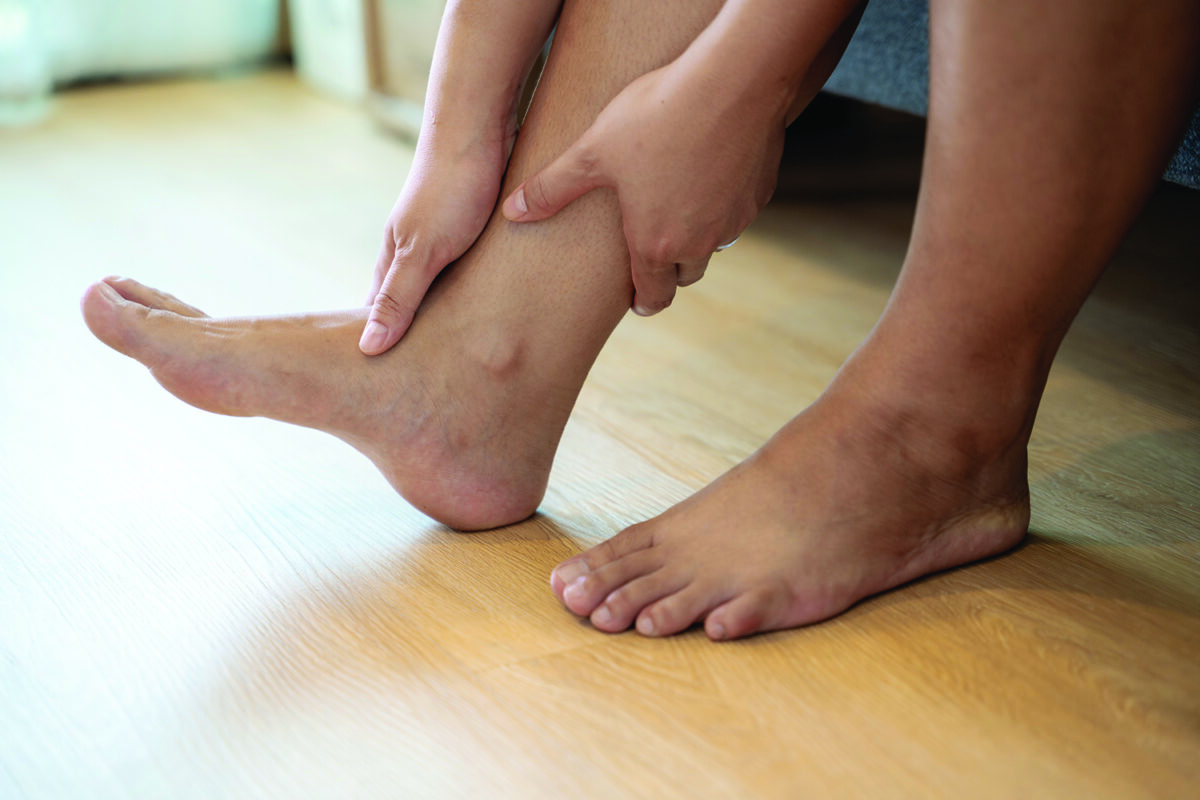
Do your ankles get so puffy by the evening that your shoes or slippers don’t fit comfortably? If so, you are not alone—research suggests that swollen ankles are common in older adults.
Even so, studies also indicate that the problem accounts for only a small proportion of reasons for primary-care visits. In fact, it is well worth mentioning swollen ankles to your healthcare provider, particularly if there is no obvious cause for the symptoms (such as an ankle injury), the ankle swelling doesn’t resolve with rest and elevating your legs, and your swollen ankles are accompanied by other symptoms, like shortness of breath.
What Causes Swollen Ankles
Oftentimes, swollen ankles are just the uncomfortable but temporary results of spending too long standing or sitting or consuming a particularly salty meal. But Patricia Bloom, MD, a Mount Sinai geriatrician, warns that ankle swelling may point to an injury or potentially serious underlying health issue that should be addressed to maintain your well-being as you age.
Common reasons for swollen feet and ankles include:
- Standing or sitting for too long. Dr. Bloom notes that gravity plays a role here, since the force it exerts causes fluid to collect around your ankles. “Moreover, if you’re sitting for long periods of time, the muscles in your legs won’t be contracting enough to help push blood up toward your heart,” she adds.
- Eating too much salt. Sodium in the food we eat passes into the bloodstream during digestion, and foods that are salty make for higher blood sodium levels. “In response, your brain releases a hormone that instructs your body to hold on to fluid to dilute the excess sodium in your blood,” Dr. Bloom explains. “Gravity will influence where that extra fluid accumulates.”
- Injury or sprain. These injuries usually cause swelling as blood leaks from the damaged area into the adjacent soft tissue. The immune system also contributes to swelling in the injured area, by supplying it with extra blood and fluids that contain white blood cells and healing nutrients. “While the swelling may be uncomfortable, it is intended to restrict movement so that the injured joint can rest,” Dr. Bloom says.
- Pregnancy. If you have ever been pregnant, you likely will recall suffering from swollen ankles. Several physiologic changes contribute. “During pregnancy, your blood and fluid volume significantly increase to supply the fetus with nutrients, and the increased pressure on blood vessels causes some of the additional fluid to leak into body tissues,” Dr. Bloom says. “To help mitigate the increased pressure, pregnancy hormones relax the walls of the blood vessels, making them less efficient at pushing blood toward your heart. The expanding uterus also begins to press against veins that carry blood back toward the heart, which means that some of the blood pools in the lower legs and causes swollen feet and ankles.”
- Medications. Older adults often take medications that cause the body to retain fluid by affecting kidney function, widening blood vessels and/or making them leaky, or overwhelming the lymphatic system (essentially the body’s drainage network) so that it is unable to efficiently absorb excess fluid from body tissues and return it to the bloodstream. Examples include some blood pressure and Type 2 diabetes drugs.
- Venous insufficiency. “The veins in the lower legs contain valves that help keep blood moving upward toward the heart,” Dr. Bloom says. “In older age, these valves often don’t work as well, and blood pools in the calves and ankles as a result.”
- Heart, kidney, or liver problems. Swollen feet and ankles are common symptoms of heart failure—a condition in which the heart is less able to pump blood throughout the body. As a result, blood backs up in the veins and pools in the ankles. “The kidneys filter excess fluid from the body, but if they are not functioning correctly, this fluid may instead be retained and may leak into body tissues, causing swelling,” Dr. Bloom explains. “The liver also helps balance your fluid levels, since it produces a protein—albumin—that keeps fluid inside blood vessels. Liver damage can affect albumin levels, making it easier for fluid to leak from blood vessels into the soft tissue.”
When Swollen Ankles Are Not Serious
Be assured that just because you often experience swollen ankles, it doesn’t always mean you have a serious health problem. This is especially true if ankle swelling sets in at the end of a long day spent on your feet, affects both ankles, is eased by resting with your lower legs elevated, and you don’t have other symptoms that could flag an injury or undiagnosed cardiovascular, kidney, or liver issues. Even so, do tell your doctor, since they may want to run some tests to rule out any possible underlying conditions.
Home Remedies for Swollen Ankles
Simple self-help strategies can go a long way toward easing swelling in your ankles.
- Elevate your feet. This means sitting down with your feet resting on pillows so that they are higher than your heart. There isn’t an established minimum time for this, but 20 or 30 minutes should help reduce mild ankle swelling. A longer period of elevation probably will be needed for more significantly swollen feet and ankles, so have a book handy.
- Move around regularly. If you spend long periods of time on your feet due to your job, try not to stand still. “Movement can help limit ankle swelling in these instances because the contraction of the leg muscles helps push blood up through the veins of the lower legs toward the heart,” says Dr. Bloom.
- Wear compression socks. These garments can make a real difference to swollen feet and ankles because the pressure they exert helps improve blood flow from the lower body. Dr. Bloom adds that compression socks also can help prevent varicose veins from developing during pregnancy.
- Reduce sodium. The American Heart Association recommends limiting daily sodium consumption to no more than 2,300 milligrams (mg), which is about the amount found in 1 teaspoon of salt. (If you have health issues, your doctor may recommend aiming for a lower daily limit.) Most Americans far exceed these recommendations.
- Stay hydrated. Dehydration causes the body to hold on to water instead of excreting it in urine. You can best prevent this process by ensuring that you consume sufficient fluids. The National Academy of Medicine recommends 9 cups of fluids per day for healthy older women, and 13 cups for healthy older men. “This advice represents total fluid intake, meaning that fluids in water-rich foods you eat should be factored in,” Dr. Bloom notes. “Keep in mind that some heath issues, including heart failure and advanced kidney or liver disease, may mean that you need to restrict fluids—be guided by your doctor.”
When to See a Doctor
It is particularly important to report swollen feet and ankles to your doctor if the swelling occurs for no apparent reason and doesn’t improve after elevating your lower legs. Other causes for concern include swollen ankles along with shortness of breath, and new or worsening ankle swelling after a diagnosis of heart, kidney, or liver problems.
“Alert your doctor immediately if you have only one swollen ankle or leg and the swelling is accompanied by warmth and tenderness in the limb,” Dr. Bloom cautions. “This can signal deep vein thrombosis, or DVT, which is a blood clot in one of the deeper veins in the lower leg. It warrants immediate medical evaluation.”
Take a list of the medications you take with you to the medical appointment. Your doctor will want to review them to determine whether a new drug is contributing to your swollen ankles.
During the appointment, your doctor will probably ask when you first noticed the swelling, what you were doing before it developed, and whether it is relieved by rest and elevation of your feet. They will gently press the swollen area to assess the extent of the swelling. If this action leaves temporary dimples in the skin, you have pitting edema, which often suggests an underlying disease process.
If there is no obvious explanation for the ankle swelling—an injury, for example—you may be referred for blood and urine tests to check for problems in the kidneys and liver. Imaging studies may be carried out if a heart condition or DVT is suspected.
How to Prevent Swollen Ankles
Follow these strategies to help prevent swollen ankles:
- Stay active. If you lead a sedentary lifestyle, try to get up and be active more often. “If your mobility is poor, try to frequently flex your legs at the knees and circle your ankles to promote blood circulation in your legs and feet,” Dr. Bloom advises.
- Manage your salt intake. Reduce the amount of salt you use in cooking, and try to add less at the table, too (add other herbs and spices to your meals to compensate). “Choose fresh foods over processed whenever possible,” Dr. Bloom says. “If you are purchasing processed foods, check the nutrition label to ensure that the salt content isn’t too high, or select low- or no-salt options. If you are eating out, request that your meal is not salted during the cooking process.”
- Maintain a healthy weight. Excess pounds place extra strain on the veins in your lower legs. Keep your weight within a normal range through portion control and more physical activity.
- Wear supportive shoes. Avoid shoes that fit tightly around your ankles.
- Manage underlying conditions. “Follow your doctor’s advice for controlling conditions that contribute to swollen feet and ankles, such as cardiovascular disease, kidney disease, and liver disease,” Dr. Bloom says.