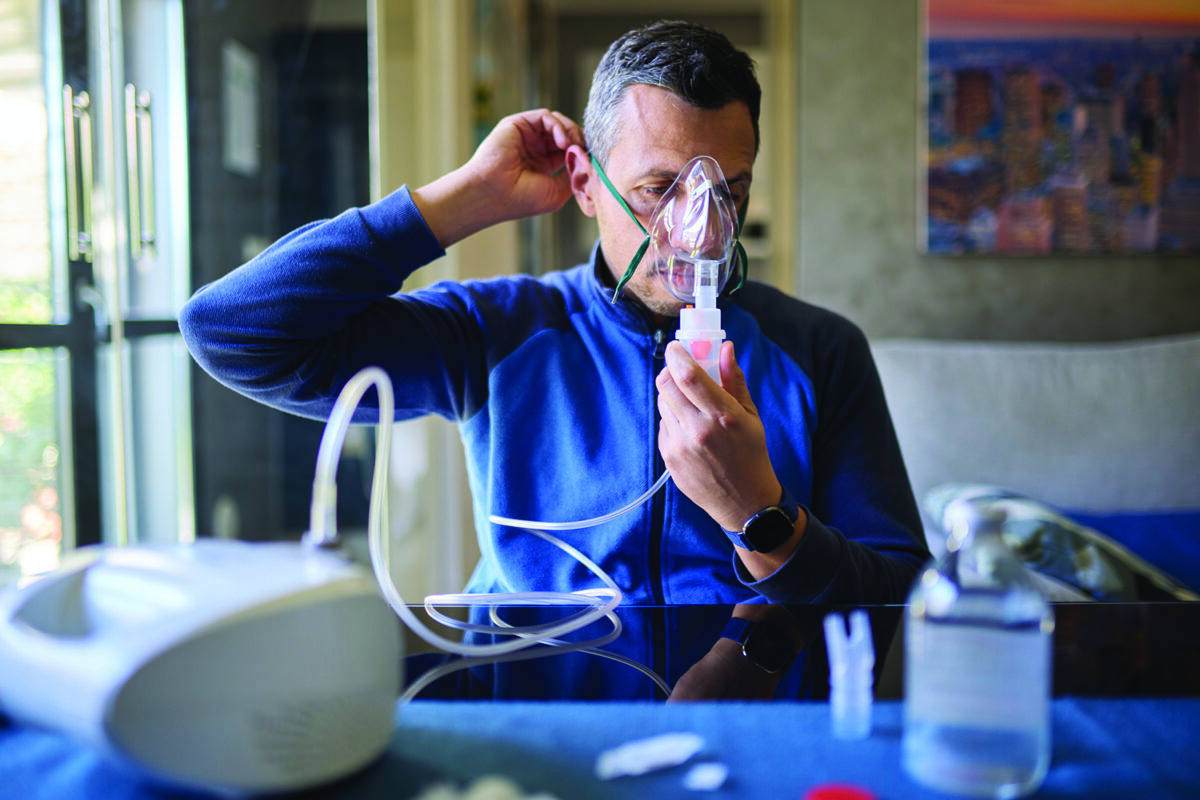
For people with asthma, chronic obstructive pulmonary disease (COPD), or other respiratory conditions, inhaled medications are a key component of care. Many people use handheld inhalers to deliver these medications, but some also benefit from nebulizer treatment. A nebulizer turns liquid medication into a fine mist that can be inhaled through a mouthpiece or mask.
“Nebulizers may be preferable to inhalers in several different situations,” says May-Lin Wilgus, MD, a pulmonologist at UCLA Health. They can be particularly useful for people who have difficulty coordinating their breathing with an inhaler or cannot inhale deeply enough to get medication into their lungs.
What Is a Nebulizer?
A typical nebulizer consists of a medication cup, tubing or another aerosol-generating mechanism, and a mouthpiece or mask. The device may use compressed air, ultrasonic vibrations, or a vibrating mesh to produce a mist that the patient inhales over several minutes. These devices are commonly used in hospitals and emergency departments, and home models are also available.
Who Needs Nebulizer Treatment?
Doctors may recommend nebulizer treatment when a person cannot use inhalers effectively.
“Nebulizers are preferable to inhalers for patients who are unable to breathe deeply enough to get inhaler medications into the lungs,” Dr. Wilgus explains.
A nebulizer for asthma can deliver medications that open narrowed airways during episodes of wheezing, coughing, or shortness of breath. Some people also use nebulized medications regularly to help control symptoms. Dr. Wilgus notes that during an asthma exacerbation, nebulizers can deliver medication even when a person is coughing or having difficulty taking deep breaths. Similarly, a nebulizer for COPD may be prescribed for people who have difficulty inhaling medications deeply enough to reach their lungs.
Nebulizers may also be helpful for young children, people with certain physical or neurological limitations, and individuals experiencing a respiratory flare-up. Nebulized medications are sometimes used for cystic fibrosis and certain respiratory infections. They are not routinely used for uncomplicated colds or respiratory infections.
Types of Nebulizers
There are three main types of nebulizers, each using a different method to convert liquid medication into mist:
- Jet nebulizers use compressed air to turn liquid medication into an aerosol. They are widely available and generally less expensive than other types. However, they can be noisy, require a compressor, and are often less portable.
- Ultrasonic nebulizers use high-frequency vibrations to create a mist. They are generally quieter than jet nebulizers and may deliver medication more quickly. Not all medications are suitable for ultrasonic devices, so confirm compatibility with your healthcare provider.
- Mesh nebulizers push liquid medication through a fine, vibrating mesh to create an aerosol. These devices are often smaller, quieter, and more portable than traditional jet nebulizers. Some are battery-operated, making them convenient for travel. Their disadvantages include higher costs and the need for careful cleaning to prevent the mesh from becoming clogged.
Nebulizer vs. Inhaler: What’s the Difference?
The main difference in the nebulizer vs inhaler comparison is how medication is delivered. An inhaler releases medication in a concentrated puff or as a dry powder, depending on the device. Some inhalers require the user to coordinate pressing the device with inhalation, while others require a sufficiently strong breath to draw medication into the lungs. Nebulizers, by contrast, allow you to breathe normally while receiving medication over several minutes.
“Inhalers require coordination of breath, which can be challenging, especially for children, while nebulized medications are easily inhaled as a mist,” Dr. Wilgus says.
Nebulizers are not necessarily more effective than inhalers when both devices are used correctly. In many situations, a properly used inhaler with a spacer can deliver medication just as effectively.
“The downsides to nebulizers are the treatment takes more time and the machines are less portable than inhalers,” Dr. Wilgus notes. The best choice depends on your condition, physical abilities, prescribed medication, and preferences.
How to Use a Nebulizer: Step-by-Step Guide
Learning how to use a nebulizer correctly helps ensure that the prescribed medication reaches your lungs.
- Wash your hands. Start with clean hands and place the nebulizer on a stable surface.
- Prepare the nebulizer medication. Measure or open the prescribed medication dose according to your healthcare provider’s instructions. Pour it into the nebulizer cup.
- Assemble the device. Attach the medication cup to the mouthpiece or mask. For a jet nebulizer, connect the tubing to the compressor.
- Sit upright. Sitting comfortably upright helps the medication travel into your lungs.
- Begin treatment. Turn on the nebulizer and breathe slowly and normally through the mouthpiece or mask. Keep the mouthpiece between your lips or ensure the mask fits snugly.
- Finish the entire dose. Continue until the medication is nearly gone and the nebulizer begins sputtering.
- Clean the equipment. Disassemble and clean the reusable parts according to the manufacturer’s instructions.
A typical session lasts about five to 15 minutes. Dr. Wilgus emphasizes that stopping treatment before the medication dose is finished can reduce its effectiveness.
Medications Used in Nebulizer Treatment
Several types of nebulizer medications are available:
- Bronchodilators, like albuterol (AccuNeb) and ipratropium (Atrovent), relax muscles surrounding the airways, allowing them to open more fully.
- Corticosteroids, such as budesonide (PulmicortRespules), reduce airway inflammation and may be used for ongoing asthma management. They are maintenance drugs and should not be used for emergencies.
- Antibiotics may be delivered through nebulizers for certain chronic lung infections, particularly in people with cystic fibrosis or bronchiectasis.
Other nebulized medications include saline solutions and mucus-thinning treatments used for selected respiratory conditions.
Only medications specifically prescribed or approved for nebulizer use should be placed in the device. Never add essential oils, homemade solutions, or medications intended for other routes of administration.
Cleaning and Maintaining Your Nebulizer
Moisture and medication residue can allow bacteria and other microorganisms to accumulate inside a nebulizer. “It is important to clean and sanitize nebulizer pieces regularly,” Dr. Wilgus says. “Most nebulizers should be cleaned after every use and sanitized after every day of use.”
After each treatment, disconnect the medication cup and mouthpiece or mask. Wash the reusable parts with mild dish soap and warm water, rinse, and allow them to air-dry completely on a clean surface. Some nebulizer parts can be disinfected by boiling, soaking in diluted vinegar, or using a baby bottle steam sanitizer, Dr. Wilgus says.
Because not every cleaning method is appropriate for every device, always follow the manufacturer’s specific instructions, including which parts can safely be boiled or disinfected. Do not immerse the compressor or electrical components in water.
Replace tubing, filters, medication cups, and other parts according to the manufacturer’s recommendations.
Potential Side Effects and Safety Tips
Side effects depend primarily on the medication being delivered rather than the nebulizer itself. Bronchodilators can cause shakiness, nervousness, headaches, or a rapid heartbeat. Inhaled corticosteroids can cause hoarseness or oral thrush, a fungal infection in the mouth. Rinsing the mouth after treatment can reduce this risk.
Contact your healthcare provider if the medication causes persistent or troublesome side effects or if treatments are becoming less effective. Seek emergency medical care for severe breathing difficulty, blue or gray lips, confusion, or symptoms that do not improve with prescribed rescue treatment. Using and maintaining a nebulizer correctly can help ensure that treatment provides the greatest possible benefit.