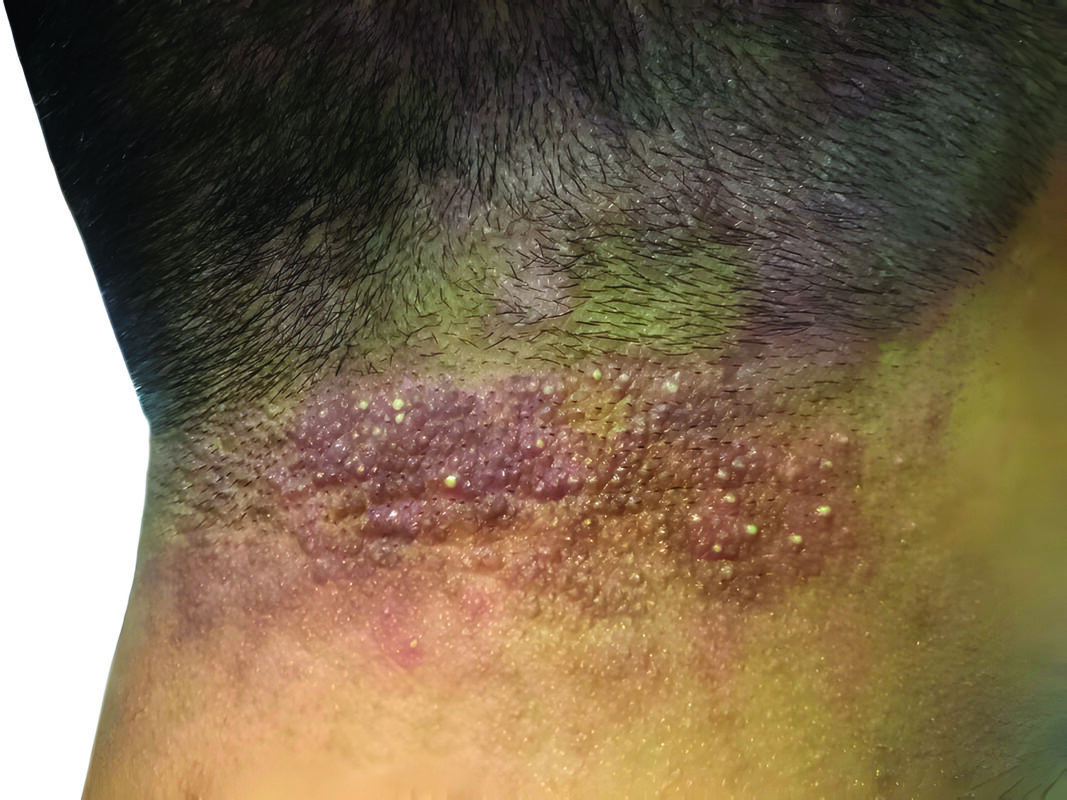
You probably remember the unsightly acne you had in your teens and early 20s. You weren’t alone. Many of your friends probably had it, too.
These days, though, as you look in the mirror, you notice red bumps adorning your cheeks, neck and even your scalp. While they could be acne, they also might signal folliculitis, a common skin condition affecting your hair follicles. Folliculitis can occur anywhere you have hair on your body, which can be particularly problematic if you shave frequently.
Although you often can take care of the problem with at-home folliculitis treatment, in some cases you need more professional help. “If you’ve tried over-the-counter products and they’ve failed, you’d better see a dermatologist,” advises Wilma Bergfeld, MD, a Cleveland Clinic dermatologist. “You want a concentrated evaluation, and you really do need to see a specialist.”
What Is Folliculitis?
You have hair on your scalp and just about everywhere else on your body. In basic terms, folliculitis refers to an infected or inflamed (swollen) hair follicle, the opening in the skin that holds each hair in place.
As with the pores of your skin affected by acne, each hair follicle can become clogged with oil from your skin, dirt and other substances that can irritate and inflame the follicle. These materials also can trap infectious agents within the follicle.
Common Signs and Symptoms
When these processes occur, red bumps or pustules form around the follicle, causing folliculitis. In some cases, the infection can spread, causing crusty sores to develop. Folliculitis can occur anywhere on the body, but it most commonly affects the face, neck, upper back, arms, and lower legs.
Oftentimes, the folliculitis-affected skin is itchy, prompting people to scratch the area; however, scratching it too much can open up the bumps and potentially worsen the hair follicle infection. Some people experience soreness and general discomfort from folliculitis, and some find it embarrassing and psychologically distressing.
What Causes Folliculitis?
Oftentimes, folliculitis results from infection by bacteria, certain fungi and yeasts, viruses, and parasites. Some medications—including testosterone replacement treatments, corticosteroids, certain anti-seizure and anti-cancer medications, long-term antibiotic therapy, and lithium—can contribute to folliculitis. In some cases, the cause is unknown.
Who Is at Risk? (Risk Factors)
In addition, certain medical conditions can raise your susceptibility to folliculitis, including diabetes, obesity, weakened immunity (e.g., HIV/AIDS), and thyroid dysfunction (particularly hypothyroidism).
Several types of folliculitis occur more frequently in people of African ancestry. For instance, razor bumps (pseudofolliculitis barbae) develop more commonly among people with curly hair, especially Black men. In severe cases, shaving can lead to barber’s itch (sycosis barbae), a deep, painful bacterial infection of the beard and mustache hair follicles.
“Folliculitis can result from frequent shaving because the hair fibers, when they grow out, can get trapped, especially if the hair is curly, like in the African-American population,” Dr. Bergfeld says. “Shaving is a problem because if you shave the wrong way, you can bury all the grime that’s on the skin, as well as the bacteria and yeast, down into the hair follicle and pore, setting up folliculitis.”
Types of Folliculitis
In addition to shaving-related folliculitis, some other forms include:
- Staphylococcus aureus folliculitis. One of the most common types, it’s a hair follicle infection caused by Staphylococcus aureus (staph) bacteria that enter through a cut or wound. It’s characterized by an itchy, pus-filled rash.
- “Hot tub” folliculitis. Another type of bacterial folliculitis, it’s caused by Pseudomonas bacteria, which are commonly found in water slides, hot tubs, and heated swimming pools, particularly those that aren’t well maintained. It causes a rash that appears a few days after exposure to the bacteria, and it may be worse in areas of the body where a swimsuit traps contaminated water against the skin for extended periods.
- Malassezia Folliculitis can result from infection by a family of yeast (Malassezia) found on the skin. In the scalp, this organism plays a role in seborrheic dermatitis, an inflammatory condition that causes severe dandruff. “A common folliculitis that we have is associated with seborrheic dermatitis, and that is a yeast-fungal organism that produces a red rash on the scalp and, sometimes, pimples,” Dr. Bergfeld says. “It can involve one hair follicle or multiple ones, and it can go on to be even more significant.”
- Furuncles and carbuncles. Furuncles, or boils, are deep hair follicle infections characterized by a red, tender, painful, pus-filled bump. When several boils form in one area and involve multiple hair follicles, a carbuncle is formed.
- Gram-negative folliculitis. This form, characterized by painful pustules that form primarily in the face (especially around the nose), can develop after long-term use of antibiotics to treat acne or rosacea, causing antibiotic-resistant gram-negative bacteria to multiply and infect the follicle.
Possible Complications
In some people, folliculitis becomes a recurring problem. Severe bacterial infections can penetrate deeper into the skin and cause cellulitis, characterized by painful redness and swelling.
Regardless of the type, severe cases of folliculitis can cause other complications, such as changes in skin color and permanent hair loss and scarring. “If it’s on a cosmetically undesirable place like your face or scalp, that’s not something you want,” Dr. Bergfeld says.
How Is Folliculitis Diagnosed?
Usually, folliculitis is diagnosed during a review of your medical history and a physical exam done by your primary care physician or a dermatologist.
Treatment Options
The choice of treatment depends on the type of folliculitis you have and how severe it is. You might need only an anti-itch cream for mild folliculitis, which in some instances (like hot tub folliculitis) may clear on its own. Applying antibacterial cleansers and shampoos on your scalp and skin can help reduce bacteria levels.
“And, you can use anti-dandruff shampoos all over your body,” Dr. Bergfeld says. “You get a great volume, and it has anti-inflammatory, antibacterial, and antifungal activities.”
Tips to Prevent Folliculitis
Consider these recommendations to help maintain your skin and reduce your risk of folliculitis:
- Wash your skin and scalp daily. Ask your healthcare provider for guidance about choosing the right skin cleanser and shampoo. “You can’t go days without cleaning off your skin. It’s exposed to all kinds of environmental toxins,” Dr. Bergfeld says. “And, your shampooing and cleansing regimens might need to be reviewed.”
- Wear clothing that allows your skin to breathe and helps wick away moisture.
- If you sweat a lot during a workout, clean your skin with an astringent before it cools off. “It’s important to take the sweat, and the oil in the sweat, off your face while it’s still warm, before it hardens in the follicle,” Dr. Bergfeld advises. “It’s too long of a time to wait until you have a shower. The skin is at normal temperature by that time.”
- Improve your shaving habits and hygiene to prevent razor bumps:
- Apply warm water to your beard and mustache before you shave, to soften the hairs and open the pores.
- Use a shaving brush to raise your beard while coating it with shaving cream.
- Shave in the direction your beard grows, not against it.
- Shave less frequently (e.g., every other day versus daily).
- Clean your razor with warm water after each use. Disinfect it by soaking it in 70% isopropyl rubbing alcohol.
- Consider using a hair-removal product (depilatory) instead of a traditional razor if razor bumps persist.
When to See a Healthcare Provider
If your folliculitis symptoms fail to resolve, contact your healthcare provider to discuss prescription-strength anti-inflammatory, antibacterial, or antifungal gels, creams, or shampoos. For deeper, more severe or recurrent bacterial infections, you may require an oral antibiotic, while a minor surgical procedure may be necessary to drain and treat more severe boils or carbuncles.
“There are many products out there you can use to address minor folliculitis. Most of them fall into the categories of acne preparations if it’s on the skin and anti-dandruff preparations if it’s on the scalp,” Dr. Bergfeld says. “But if your skin isn’t clearing on that therapy after four to six weeks, you really do need a professional opinion, and I would say a dermatologist can best give that to you.”