Nitrates (and their related compounds, nitrites) are naturally occurring components of the air we breathe, the water we drink, and, most of all, the food we eat.
Nitrates have been described as having a Dr. Jekyll and Mr. Hyde effect. That’s because research has shown that nitrates’ health effects can be either beneficial or harmful, mostly depending upon how much you take in and in what form. The levels of both nitrates and nitrites found in foods can vary greatly.
What Are Nitrates?
Nitrates are compounds, both natural and synthetic, made of the elements nitrogen and oxygen. They occur naturally in many vegetables, in meat, in soil, in the air, and in water. Synthetic forms are found in cured and smoked meats. Bacteria and enzymes present in the body can convert nitrates to nitrites.
Nitrates are also the basis for the medication nitroglycerin, which relaxes and expands blood vessels to prevent and treat cardiac-related chest pain (angina).
Where Do Nitrates Come From?
Vegetables provide about 80% of nitrates in the diet, but the nitrate content varies greatly depending on where the vegetables are grown and the season in which they are harvested. Lesser amounts are found in citrus fruits and bananas.
Small amounts of nitrates occur naturally in the soil. Some of the nitrates in water are the result of fertilizer runoff from crops and from lawn care products, which can make their way into the local water supply. Municipal water processing plants or home water filters do not filter out nitrates, but there are legal limits set for nitrate content in water supplies.
Common Foods That Contain Nitrates
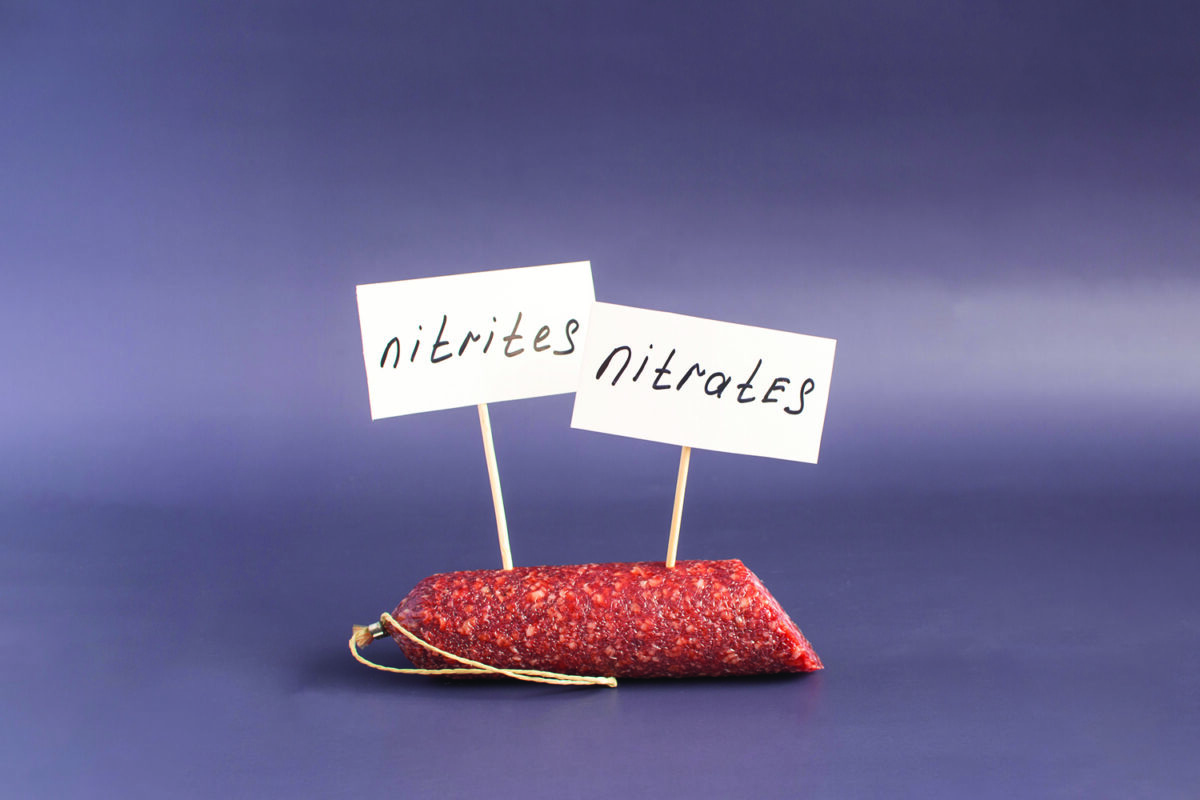
Among the most nitrate-rich vegetables are spinach, beets, broccoli, cabbage, cauliflower, endive, lettuce, parsley, celery, and cucumbers. Synthetic nitrates and nitrites, often in the form of sodium nitrite or sodium nitrate, are typically added to processed meats, such as bacon, hot dogs, lunch meats, sausage, pepperoni, salami, and canned luncheon meats, to slow or prevent the growth of potentially deadly bacteria such as Clostridium botulinum, Listeria monocytogenes, and Clostridium perfringens.
Plant-based substitutes that are rich in nitrates also have been used, but they can change the color and taste of the product, making them less appealing. Processed meats with plant-based substitutes may be labeled as “no nitrates or nitrites added,” even though naturally occurring nitrates may be present from nitrate-rich plants such as celery. A wide range of estimated intakes of nitrates, both natural and synthetic, exist, but an exact intake isn’t known.
How Do Nitrates Affect the Body?
Consuming a diet rich in nitrate-containing foods can significantly reduce inflammation and reduce the negative effects of oxidative stress on the body. Some research suggests that nitrates in food can benefit cognitive function, eye health, and muscle function, and improve physical performance.
Moreover, nitrate supplements have been shown to improve endurance and performance during exercise, says Adam M. Gonzalez, PhD, a Hofstra University professor and exercise physiologist.
“Ingestion approximately two to three hours before exercise can improve exercise capacity and produce small, but meaningful, improvements in muscular endurance, high-intensity exercise, and power,” he says. He adds that taking 400 to 1,000 milligrams of supplemental nitrate has been shown to be effective and well tolerated, with no side effects.
Health benefits occur when the body converts nitrates into nitric oxide, which regulates dilation and constriction of blood vessels. One of the key nitric oxide benefits is that it helps to relax blood vessels, thereby reducing blood pressure and improving blood flow and oxygen delivery to tissues throughout the body.
Nitric oxide also plays a role in blood clotting, as well as immune responses and inflammation. Diets that rely heavily on nitrate-rich vegetables, such as the Mediterranean eating pattern, vegetarian diets, and the traditional Japanese diet, are believed to be healthy, in part, because of the benefits that result from the natural nitrates they contain.
Note: Using antiseptic mouthwash or antacids can interrupt the conversion of nitrates to nitric oxide and reduce nitrates’ beneficial effects.
Are Nitrates Safe? Risk and Controversies
Naturally occurring nitrates in food are considered to be healthy, reducing the risk of conditions and diseases related to your body’s vascular system.
The Dr. Jekyll and Mr. Hyde label comes from the fact that some nitrates can be converted to compounds called nitrosamines, which have been linked to several types of cancer, including cancers of the stomach, colon, liver, and pancreas. When nitrates in food or water are consumed, bacteria in the mouth can convert some of them to nitrites, which can then be converted to nitrosamines in the stomach or during cooking, especially high-heat, dry-cooking methods like grilling, deep frying, or pan frying.
Processed and cured meats contain the most nitrosamines as a result of nitrates and nitrites reacting with protein during processing or cooking, or in the stomach. Frying bacon is the best (or worst) example of a meat that is cured with nitrites and then cooked over high heat, resulting in high levels of cancer-causing nitrosamines. Smoked fish and aged cheeses also are sources of nitrosamines.
One of the reasons that nitrates found naturally in food are considered to be healthy, while nitrates or nitrites added during processing or curing of meats are not, is because vegetables are rich in other nutrients, like vitamin C and E, which can stop the conversion of nitrates to cancer-causing nitrosamines. The nitrates are then available to convert to beneficial nitric oxide.
You can’t get too much nitrate from eating a diet rich in naturally occurring nitrates. In fact, in an article published in the journal Nitric Oxide (March 1, 2023), researchers concluded that nitrates “should be considered an indispensable nutrient that should be accounted for in dietary guidelines.” However, consuming a diet high in processed meats, fish, and aged cheese that contain nitrosamines can increase your risk of cancer.