The current focus on low-salt diets and salt substitutes gives some people the impression that salt is a “four-letter word.” This belief is far from the truth.
Maintaining normal sodium levels is important because sodium is necessary for life. The electrolyte plays a critical role in so many bodily functions that eliminating sodium can be lethal.
“When patients proudly tell me they don’t eat any salt, I tell them we all need to consume some sodium, at least 200 to 500 milligrams (mg) a day. There is a minimum amount we need to survive,” says Luke J. Laffin, MD, a Cleveland Clinic preventive cardiologist. “If you have to restrict sodium intake for medical reasons, a low-salt diet is less than 2,300 mg of sodium a day or, ideally, less than 1,500 mg a day. But if you eliminate sodium entirely, you will die.”
Diet aside, blood (serum) sodium levels can rise or fall in response to various situations. Serum sodium levels that rise too high (hypernatremia) or fall too low (hyponatremia) can be dangerous. The body functions best when sodium levels stay within the normal range.
What Are Normal Sodium Levels?
A normal serum sodium level is between 135 and 145 millimoles per liter (mmol/L). Levels that are lower or higher are flagged as abnormal.
“Mildly decreased sodium is not uncommon with aging and is usually fine,” Dr. Laffin says. “When we see a blood sodium level between 130 and 135 mmol/L and there is no clear reason for it, we may simply watch it.”
Why Sodium Matters for Your Health
Sodium is a key component in nerve and muscle function. Sodium helps maintain blood pressure and regulate fluid balance in the body.
The kidneys are primarily responsible for controlling blood sodium levels. They do it by deciding how much sodium to keep and how much to eliminate. As body fluid flows through the kidneys, tiny filters called nephrons grab about two-thirds of the filtered sodium and return it to the bloodstream. The remaining sodium is absorbed later.
As blood pressure and sodium levels in the body change, three hormones tell the kidneys how to react:
- When blood pressure drops, aldosterone makes the kidneys absorb more sodium, so blood pressure rises.
- When blood pressure rises too high, atrial natriuretic peptide tells the kidneys to stop absorbing sodium, so blood pressure falls.
- When sodium concentration rises, antidiuretic hormone tells the kidneys to retain water, which dilutes the sodium.
Causes of Abnormal Sodium Levels
Despite the kidneys’ best efforts, certain conditions can cause low or high serum sodium levels.
Aging, heart failure, and some forms of cancer can cause blood sodium levels to drop. So can taking certain medications, such as thiazide diuretics and mineralocorticoid receptor antagonists, which are cornerstones of heart failure therapy. “We keep an eye on sodium levels in heart failure patients because chronic hyponatremia is associated with worse cardiovascular outcomes,” Dr. Laffin says.
The most common cause of low sodium levels is syndrome of inappropriate antidiuretic secretion, or SIADH. People with SIADH produce too much antidiuretic hormone, causing their kidneys to retain so much water that the amount of sodium in the blood is diluted.
Sometimes, the cause is never found. “Some people just have low serum sodium levels for no apparent reason,” Dr. Laffin says.
In general, high blood sodium is less common than low blood sodium. It is very uncommon in individuals with cardiovascular disease. “Hypernatremia is primarily an issue with water,” Dr. Laffin says. “People can become dehydrated when they don’t drink enough water, and their blood sodium level rises.”
Diabetes insipidus also can cause hypernatremia. In this condition, the kidneys cannot conserve water, and the individual becomes severely dehydrated. “Drinking more water doesn’t help: You simply pee it out,” he says.
Because the kidneys do such a good job at regulating blood sodium, a diet high in salty foods is unlikely to cause high blood sodium levels. “It’s very uncommon to get high blood sodium levels by eating excessive amounts of salt,” Dr. Laffin says.
Symptoms of Sodium Imbalance
Because high sodium levels are typically driven by dehydration, the most common symptom of hypernatremia is extreme thirst. Drinking water can bring sodium levels down.
The symptoms of low sodium include fatigue and general malaise. Very low sodium levels can cause seizures. The appropriate treatment depends on the severity of hyponatremia.
“Mildly low sodium levels can be corrected by restricting fluid intake. If hyponatremia is caused by a medication, we remove the offending medication,” Dr. Laffin says.
Very low sodium levels require urgent intervention. “When hyponatremia is severe, we admit the individual to the hospital to correct their sodium levels with intravenous saline,” he says. “You may not be able to raise blood sodium levels sufficiently yourself by drinking salt water or eating salt tablets.”
How to Test and Monitor Your Sodium Levels
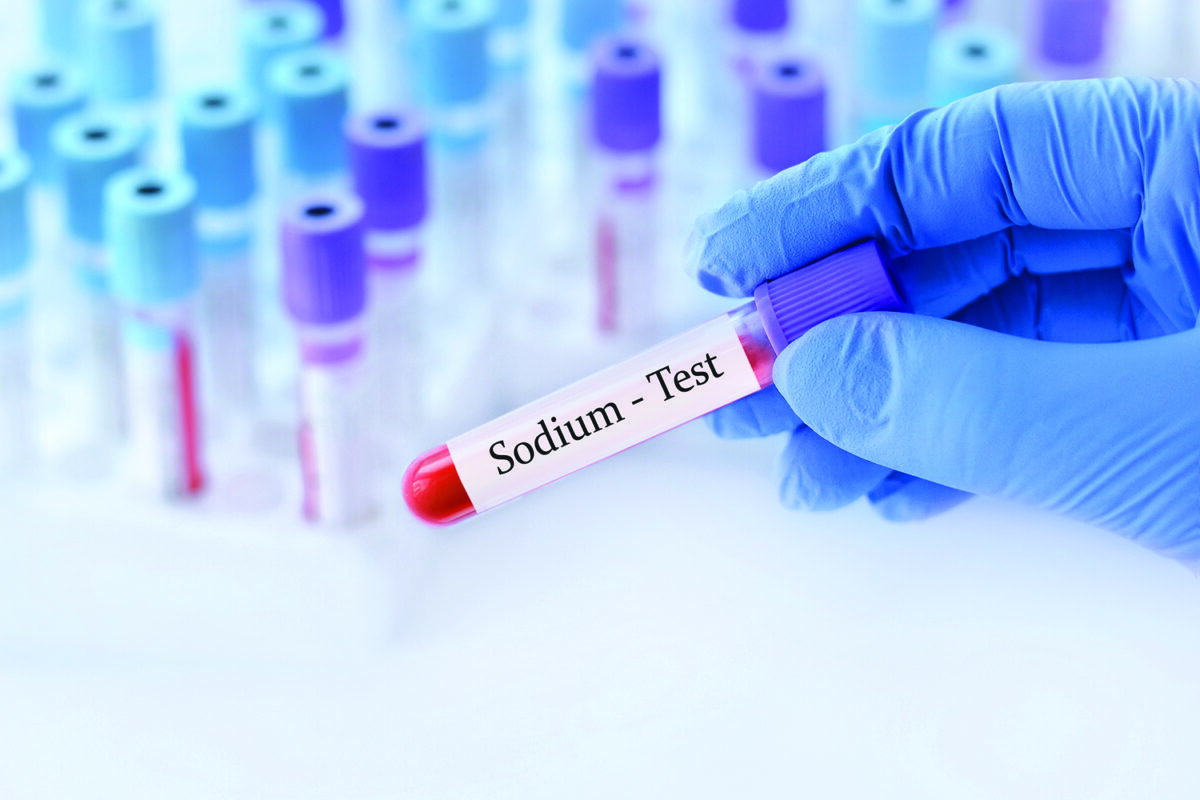
If you don’t know what your blood sodium level is, request a basic metabolic panel. This blood test measures not only sodium but also potassium, magnesium, chloride, carbon dioxide, calcium, glucose, blood urea nitrogen, and creatinine to provide an overview of your health.
No special preparations are needed for the test, which is often included in a general physical exam.
Tips for Maintaining Healthy Sodium Levels
There are several things you can do to help your kidneys maintain normal sodium levels in your blood:
- Stay well hydrated, but don’t overdo it. “Drinking too much or too little water can change the balance of water and sodium in your body,” Dr. Laffin says.
- Don’t eat excessive amounts of salt, but don’t eliminate it, either. “Some salt is OK. If your doctor wants you to restrict salt intake, follow their instructions,” he says.
- If you are taking a diuretic or other medication known to affect blood sodium levels, take the medication as directed and be sure to get follow-up blood work on the schedule your doctor recommends.