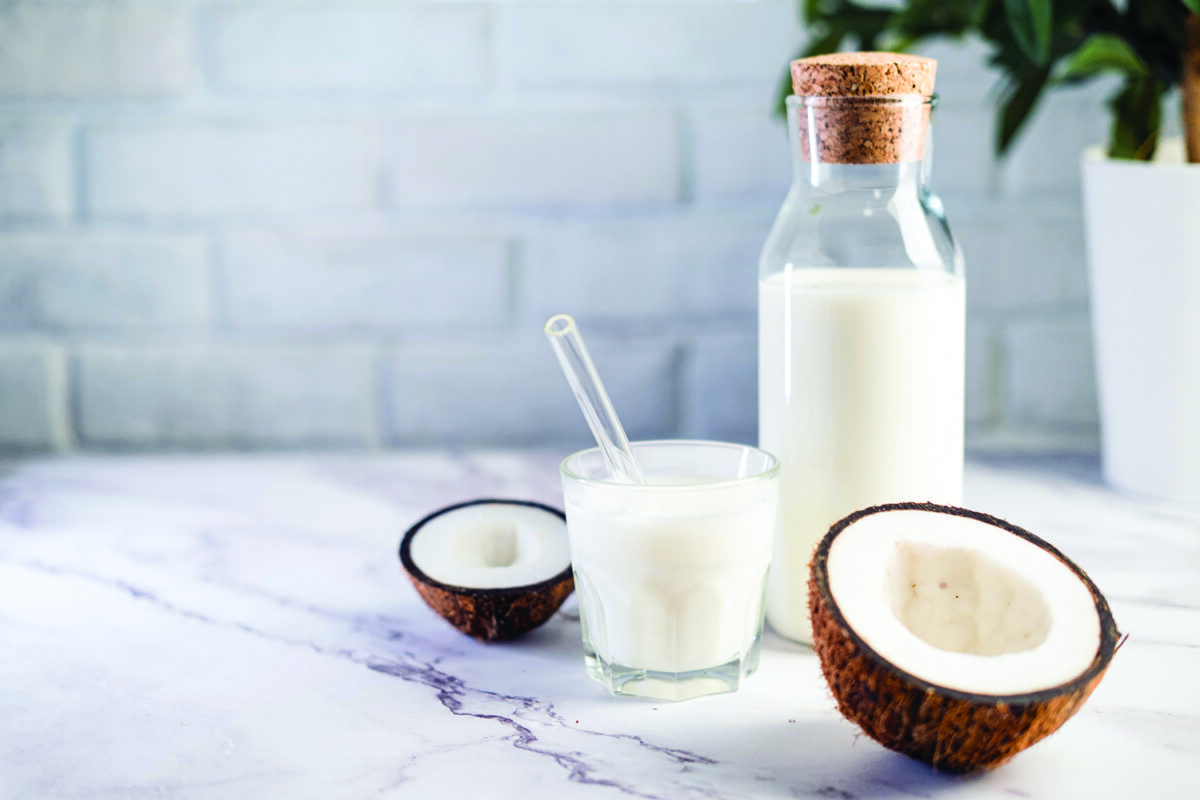
If you’re looking for an alternative to cow’s milk, you might consider coconut milk. This tasty, creamy beverage is gaining in popularity, and it may offer some potential health benefits.
What Is Coconut Milk?
Not to be confused with coconut water, coconut milk comes from the white meat or flesh inside the coconut. Once the coconut has been split open, the flesh is scraped out, then grated or put in a blender, and strained—through cheesecloth if you’re doing it at home—resulting in a thick, milky liquid. Water is added so that coconut milk more closely resembles the consistency of dairy milk or other plant milks.
The process is more complicated, of course, when coconut milk is produced on an industrial scale, but the result is basically the same. Making coconut cream involves the same process as coconut milk, but less water is added, resulting in a thicker, creamier product. Both coconut milk and coconut cream often contain emulsifiers to prevent the water from separating out, sweeteners, and preservatives to extend shelf life. Unadulterated options are available, but the milk or cream has to be stirred or shaken before drinking, and it will have a shorter shelf life than products with preservatives added.
Coconut water, on the other hand, is the watery liquid found in the middle when the coconut is cracked open. If you’re collecting coconut water at home, strain it to remove any bits of the coconut shell that may have found their way into the liquid. Commercially produced coconut water often contains additives and sweeteners, even when the label claims it to be “100% natural.”
Coconut Milk Nutrition
The nutritional value of coconut milk can vary greatly depending on whether it is fortified with added nutrients, such as vitamins A, B12, D and E, as well as calcium, iron, magnesium, and potassium. However, the calories (40 to 45), fat (4 grams, most of which is saturated fat), cholesterol (zero), fiber (zero) and protein (zero) are fairly standard for an 8-ounce glass. Some coconut milks that are made by adding coconut water to coconut cream are higher in fat and calories.
If you’re trying to increase your protein intake, coconut milk may not be the best choice. “Coconut milk contains no protein, so it won’t keep you feeling full for long,” says Bailey Franklyn, RD, a culinary registered dietitian.
Is Coconut Milk Good for You?
Coconut milk is an alternative to dairy for people with lactose intolerance or who have a dairy allergy, and for vegetarians and vegans. While most coconut milk contains about half the amount of fat you find in whole dairy milk, most of the fat is saturated fat.
However, keep in mind that the type of saturated fat that makes up most of the fat in coconut milk is different from what you would find in whole dairy or most other animal fats. About 50% of the saturated fat in coconut milk is medium chain triglycerides (MCTs). Whole milk dairy contains only about 10% to 15% MCTs, while the rest are mostly saturated fats that have been associated with raising cholesterol levels in the blood. Because skim milk is fat free, it contains neither type of saturated fat.
“Some research suggests that MCTs may be helpful in weight loss and improved body composition,” Franklyn says. Also, some preliminary research suggests that MCTs might help with brain function.
MCTs are absorbed quickly by the body, so they are available for quick use as energy, unlike other fats. As such, MCTs have been suggested to enhance athletic performance and increase endurance. MCTs also have antioxidant properties and may help lessen inflammation.
Coconut milk is also rich in naturally occurring plant compounds called polyphenols. An animal study found that these compounds also act as antioxidants, preventing fats in the blood from causing damage and even possibly protecting DNA from damage.
It’s a commonly held belief that coconuts are a tree nut and should be avoided by anyone who has an allergy to tree nuts like almonds, walnuts, cashews or pecans. Even though the U.S. Food and Drug Administration requires coconut to be labeled as a tree nut, botanically it is classified as a fruit, so coconut lacks the specific proteins in nuts that trigger allergy symptoms. Still, if you have a tree nut allergy, check with your healthcare provider before stocking up on coconut milk. Though coconut allergies are rare, it is possible to be allergic to coconut and not have any allergy to nuts.
Furthermore, if you have cardiovascular disease or are at increased risk for it, pay attention to research suggesting that coconut oil may increase triglycerides and low-density lipoprotein (LDL “bad”) cholesterol in the blood, both of which are associated with increased cardiovascular risk. However, coconut milk has also been shown to increase levels of high-density lipoprotein (HDL “good”) cholesterol, which helps to remove LDL from the bloodstream. If you have elevated levels of unhealthy fats in your blood, check with your healthcare provider before adding coconut milk to your diet.
Understand, too, that high intakes of MCT can cause digestive upset and diarrhea, but those symptoms usually occur when MCTs are taken as a supplement.
Canned Coconut Milk vs. Carton Coconut Milk
You can find coconut milk in a can or in a carton. Coconut milk in a carton is made to mimic the consistency of dairy milk. Canned coconut milk is thicker because less water is added during processing. Coconut cream is thicker still and is available in a can.
Before packaging, most coconut products, like coconut milk, coconut water, or coconut cream, are all sterilized with a heat treatment to kill microorganisms, so if they’re not opened, they can be safely stored for long periods of time. Once open, however, they should be used within seven to 10 days even if refrigerated. If it smells sour, throw it out.
How to Choose Coconut Milk
Which coconut milk you choose greatly depends on how you intend to use it. If you plan to replace dairy milk with coconut milk, choose coconut milk in a carton.
“Choose an unsweetened option, and check the serving size, since coconut milk’s saturated fat and any added sugar can add up quickly,” says Mackenzie Burgess, RDN a Los Angeles-based dietitian. But remember, you may be missing out on calcium, vitamin D, and vitamin A, among other nutrients, so it’s important to choose a coconut milk that is fortified with these and other nutrients.
Canned coconut milk is typically not sweetened, but coconut milk in the carton can be sweetened or unsweetened.
“Ingredient labels tell you more than marketing claims do,” says registered dietitian nutritionist Christa Brown, MS, RDN, LDN. “Skip anything with added sugar, and pay attention to potassium content, since heavily processed or from-concentrate versions often lose electrolytes along the way.”
Coconut Milk Substitutes
Franklyn offers a few suggestions for incorporating coconut milk into your diet. “Coconut milk is a delicious dairy alternative to use in your coffee, cold or hot cereal, blended into a smoothie, or used in soups or curries,” she says. Burgess adds overnight oats, stews, and sauces to the list of food that can use coconut milk as a substitute for dairy milk.
Coconut milk yogurts, made by fermenting coconut milk or cream with probiotics, are also available and can be used in place of dairy yogurts in most recipes. But, again, it’s important to read ingredient labels. They can have a wide variety of added nutrients, and the fat and calorie contents will vary depending on whether the yogurt was made with coconut milk or coconut cream.