If you’re tired of pricking your finger multiple times a day to keep tabs on your blood sugar, continuous glucose monitoring offers a relatively painless alternative that can help you and your healthcare team manage your diabetes more effectively.
A continuous glucose monitor (GCM) functions as a sentinel, alerting you to dangerous highs and lows in your blood sugar, or glucose. These devices also provide you with valuable information about how certain foods you eat affect your glucose levels.
“I consider them a form of treatment,” explains Anira Iqbal, MD, a Cleveland Clinic endocrinologist. “Once they see how their lifestyle impacts their glucose control, many patients become more aware of what they can change in their day-to-day life to improve their diabetes numbers and help prevent complications.”
Yet, it’s important to understand how CGMs work, their benefits and limitations, how you should interpret the data they provide and whether you can benefit from one.
What Is Continuous Glucose Monitoring?
Unlike traditional finger-stick testing, which gives a snapshot of your blood sugar at one point in time, CGMs continuously track your glucose levels and record readings every few minutes without drawing blood from your fingertip. They’re especially helpful for identifying glucose trends over time.
How Does a CGM Work?
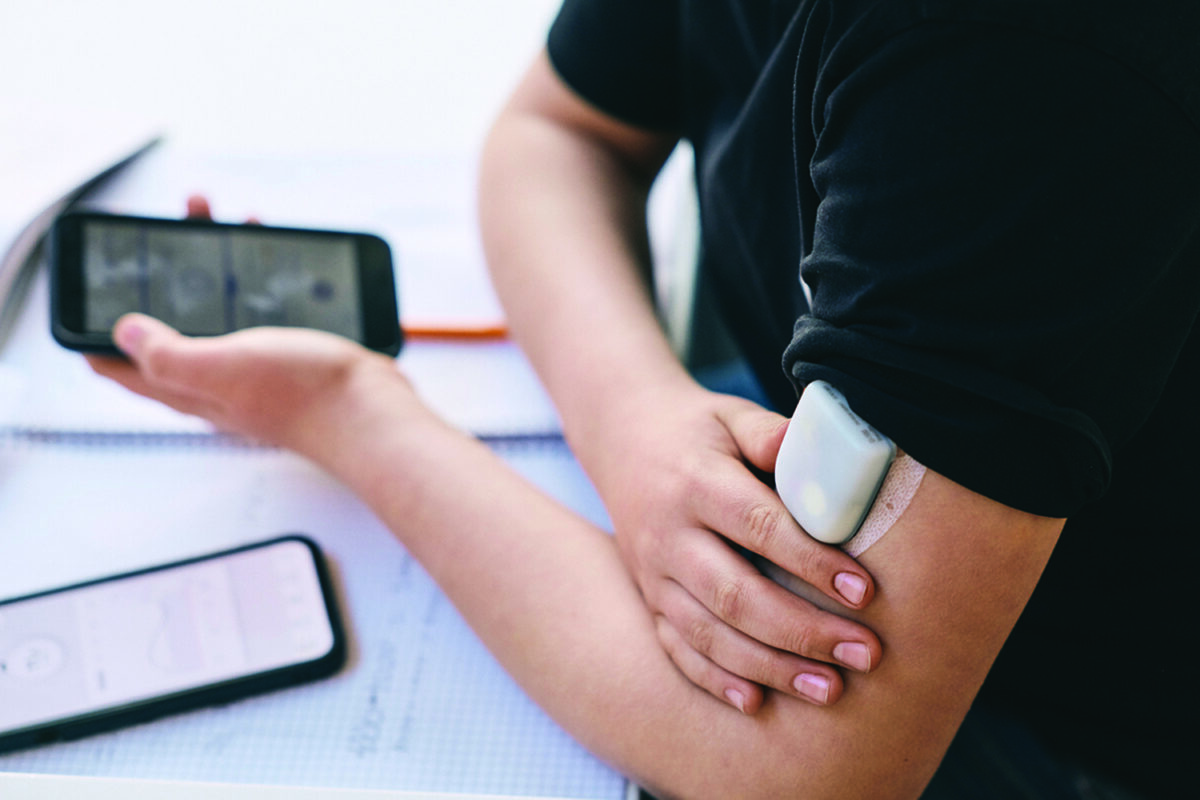
CGMs include a small sensor that sits mostly on top of the skin, but it uses a tiny, flexible plastic filament that is inserted just beneath the skin into the fatty layer (typically on your upper arm or your belly) with an applicator. A transmitter built into the sensor sends your blood sugar result to a compatible smartphone or a handheld receiver. Unlike conventional blood sugar monitoring that measures glucose in the blood, CGMs measure it in the interstitial fluid in your body’s tissues.
The sensors are worn 24/7 and are usually designed to remain on your body for 15 days. However, people often have to replace the sensor a few days earlier if it malfunctions or falls off due to sweating or other causes, Dr. Iqbal says.
What Your Numbers Mean
|
Category |
Reading |
|
Normal |
Hemoglobin A1c: <5.7% Fasting glucose test: <100 mg/dL Oral glucose tolerance test: <140 mg/dL |
|
Prediabetes |
Hemoglobin A1c: 5.7%–6.4% Fasting glucose test: 100–125 mg/dL Oral glucose tolerance test: 140–199 mg/dL |
|
Diabetes |
Hemoglobin A1c: ≥6.5% Fasting glucose test: ≥126 mg/dL Oral glucose tolerance test: ≥200 mg/dL |
Who Can Benefit from a CGM?
Once reserved only for people with diabetes treated with insulin, CGMs are now also recommended for adults taking noninsulin treatments that can cause low blood sugar (hypoglycemia) as well as individuals “on any diabetes treatment where CGM helps in management,” according to the American Diabetes Association’s (ADA) 2026 standards of care (Diabetes Care, January 2026).
Dr. Iqbal notes that people with prediabetes (elevated blood sugar levels that don’t exceed the threshold for Type 2 diabetes) also can benefit from CGMs. “Patients typically come to me after they’ve already been diagnosed with diabetes, and in most of those patients, if they’re not already on a continuous glucose monitor, I’m placing them on one,” she says. “Even in those with prediabetes, I’m recommending the use of continuous glucose monitors.”
CGMs, particularly nonprescription CGMs, have also been embraced by nondiabetic individuals who contend that, just like fitness trackers, CGMs can be used for educational purposes and as motivation to improve their health. However, Dr. Iqbal cautions that interpreting high and low blood sugar readings from CGMs in people without diabetes can be difficult.
“Sometimes, patients without diabetes can get blood sugar spikes if they eat a carbohydrate-heavy food, and they might think it’s because they’re developing diabetes, but it might be completely normal body physiology,” she says. “You have to interpret the numbers with caution and not be overly alarmed by highs or lows, because those are common and every person is different. When you’re using the CGM, it has to be interpreted with the help of a physician and not just by yourself or by using the internet.”
Types of Continuous Glucose Monitors
Intermittent-scan CGMs require you to manually swipe a reader device or smartphone over the sensor to retrieve your blood sugar reading and other data.
These devices have largely been replaced by real-time glucose monitoring devices, which transmit data continuously to a smartphone app or receiver, without needing to swipe—some systems give your physician continuous access to the CGM data. Most newer CGMs require no finger stick to calibrate the device, and they also feature adjustable alarms that can alert you to high or low blood sugar levels. Moreover, some CGMs can be connected to insulin pumps, thereby functioning as automated insulin delivery systems.
“We use real-time CGMs pretty much all the time now,” Dr. Iqbal says. “Once you have it on, you don’t have to worry about it for two weeks unless something happens and you have to change it. When you’re at a restaurant, you can just see on your phone or the receiver what your numbers are.”
Another option is an implantable CGM, featuring a pill-sized sensor placed under the skin during an outpatient procedure. The sensor is designed to last up to a year. Additionally, several over-the-counter (nonprescription) CGMs are available.
Benefits of Using a CGM
Research suggests that continuous glucose monitoring can aid in glucose management for people with diabetes. For instance, in the CONNECT trial, involving 283 adults with Type 2 diabetes managed without insulin, CGM use was associated with a 0.9% greater reduction in hemoglobin A1c levels over six months, compared with standard glucose meter testing (American Diabetes Association Scientific Session, June 2026).
“I have some Type 2 diabetes patients who were able to put their diabetes in remission by making the correct lifestyle choices,” Dr. Iqbal says. “Once they saw on the continuous glucose monitor what a particular food or being sedentary was doing to their body, they significantly improved their glucose numbers by making lifestyle changes.”
Other CGM benefits include detection of high and low interstitial sugar readings, and by recording trends in your glucose levels, the devices provide physicians with an important tool to help personalize diabetes medical care. Furthermore, CGMs can greatly reduce the number of finger sticks you have to perform.
Limitations and Considerations
However, Dr. Iqbal and the ADA caution that, due to technology limitations, CGMs don’t necessarily replace conventional blood sugar monitoring with finger sticks. For example, since CGMs measure glucose in the interstitial fluid, it can take about 15 minutes for the reading to match a finger-stick result, particularly if glucose levels are rising or falling rapidly, Dr. Iqbal says. Because of this lag time, confirm any low or high CGM readings with a finger stick, especially before you take insulin to address a high reading or consume a sugary beverage to correct a low blood sugar level, she emphasizes.
Also, the readings of a CGM be as much as 15 points higher or lower than those you get from a finger stick, Dr. Iqbal says: “That’s just the CGM accuracy and what we have in terms of experience with most of the CGMs. That’s how off they could be.” Be aware that use of certain medications or supplements—including hydroxyurea (Droxia®, Hydrea®) and high doses of acetaminophen (Tylenol®), aspirin or vitamin C—can affect the accuracy of CGMs.
Moreover, with all the data you receive from CGMs, be careful not to succumb to information overload or become overly fixated on the results. And, while CGMs need to alert you to blood sugar extremes, you may suffer from “alarm fatigue” and find repeated alarms from the device bothersome. Note that lying on the CGM sensor can cause it to produce a falsely low blood sugar reading and trigger an alarm while you sleep.
“Alarm fatigue is a huge thing with patients,” Dr. Iqbal says. “That’s why personalizing the alarm settings based on your physician’s recommendation is very important. It has to be very individualized.”
How to Get Started with a CGM
Ask your physician about your need for continuous glucose monitoring, how to set up a CGM and its role in your diabetes management. Whether you have diabetes, prediabetes or neither, use the information you gain from the device to make the changes you need to your diet, physical activity or other behaviors to keep your blood sugar in an acceptable range.
“CGMs are an excellent tool,” Dr. Iqbal says. “Be open to working with the CGM, and think of it as a treatment tool rather than a diagnostic tool. Even for me when I tried it—and I’m not diabetic—it gave me some insight into what I was eating that raised my blood sugar and caused spikes, which can eventually lead to insulin resistance. …Use the information you get to implement lifestyle changes. That’s the best thing you can do for your body.”
If you’re interested in CGMs, or if you already have one, consider these tips:
- If you have diabetes or prediabetes, ask your doctor if continuous glucose monitoring is right for you, as well as how often you should perform finger-stick testing.
- Discuss the pros and cons of over-the-counter CGMs with your healthcare providers, and have them help interpret the results.
- Don’t be overly worried about individual CGM readings. “How often you are in a normal blood sugar range is more important than if it went low or high one time,” Dr. Iqbal says. “You have to look at the bigger picture.”
- Review your readings with your physician. Ask which ones are in an acceptable range before and after a meal and what you should do if your glucose levels are outside this range.
- Notify your doctor if you notice an unfavorable blood sugar pattern on your CGM, especially if it doesn’t normalize and you’ve confirmed it with finger-stick testing.
- Do not try to correct a low or high reading on a CGM without first confirming it with a finger-stick test.