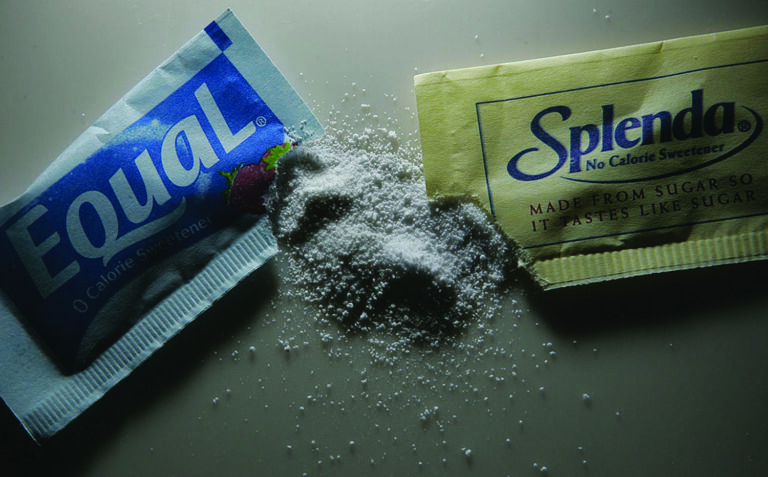
If you’re like most people, you crave a sweet treat from time to time, but you’re also conscious about your weight, blood sugar, and overall health and don’t want to overdo it with sugar. You also might be seeking an alternative to the artificial sweeteners you find in the blue, pink and yellow packets.
These are a few reasons why interest in sugar alcohols has grown over the years. But what is sugar alcohol?
These sweetening agents are found in hundreds of products, from sugar-free chewing gum, protein bars, and diabetic candies to toothpaste and throat lozenges.
Although sugar alcohols can provide the sweetness without the cane sugar, they should be used with caution, as data from researchers at Cleveland Clinic and elsewhere has raised cardiovascular concerns about them.
“I see a huge amount of interest in sugar alcohols and other nonnutritive sweeteners within my own patient base,” says Cleveland Clinic dietitian Kristin Kirkpatrick, MS, RD, LD. “There’s still a desire to have things that people like, that give them that sweet taste, but they’re also worried about their health, based on some of the negative data that has come out.”
What Is Sugar Alcohol?
The term “sugar alcohol” is a bit of a misnomer. Although they’re composed of sugar and alcohol molecules, sugar alcohols contain no table sugar (sucrose), nor do they have the alcohol (ethanol) you’d find in distilled spirits, wine, or beer. Rather, they’re carbohydrates that have a chemical structure that’s similar to regular sugar.
Common Types of Sugar Alcohols
Also known as “polyols,” sugar alcohols are typically easy to spot on product labeling: Just look for ingredients ending in “ol”—with one exception: isomalt. Examples include:
- Erythritol, one of the most widely used sugar alcohols, is found in small amounts in watermelon, pears, and soy sauce and is commercially manufactured through a yeast fermentation process.
- Xylitol is extracted from plant sources like tree fibers or corn and is widely found in diabetic candies and oral care products.
- Isomalt is made from beet sugar.
- Lactitol is manufactured from lactose, the primary sugar in milk.
- Maltitol is made by extracting malt sugar (maltose) from starches like corn and potatoes and applying a chemical process (catalytic hydrogenation).
- Mannitol is found naturally in celery, mushrooms, and an array of fruits; commercially, much of it is made from hydrogenation of natural fruit sugar (fructose).
- Sorbitol is found naturally in certain fruits, like apples, but commercially, it’s made from hydrogenation of starches like corn and potatoes.
How Are Sugar Alcohols Used?
Sugar alcohols occur naturally in minute amounts in a variety of fruits and vegetables, and your body generates small amounts as part of natural metabolism.
However, most of the sugar alcohols you consume are manufactured on an industrial scale from carbohydrate sources, using various chemical or fermentation processes. They’re used to sweeten and thicken a wide variety of “sugar-free” or “diet” products, many of which are highly processed, or ultraprocessed.
The popularity of sugar alcohols has grown partly due to the keto diet craze, Kirkpatrick says, as many “keto-friendly” products contain sugar alcohols because they’re lower in carbohydrates than regular sugar.
In some instances, even products containing natural sweeteners like stevia (Truvia, Pure Via) and monk fruit extract (Nectresse) are blended with sugar alcohols to add some sweetness.
“Erythritol seems to be the one I see the most,” Kirkpatrick says. “When I was in the grocery store recently, I was looking at protein bars and keto foods, and erythritol was in a lot of them.”
Sugar Alcohol vs. Sugar and Artificial Sweeteners
On average, sugar alcohols contain about two calories per gram, compared with four calories for table sugar and zero calories for artificial sweeteners like aspartame (Equal), saccharin (Sweet’N Low), and sucralose (Splenda).
“Sugar alcohols are lower in calories than regular sugar, but not by a tremendous amount, which is why on products containing sugar alcohols you see a note that says it’s not a low-calorie food,” Kirkpatrick says.
Whereas artificial sweeteners may be hundreds of times sweeter than table sugar, sugar alcohols tend to have 50% to 80% of sugar’s sweetness level, so it may take more sugar alcohol to gain the same sweet sensation you would get from table sugar.
Unlike table sugar, sugar alcohols (and artificial sweeteners) don’t cause abrupt blood-sugar spikes. Still, since they’re carbohydrates, some sugar alcohols may slightly increase blood glucose.
Health Benefits of Sugar Alcohols
Because they generally have a minimal effect on blood glucose, sugar alcohols are often marketed as being good for people with diabetes. And, being slightly lower in calories, they also offer somewhat of an advantage over table sugar when it comes to watching your weight.
Also, sugar alcohols, particularly xylitol, don’t have the adverse effects on dental health that regular sugar does, as oral bacteria cannot ferment them to form acids that erode tooth enamel and cause cavities and tooth decay. That’s why xylitol is commonly used to add sweetness to products like toothpastes, mouthwashes, cough drops, and chewing gum.
Potential Risks and Side Effects
One of the reasons why sugar alcohols have minimal effects on blood sugar is because your body cannot fully digest them. But this same phenomenon is also responsible for one of the most common complaints about sugar alcohols: gastrointestinal (GI) side effects. Consuming sugar alcohols, especially in higher amounts, can cause bloating, gas, diarrhea, and indigestion, and they also have a laxative effect. (Erythritol tends to be gentler on the GI tract than other sugar alcohols.) Given their digestive effects, sugar alcohols may not be suitable for people with irritable bowel syndrome, inflammatory bowel disease, or other GI issues.
Although there’s no specific recommended intake level, consuming 10 to 15 grams of sugar alcohols per day is generally considered to be safe from a GI standpoint. Just be aware that some products contain significantly higher amounts of sugar alcohols.
What’s more concerning about sugar alcohols is research in recent years linking them to increased cardiovascular risk. In a 2024 study, Cleveland Clinic researchers reported that consumption of erythritol in amounts typically found in a sugar-free soda or muffin promoted blood clotting (thrombosis), thereby potentially increasing the risk of heart attacks and ischemic strokes. Earlier that year, the researchers reported similar findings for xylitol.
In another study, University of Colorado researchers reported that when cells that line blood vessels in the brain were exposed to an amount of erythritol similar to that found in a typical sugar-free beverage, they generated lower amounts of nitric oxide (which helps blood vessels relax) and higher amounts of a protein that causes blood vessels to constrict, and also developed a reduced ability to release tissue plasminogen activator, a compound that helps to break down blood clots. The findings suggest a potential mechanism by which erythritol contributes to increased ischemic stroke risk, according to the study (Journal of Applied Physiology, June 1, 2025).
In response to the study findings, some food manufacturers are “trying to steer away from sugar alcohols, especially erythritol,” Kirkpatrick says. “There was a product I saw the other day that, even though there’s only so much space on the front of the product to advertise, they included ‘zero erythritol’ on it.”
What’s particularly worrisome is that sugar alcohols are in many products commonly marketed for people with diabetes, who already are at increased cardiovascular risk. So, ask your physician if you should limit or avoid sugar alcohols if you have, or are at higher risk for, cardiovascular disease.
Curb Your Sweet Craving
The latest Dietary Guidelines for Americans emphasize eating more whole foods, while minimizing or avoiding consumption of packaged and heavily processed foods and beverages.
“Many of the foods that contain these nonnutritive sweeteners are also ultraprocessed and have independent risks outside of the sweetener,” Kirkpatrick says. “Just because it’s sugar-free doesn’t mean it’s healthy.”
As a potential alternative to table sugar, sugar alcohols, and artificial sweeteners, some nutrition experts are considering allulose, a “rare sugar” derived from figs, raisins, and maple syrup, among other foods. Like sugar alcohols, allulose is less sweet than regular sugar, is lower in calories and doesn’t cause blood-sugar spikes or promote tooth decay, but it tastes more like table sugar and tends to be gentler on the GI tract, Kirkpatrick says: “I think you’re going to start seeing it more and more because it doesn’t have the negative data surrounding it and consumers are now looking for products that don’t have erythritol.”
However, until we have a larger body of evidence from long-term human safety studies, it’s probably best to carefully inspect product labeling and limit consumption of allulose and any sugar substitutes. If you need some sweetness, allow yourself a little natural sugar or honey or a splash of fruit juice, and enjoy some berries, apples, or other fruit that provide natural sweetness, Kirkpatrick says. Ask your health-care provider about sugar alcohols (and nonnutritive sweeteners in general), and view them in the context of your overall health.
“Doing a deep dive into your health and what makes sense for you is important,” Kirkpatrick says. “Someone who has a low cardiovascular risk might have a protein bar once a week or have a little erythritol to sweeten a cup of coffee, and it’s probably fine.
“The ultimate decision on what you’re going to do with some of these nonnutritive sweeteners is really driven by how much you use them,” she continues. “Looking at the whole picture is always a good idea.”
About sugar alcohols…
- They occur naturally in certain fruits and vegetables but are most often manufactured from carbohydrate sources.
- They are found in an array of sugar-free or diet products and many highly processed foods.
- They are sometimes added to natural sweeteners, such as stevia and monk fruit extract, to increase their sweetness.
- They’re less sweet than table sugar, but they’re lower in calories and carbohydrates and do not cause sudden spikes in blood sugar.
- They can cause gastrointestinal side effects, so they may not be appropriate for individuals with irritable bowel syndrome, inflammatory bowel disease, or chronic other digestive problems.
- Some data suggest they may promote blood clotting and increase the risk of heart attacks and ischemic strokes. Ask your doctor if you should refrain from sugar alcohols if you have, or are at increased risk for, cardiovascular disease.