In this age of electronic banking, voiding a paper check can seem like an anachronism…so much so that many people no longer even know how to void a check, and some even may ask, “What is a voided check?”
We interviewed banking expert Ted Rossman, senior analyst at Bankrate.com, to take us through this simple process that we’re occasionally still called upon to perform. He also gives us some voided check safety tips and alerts us to some common mistakes when voiding a check.
What Is a Voided Check?
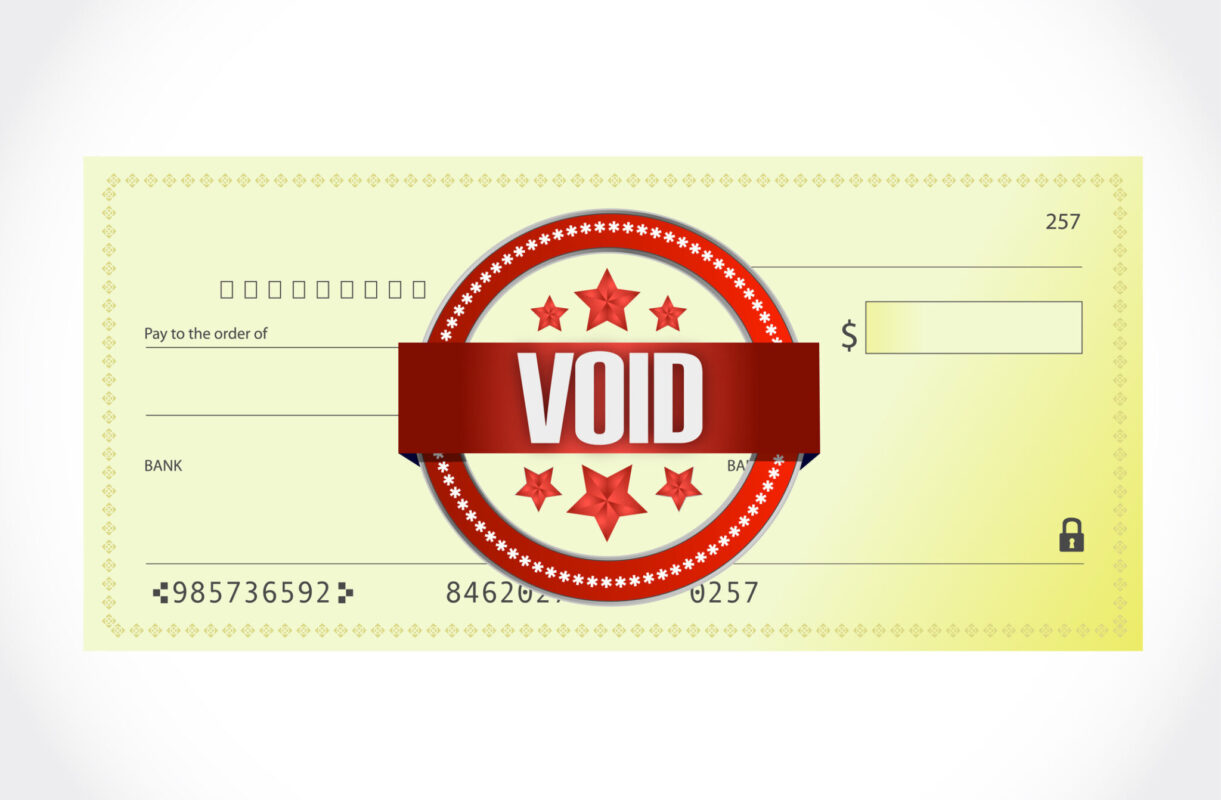
“A voided check is one that can’t be used because you’ve written ‘VOID’ across it,” Rossman says. “You create a voided check for the express purpose of sharing your banking information with a trusted entity.”
Some people confuse “stop-payment” and “voided check.” Others get “voided checks” mixed up with “cancelled checks.” But there are key differences…
- “Stop payment” means you want to block your bank from paying out on a check that you’ve written.
- Cancelled check is a copy of an already-cashed check.
Voided check has never been made out to any payee for any amount and is done for informational purposes only. Example: When you start a new job, your company’s accounting department might ask you for a voided check for direct deposit. They’re not going to do anything with the check except use it as a reference to get your exact banking information, including your routing and account numbers, so that your paychecks will go to the right place.
But why void a check instead of just telling your colleagues in accounting what they need to know?
For one thing, bank numbers are sensitive information that you might rather not share over the phone or via e-mail…and there is a chance you’d read off or type a number incorrectly, confuse the routing and account numbers or make some other error. “Voiding a check for bank-account verification eliminates some of that margin for error,” says Rossman.
When Do You Need to Void a Check?
These days, with so much banking activity happening online, both consumers and institutions have become much more comfortable simply asking you to provide your account information via a secure web form. But in addition to setting up direct deposit, there’s still a chance you’ll be asked to provide a voided check for automatic payments…to correct an earlier mistake regarding account information…to take out a mortgage…or when changing systems or updating records.
How to Void a Check…Step by Step
- Use a permanent blue or black pen to write the word “VOID” across the front of the check.
- Be sure that your writing covers all the boxes and spaces that you would normally fill in when writing a check, such as amount, date, signature and payee.
- Do not cover the important information you’re trying to share, including your name and address at the top, your account and routing numbers (probably in the lower left), and the check number.
- If you keep a check register, note in it that this check (referenced by number) was voided.
Safety Tips: Protecting Your Bank Information
Chances are, you’re handing your voided check to a trustworthy institution that’s either going to file it away or destroy it. But there’s still a chance that someone else could get their hands on it and use it to do a “check-washing” scam, in which the scammer washes away the handwritten ink with common chemicals and then fills out the check to himself. “That’s why you don’t want to leave any wiggle room by not covering an important part of the check,” Rossman says.
If the institution returns the voided check to you after it has recorded your information, shred it or otherwise destroy it. “Treat it like you would a check that you’ve deposited electronically,” says Rossman.
Alternatives If You Don’t Have a Check
Ask the person requesting the check if it’s possible to share your banking information with them in some other form. Some may accept the information verbally or in writing, while others might accept deposit slips, direct-deposit forms or bank letters.