There is an abundance of cleaning products available in the grocery store aisles, but if you are a health-conscious consumer, cleaning with vinegar is surprisingly effective. “White vinegar is a safe, eco-friendly and cost-effective alternative to harsh chemical cleaners,” says Caroline Blazovsky, America’s Healthy Home Expert and CEO and founder of My Healthy Home.
While this natural household cleaner isn’t a cure-all for all the dirt and grime around your house, it is suitable for a wide range of cleanup tasks. We asked Blazovsky why (and for what) she recommends white vinegar and how you can use it effectively in your home.
Why Use White Vinegar for Cleaning?
Vinegar is as an earth-friendly, multipurpose cleaner. “Its primary strength lies in its acetic acid content, which allows it to dissolve dirt and grease without releasing toxic fumes,” says Blazovsky. “It is considered a low-VOC (volatile organic compound) cleaner, though it does have an odor. And vinegar is highly biodegradable.”
Vinegar is also affordable—a typical 128-ounce (one-gallon) container of white vinegar costs only a few dollars, making it far less expensive than the most standard cleaners on the market. And a little goes a long way, since it should be diluted for cleaning.
Note: One type of vinegar—called “cleaning vinegar”—contains 6% acetic acid, while regular white vinegar contains 5%. But, says Blazovsky, “The standard 5% distilled white vinegar is powerful enough for general cleaning tasks and as a light disinfectant.” The 6% acetic acid is stronger, which means it can be risky for certain surfaces and has a stronger odor. “I recommend the stronger vinegar for outside applications like weed killing verses inside cleaning,” says Blazovsky.
White vinegar also has a smaller environmental footprint. “White vinegar breaks down rapidly and leaves no toxic residue,” says Blazovsky. “It will break down mostly into water, salt and carbon dioxide with the acetic acid evaporating.”
How White Vinegar Works as a Cleaner
White vinegar works well when used to remove limescale, the chalky deposit that accumulates on exposed hard surfaces, as well as hard-water stains, rust and mold. “It is an acid, so it can kill around 80% of mold species,” says Blazovsky. “It does require more contact time—perhaps 60 minutes depending on the surface—to be effective. For grout, you can leave the vinegar overnight. But because it is an acid and can damage a finish, you need to make sure you are not using it on surfaces that are sensitive to acid.”
How does vinegar work as a disinfectant? It has been shown to help remove flu virus and pathogens such as Escherichia coli (E. coli), Salmonella and Listeria monocytogenes. But Blazovsky says white vinegar is really considered a cleaner, not a disinfectant. “If you want to try a low-grade cleanup after a household flu or cold and want to stay away from harsh chemicals, vinegar is one way to go,” says Blazovsky. “It is not considered a 100% reliable disinfectant because its effectiveness can be inconsistent.”
Common Uses for White Vinegar In the Home
You can use white vinegar for many cleaning tasks around the house. “In places where food is prepared or there are individuals sensitive to harsh chemicals and fragrance, it is a great cleaner to remove grease, dirt and some bacteria and mold,” says Blazovsky. Use it for…
Kitchen surfaces and appliances
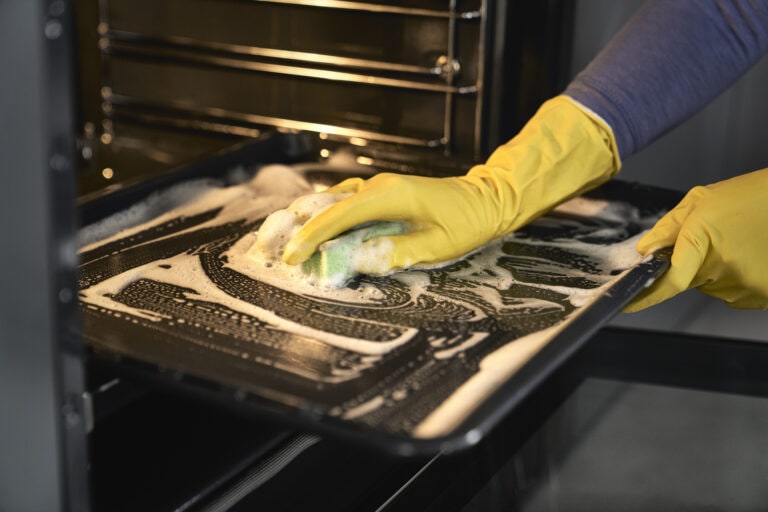
Use undiluted white vinegar on sinks, stovetops, certain countertops, including laminate, butcher block and stainless steel, as well as on cutting boards, Blazovsky recommends. “It works great in kitchens…especially reducing levels of E. coli, Salmonella and Listeria.”
Bathroom cleaning
Use white vinegar to clean tiles, grout, sinks and your bath or shower—particularly those damp areas prone to mold. “We have used vinegar for clients that cannot tolerate harsh mold-remediation chemicals,” says Blazovsky. You can also soak your shower head in a bowl of vinegar to remove calcium deposits, Blazovsky recommends. “Vinegar’s mild acidity excels at dissolving buildup.”
Glass and mirrors
Vinegar can remove fingerprints, grime and hard water spots from glass, says Blazovsky. “It leaves a streak-free shine without residues like a lot of commercial cleaners,” she explains. She mixes one cup of white vinegar and one cup of distilled water in a spray bottle to spritz on glass and mirrors. Then, just wipe them down with a microfiber dishcloth. Since distilled water has no minerals, it leaves behind no streaks or cloudy spots.
Laundry and fabrics
White vinegar can work in several ways for laundry. It can work as a stain pre-treatment. Blazovsky sprays the stain with full-strength vinegar and lets it sit for 10 minutes. To eliminate odors from clothes, add one cup of vinegar to the rinse cycle. As an eco-friendly fabric softener, add one-half cup of vinegar to the liquid fabric softener dispenser in your washer. It also can be used to clean the machine—”run an empty hot cycle with two cups of vinegar,” Blazovsky recommends.
Odor removal
Vinegar can remove odors around the house. Set out a bowl or dish with a half-inch of vinegar and leave it overnight. You’ll wake up in the morning to a fresh-smelling room.
What Not to Clean with White Vinegar
While white vinegar is an effective cleaner, it should be avoided on certain appliances.
Natural stone countertops
Skip vinegar on these surfaces. Vinegar can erode the surface and make it more vulnerable to staining.
Hardwood or stone floors
Because vinegar is an acid, it can break down the flooring surface and reduce shine.
Grout
Vinegar can clean grout—the sealant between tiles—but don’t use it any more than twice a year. Too much can erode the grout and potentially discolor it.
Dishwashers
Using vinegar in your dishwasher can damage some rubber seals and hoses.
Washing machines
Occasional use is fine, as described earlier. However, excessive use can erode the rubber seals on your washing machine. Be sure to use it only with a full tub of water.
Caution: Combining vinegar with certain chemicals can be dangerous, warns Blazovsky. “Never mix vinegar with bleach. It will produce toxic chlorine gas,” she says. “And if you mix it with hydrogen peroxide, it can create peracetic acid (a high-strength disinfectant). Using them on their own is the best and safest option.”
Vinegar Cleaning Recipes and How-To Tips
Here are a few easy vinegar cleaner recipes. General rule of thumb: A 1:1 ratio of water to vinegar.
All-purpose vinegar spray
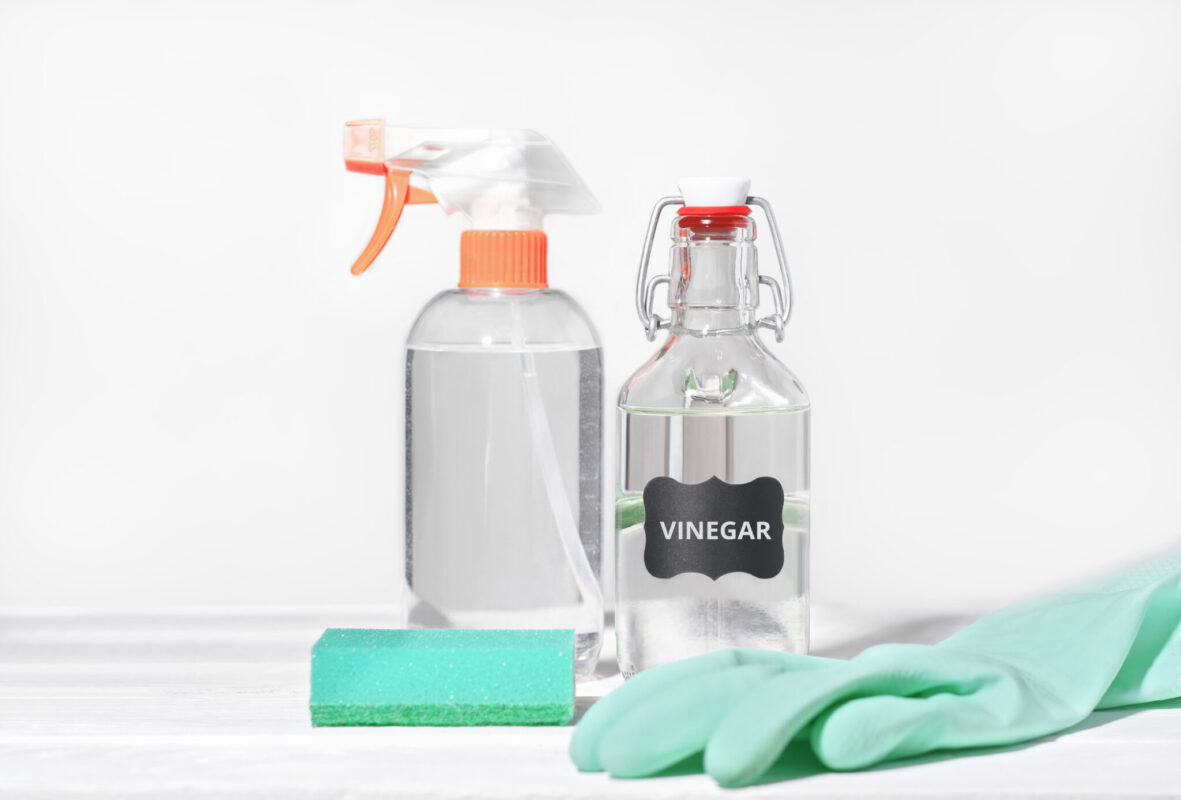
Combine one cup of distilled water and one cup of vinegar in a clean spray bottle. If you are sensitive to vinegar, which can irritate eyes or skin, reduce the amount of vinegar.
Scented spray
Blazovsky doesn’t recommend adding scents to the vinegar mixture. “It raises your VOC load,” she says. “Even natural things, like lemon, lavender, citrus smells and scents add chemicals to the air.” But if you do want your vinegar mixture scented, use the same recipe as above and add 15 to 20 drops of scented essential oils, such as rose, lemon or rosemary.
If you don’t have oils on hand: Peels from citrus fruits and fresh herbs work just as well. Soak your peels in vinegar, seal them in a jar, and leave the jar unattended for two weeks. Strain the peels, and add the scented vinegar to an empty spray bottle. Dilute with an equal volume of water.
Strong vinegar cleaner
Fill a small bowl or container with vinegar, then dab a microfiber cloth or paper towel in it. Apply the vinegar to tough-to-clean areas, such as mold or hard-water spots in the bathroom. It can also work in the kitchen, especially in the sink or on the cutting board. Blazovsky says, “Cleaning wooden cutting boards with undiluted vinegar can inhibit bacterial growth.”
Do dilute the vinegar to create a safe, all-purpose cleaner. Undiluted vinegar can remove tough-to-clean hard-water spots or buildup from showerheads. But in most cases, the diluted mixture of a one-to-one ratio of water and vinegar works just fine.
Do a spot test in advance. Test by dabbing vinegar on a surface area before cleaning with it. Vinegar can damage certain finishes and painted surfaces.
Do ventilate while cleaning. Keep your windows open while cleaning with vinegar to minimize odors.
Do wear gloves for protection. Vinegar can irritate your skin.
Don’t use vinegar on natural stone or wood surfaces. It can etch or dull stone or wood surfaces. Stick with the appropriate cleaners for these areas instead.
Don’t overuse vinegar on grout. While occasional use is fine, too much can erode the grout between tiles.
Don’t mix vinegar with other household cleaners. Vinegar mixed with other cleaners, such as bleach or hydrogen peroxide, can become dangerous.
Don’t mix vinegar with baking soda. Using baking soda and vinegar together as a cleaning solution eliminates the effectiveness of both. Instead, apply them separately to remove debris, dirt and grime around the house.