
There are only three major cellular networks in the US…but there are dozens of different cellular-service providers and hundreds of cellular plans to choose among. What are the key considerations for seniors selecting cellular plans? Is it prudent to stick to the plans specifically marketed to older users? Do low-cost providers offer real value…or is it safer to choose one of the three big carriers—AT&T, T-Mobile and Verizon?
We discussed these and other issues with Monica Dyer, editor-in-chief of TheSeniorList.com, which regularly reviews cell-phone plans for seniors…
What Seniors Should Look for in a Phone Plan
“For most seniors, the top three considerations are cost, the amount of data they’ll need and the coverage area,” says Dyer.
When evaluating cost, Dyer cautions that the advertised price doesn’t always tell the whole story. “You also want to look for any ‘hidden’ costs,’” she says. “These can include things like activation fees, device financing charges, taxes, regulatory fees, surcharges, autopay requirements and so forth.”
There are numerous paths seniors could follow to obtain low-cost cellular service. Senior-only cellular plans and discounts are worth exploring, as are simple no-contract-required plans that cost as little as $15 to $20 per month.* There’s even a government program that can help some seniors lower their cellular bills—more about these and other options below.
Another option: Join a family member’s cellular plan. Many carriers, including all three of the major carriers, offer family plans that supply multiple members of a family with their own phone lines, and the cost per line can be quite reasonable.
Other factors worth considering when selecting a cellular provider include customer service, ease of use and flexibility. Some service providers offer customer support largely or entirely via text and chat, with little or no phone support…while others not only have 800-numbers but also brick-and-mortar stores for in-person assistance. The key factor when it comes to flexibility is whether a plan locks customers into extended contracts.
Types of Phone Plans Available for Seniors
To pare down the long list of cellular-service options, ask yourself these questions…
How much data do I need? Most cell-service plans offer unlimited domestic calling and texting. But plans differ when it comes to data. There are three types of data plans to consider…
- Unlimited plans don’t cap how much the phone can be used to access the Internet via cellular networks each month.
- Limited plans cap this usage—anywhere from under one gigabyte (GB) to dozens of gigabytes per month. (Note: One gigabyte of data provides approximately one hour of standard video streaming).
- No-data plans, also known as “talk and text only” plans, allow only calls and texts but no access to Internet, e-mail or streaming.
These days it’s possible to find affordable cell-phone plans that offer abundant data—there even are unlimited data plans for seniors available for reasonable prices. “Unlimited phone plans, which generally include unrestricted talk, text and data, are now becoming pretty standard,” says Dyer. “Our research shows that the average for unlimited plans can range anywhere from $15 to $90 per month, depending on the carrier.”
It’s worth noting that unlimited data doesn’t necessarily mean unlimited high-speed data. “Most unlimited plans still come with soft data caps,” adds Dyer. “This means that even though seniors can use as much data as they’d like, after they reach a certain threshold during a given month—usually between 35 GB and 50 GB—speeds may be throttled, or slowed down, until the next month begins.”
What’s my prepaid vs. postpaid plan preference? Prepaid cell-phone plans require users to pay a flat fee at the beginning of each billing cycle. They often provide low prices and typically don’t require long-term contracts or credit checks.
Postpaid cellular plans sometimes require a contract and generally charge higher prices than value-oriented prepaid plans, but they usually provide access to the fastest available connection speeds, a free or heavily discounted new phone, and additional perks such as streaming service subscriptions.
Which cellular networks work well in my area? Cellular carriers often advertise the overall quality of their coverage networks. What really matters, though, isn’t which has the most extensive coverage nationwide but which has strong coverage in the places where you regularly spend time. You can compare local coverage quality at the third-party website CoverageMap.com. Important: AT&T, T-Mobile and Verizon each operate their own cellular networks. Other cellular providers provide service through one or more of these three networks. Consumers considering these smaller carriers should check which of the big-three cellular networks the smaller carrier utilizes, then confirm that this network provides strong coverage in their area.
Top Phone Plan Providers for Seniors
Our selections for the top plans for seniors were largely based on the following criteria…
Pricing and affordability: Many seniors live on a fixed income, so financial considerations are a big factor. Unlimited phone plans offering all the bells and whistles simply may not be feasible for those living on Social Security and retirement savings. Consequently, we looked for a good balance between affordability and quality features.
Coverage: Companies with the largest 4G LTE and 5G service areas tend to offer the best overall experience to consumers. This is something to keep in mind, especially if you plan to travel. But as previously mentioned, the bigger consideration is the strength of the coverage in your area.
Health and safety services: While not all our selected carriers offer these features, for seniors living alone or with acute health issues, carriers that offer perks such as built-in connections to medical or safety support are a viable option.
Customer service: Quick and easy access to customer service is essential, which is why, as part of our carrier review process, we interacted with carrier representatives to ensure the customer service experience was a positive one.
Leading contenders for the title of best phone plan for seniors, based on affordable prices for service plans and other features that often appeal to older customers…
|
|
Consumer Cellular |
Lively |
AT&T |
T-Mobile |
Mint Mobile |
Cricket Wireless |
Visible |
|
Starting Monthly Price |
$20 |
$19.99 |
$99 (with home Internet) |
$50 |
$15 Prepaid |
$35 Prepaid |
$25 |
|
Network |
AT&T |
Verizon |
AT&T |
T-Mobile |
T-Mobile |
AT&T |
Verizon |
|
Starting Data |
1 GB |
1 GB |
Unlimited |
50 BG |
6 GB |
10 GB |
Unlimited |
|
Features |
Unlimited talk, text |
Unlimited talk, text |
Unlimited talk, text, data + home Internet |
Unlimited talk and text |
Unlimited talk and text |
Unlimited talk, text, data |
Unlimited talk, text, data |
Consumer Cellular
“Consumer Cellular is extremely popular among seniors for its low rates,” says Dyer. “Its cheapest unlimited talk-and-text plan starts at $20 a month, and no long-term contracts are required. Since it uses AT&T’s network, Consumer Cellular also offers nationwide coverage and provides excellent customer service.” If the 1 GB of data provided by that $20-per-month senior cell phone plan isn’t sufficient, there’s a $25-per-month plan that provides 5 GB…and a $35-per-month unlimited plan available to customers age 50 and up.
Warning: If you exceed your monthly data allowance, most carriers will simply throttle your Internet speeds for the remainder of the billing period, but some carriers may charge you extra. Example: Consumer Cellular upgrades customers to the next highest tier when they overrun their data limit—if you sign up for the $20 1 GB plan but use 2 GB in a month, you’ll charged an extra $5 and bumped up to the 5 GB plan. Other carriers impose far less consumer-friendly overage charges that can add up to significant amounts.
Lively
“Lively is another budget-friendly choice high on our list,” says Dyer. “It offers a basic unlimited talk-and-text plan starting at $19.99. We also like that its two Jitterbug phones are geared specifically for seniors. They offer super-helpful health and safety features such as a designated on-call nurse and urgent response buttons that can quickly connect users to a certified agent who will then dispatch emergency responders.” The $19.99 plan includes 1 GB of data, but customers can upgrade to 5 GB for an additional $5 per month. Lively utilizes Verizon’s cellular network. Most of the health-and-safety features Dyer mentioned are available only with Lively’s higher-end plans. Example: The “nurse on-call” feature is available only with Livey’s premium plan, which costs $49.99 per month.
AT&T
“Not surprisingly, AT&T plans make our list for having one of the largest and most reliable network infrastructures,” says Dyer. “It has a 55+ plan that gives seniors a discount if they sign up for a bundled wireless-and-Internet-service plan.” The 55+ plan provides couples age 55 and up with two lines with unlimited talk, text and data, plus home Internet service, all for $99 per month.
T-Mobile
“T-Mobile also has a large network in the US, and, like AT&T, has a program offering older adults an unlimited 55+ discounted plan,” says Dyer. “T-Mobile’s plan comes with three different options, depending on the benefits you want.” The most affordable of these 55+ options is Essentials Choice 55, which includes 50 GB of data in addition to unlimited talk and text for $50 per month for one line or $60 for two.
Mint Mobile
“For seniors looking for a great prepaid phone plan, Mint Mobile is a standout,” says Dyer. “Since it is owned by T-Mobile, it runs on T-Mobile’s vast network and also has a senior plan called Mint 55+. Mint Mobile has flexible plan options, straightforward pricing and affordable plans that start as low as $15 a month.” That $15 includes unlimited talk and text plus 6 GB of data. Mint is a great place to start if you’re searching for prepaid phone plans for seniors.
Cricket Wireless
“Cricket Wireless is a prepaid phone plan known for offering significant discounts, like $35 per month, on unlimited talk, text and data plans,” says Dyer. “The caveat is that for this deal specifically, you need to pay up to a year in advance.” Cricket’s most affordable unlimited data plan for customers who prefer not to pay for a full year of cellular service upfront costs $35 per month. It provides service through AT&T’s cellular network.
Other notable options…
Visible, owned by Verizon, offers plans featuring unlimited data, as well as unlimited talk and text, for as little as $25 per month, taxes and fees included.
Xfinity offers plans featuring unlimited data, as well as unlimited talk and text, to customers who also have Xfinity Internet home service for as little as $30 per month. It provides access to Verizon’s cellular network.
Tracfone offers plans starting at $15 per month—that entry-level plan provides unlimited talk and text plus 1 GB of data. It utilizes Verizon’s cellular network.
Special Discounts and Programs for Seniors
Additional cellular savings might be available through…
AARP phone plan discounts. AARP members can receive a 5% discount on Consumer Cellular plans.
Carrier-specific senior plans. Many carriers offer senior discounts on phone plans. You don’t necessarily even have to be retirement age to qualify—50 or 55 often is old enough.
Lifeline program for seniors. A program overseen by the Federal Communications Commission provides a discount—often of $9.25 per month—to qualifying low-income individuals who obtain cellular or Internet service through participating providers. See LifelineSupport.org for details.
How to Switch Carriers Without Losing Your Number
You don’t have to change phone numbers when you change cellular carriers. The new carrier you select should be able to handle the phone number transfer process on your behalf. You likely will have to obtain a PIN from your prior carrier for the new carrier to do this, and it’s important that you don’t cancel your old cellular service before arranging this. “When you sign up for new service, tell the new provider that you want to keep your current number,” advises Dyer. “They will be able to walk you through the steps to contact your current carrier to get everything you need to transfer your number.”
Choosing the Right Phone: Senior-Friendly Devices and Features
Many seniors seek the same cell-phone features as younger phone users. “Just like younger generations, seniors also appreciate phones with great camera quality and even alert features to remind them of important tasks,” says Dyer.
Other seniors prefer cell phones that are specifically designed for users who have dexterity, vision and/or hearing issues…that are simple to use…and/or that are comparable with cell-phone plans with medical alert features. “Their list of priorities can include things like larger and brighter screen buttons and interfaces, hearing-aid compatibility, GPS-location assistance, and health, medical and safety features,” says Dyer. “The latter, which can include options such as emergency response buttons, is becoming more popular since so many older adults are deciding to age in place at home—and alone.”
Phones that might appeal to older users include…
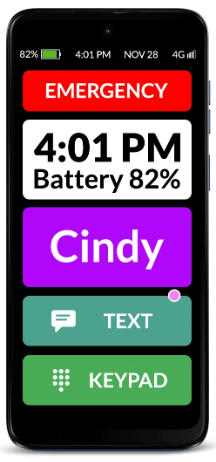
RAZ Memory Cell Phone, designed specifically for users who suffer from memory and vision loss. Users can simply tap and hold a picture of a friend or relative to call that person, for example, and it can be set to display extremely large, easy-to-read buttons. It’s compatible with numerous cellular carriers. Prices start at $369.
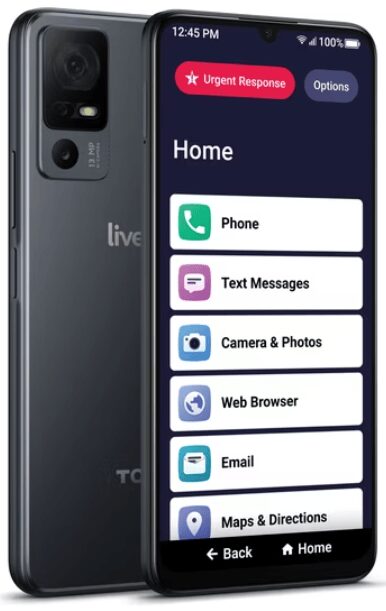
Jitterbug Smart4, which has a large screen, simple menu and strong speaker. It’s compatible with Lively cellular plans. Prices start at $47.99.
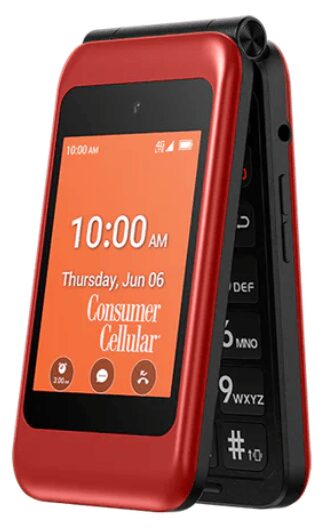
IRIS Easy Flip, which features a large keypad appropriate for users who have limited dexterity. It’s compatible with Consumer Cellular plans. Prices start at $59.
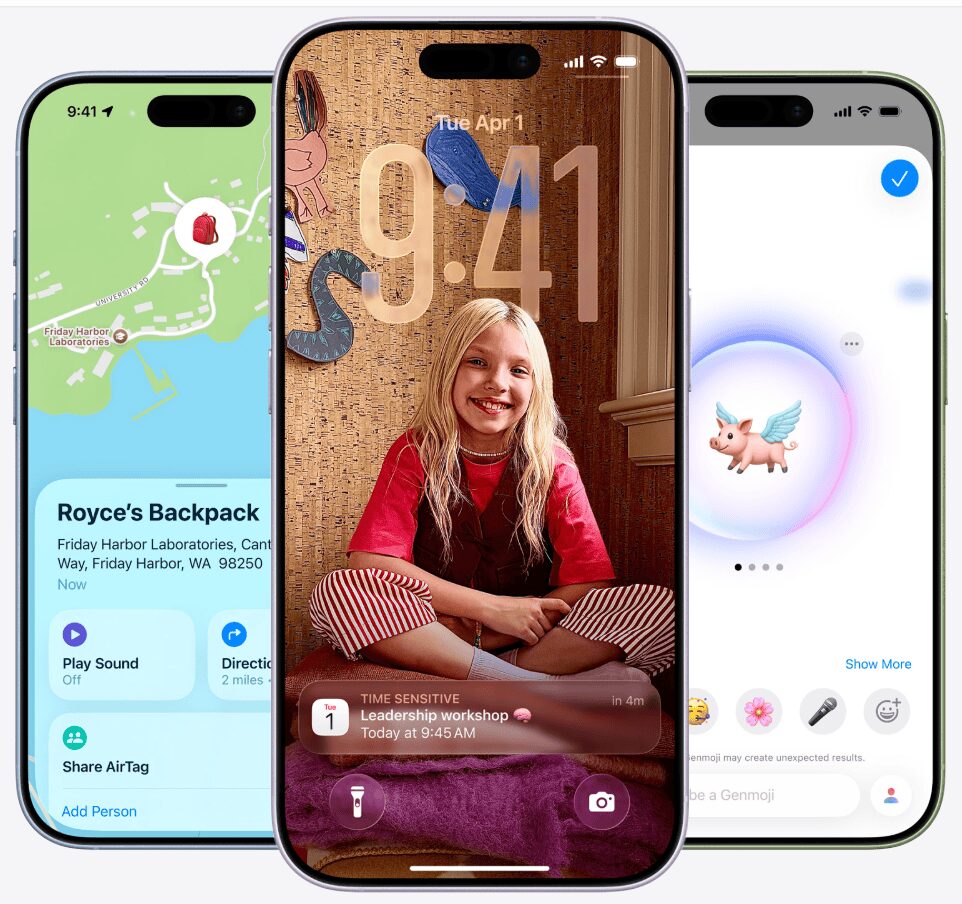
iPhone 17, the popular, versatile, high-end smartphone, is not specifically designed for older users, but it survives drops extremely well, its screen is large and easy to read, and it’s simple to use once its “Assistive Access” setting is engaged. It is compatible with virtually all carriers. Prices start at $799.
*Cell-service rates and offers cited in this article were available as of mid-2026. Refer to service provider websites for current terms. Most rates do not include taxes and fees, except as noted.