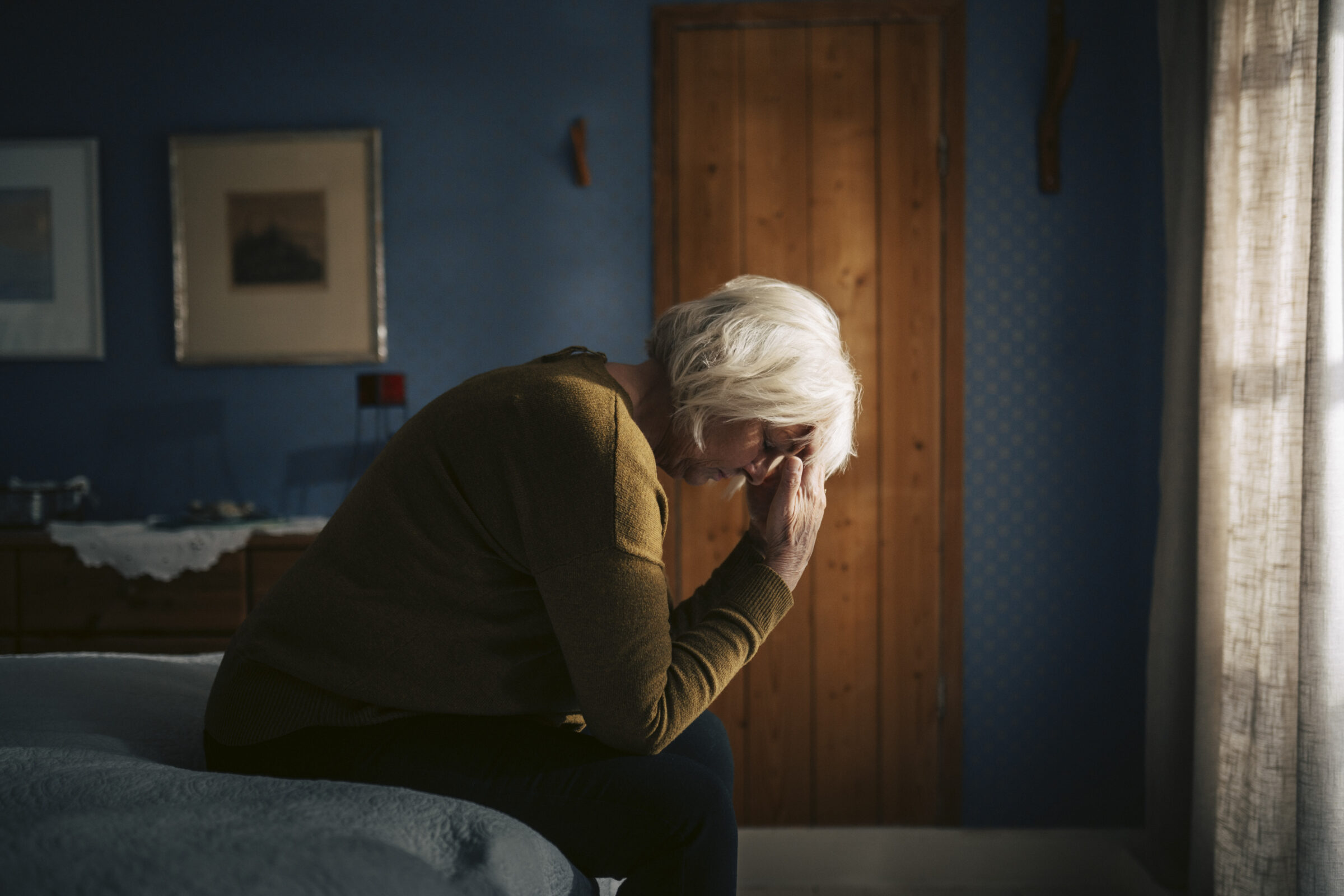
People often say they’re depressed when they’re feeling blue, but is that a temporary sadness or a mental health condition that needs specific attention? Bottom Line Health turned to Alice A. Frye, PhD, MPH, professor of psychology at the University of Massachusetts at Lowell, to better understand major depressive disorder.
Major depressive disorder is the clinical term for depression, a mental state that involves negative changes in emotion as well as in cognition. People usually experience increased sadness (in children there’s often increased irritability) along with strong feelings of self-loathing and self-criticism and the tendency to blame oneself. It’s also very frequently associated with changes in sleeping and eating habits—too much or too little of either.
What you may find most surprising is that depression can also cause problems with decision-making. People who are depressed may not be as precise in their thinking as they were when they were not depressed.
People can develop depression at any stage of life. On one hand, according to the CDC’s April 2025 report from the National Center for Statistics, which looks at numbers in a given two-week period, the prevalence of depression in adults 60 and older was 8.7 percent compared to 19.2 percent among of adolescents between the ages of 12 and 19.
But on the other hand, recognizing depression in older age can be challenging to the depressed person and those around them. Loved ones may attribute certain signs of depression in an older person, such as talking a little more slowly or not being as expressive as they used to be, to the aging process and miss the fact that they’re depressed and need treatment.
Another problem is that some older people, who might be correctly concerned that they’re depressed, may feel there’s a stigma about getting treatment. So rather than get help, they minimize what they’re feeling. They might say to themselves things such as “I really shouldn’t be depressed” or “This is all my fault. I don’t deserve treatment” or “Nobody should have to put up with me.” These very strong negative feelings are part and parcel of depression and signs that they need to get help rather than minimize or deny what they’re going through.
Know the Major Depressive Disorder Risk Factors
One of the most underappreciated risk factors for depression is stress, and stress changes over one’s lifetime. You may not be able to punch through challenges that you had been able to face head-on at a younger age. That lack of ability can change your sense of self and put you at risk for depression.
Stress and depression can also stem from losing your social networks as people close to you pass away. Life changes, such as having a serious physical illness or losing mobility, can trigger quite serious depression. Burgeoning research about the relationship between illness and depressive symptoms shows that problems as wide-ranging as getting the flu to having a heart attack can put you at risk.
Recognizing Major Depressive Disorder Symptoms
Some depression symptoms that are more easily recognizable in a younger person can be hard to suss out in an older one. For instance, it’s typical that as we age, we need less sleep. So, it’s easy to think that sleeping less or having insomnia is simply because you’re getting on in years. Some women might attribute sleep problems to being postmenopausal. But sleep difficulties are a major symptom of depression. So are changes in eating habits. People sometimes think their appetites wane as they get older or they eat less because they’re less active. But, in fact, not eating is another sign of depression. What’s more, hypersomnia, or sleeping too much, as well as overeating can also be major depressive disorder symptoms.
In a world that’s moving so fast all the time, it’s crucial to slow down and take a look at oneself or those close to us to see if you spot any noticeable changes and whether they’re having a negative impact on quality of life.
Getting Help: Major Depressive Disorder Treatments
The good news about depression is that there are many treatments with very strong empirical support behind them. While there are many medications in many drug classes—it often take trial and error to find which one or combination will work for any given person, there are also many non-drug major depressive disorder therapies that nearly everyone with depression might consider:
Cognitive behavioral therapy, also called CBT, is a very effective form of talk therapy that helps you replace negative thoughts and feelings with positive ones.
Interpersonal therapy, or IPT, is talk therapy that explores how your relationships and your emotions are related and how you can move forward to re-establish human connections and lost social networks.
Behavioral activation is a form of talk therapy that helps you understand how your emotions and your behaviors are connected and gain positive feedback from restarting activities you loved, engaging in movement, and getting reconnected through, for instance, volunteering or joining a group activity. Being more active can be very important for people who have become isolated and sedentary. Research has found that one form of movement in particular, yoga, is a very effective component of an overall depression treatment plan.
Mindfulness-oriented therapies, including meditation and mindful movement, are another way to help ease major depressive disorder symptoms by making you more aware of your thoughts and feelings without passing judgment in order to break a cycle of negative thinking.
Keep in mind that it takes time to feel the effects of therapy. We’re so used to instant gratification that we expect treatment to work overnight, but it can take months or longer to really feel connected to a new activity or social group. The thing is to start off with low expectations and to invest time and effort to create those connections because that’s how you build them—they don’t just happen. And even if you don’t feel better after you distract yourself by doing something, if you don’t feel worse, that was a good couple of hours. Continue to engage: As the train picks up steam, you will start to gain more benefit from it.
Finding Smart Care
Of course, depression therapy involves working with a therapist and possibly a psychiatrist. You want a therapist who has experience with many talk therapy tools and a network of professionals who specialize in others, should you need them…who keeps up on research…and has a good relationship with a quality psychiatrist, should you be able to benefit from medication (only an MD can write prescriptions).
The research on depression medication is quite varied, so it’s important to get a practitioner who is empirically-oriented, who keeps up with the research, knows the most recent findings, and understands what drug might or might not work for you, not somebody who’s will merely write you a script after 15 minutes and show you out of the office. This is crucial since there are new medications for depression gaining approval nearly every year or two.
The bottom line: Depression is a serious illness that has a ripple effect, impacting spouses, children, the person’s entire social network. It’s not a trivial illness. Most importantly, it’s a treatable illness. And it should be treated. People who are depressed deserve treatment. They don’t have to feel as though they just need to shoulder their way through it. There are good quality therapies available, and they can be lifechanging.