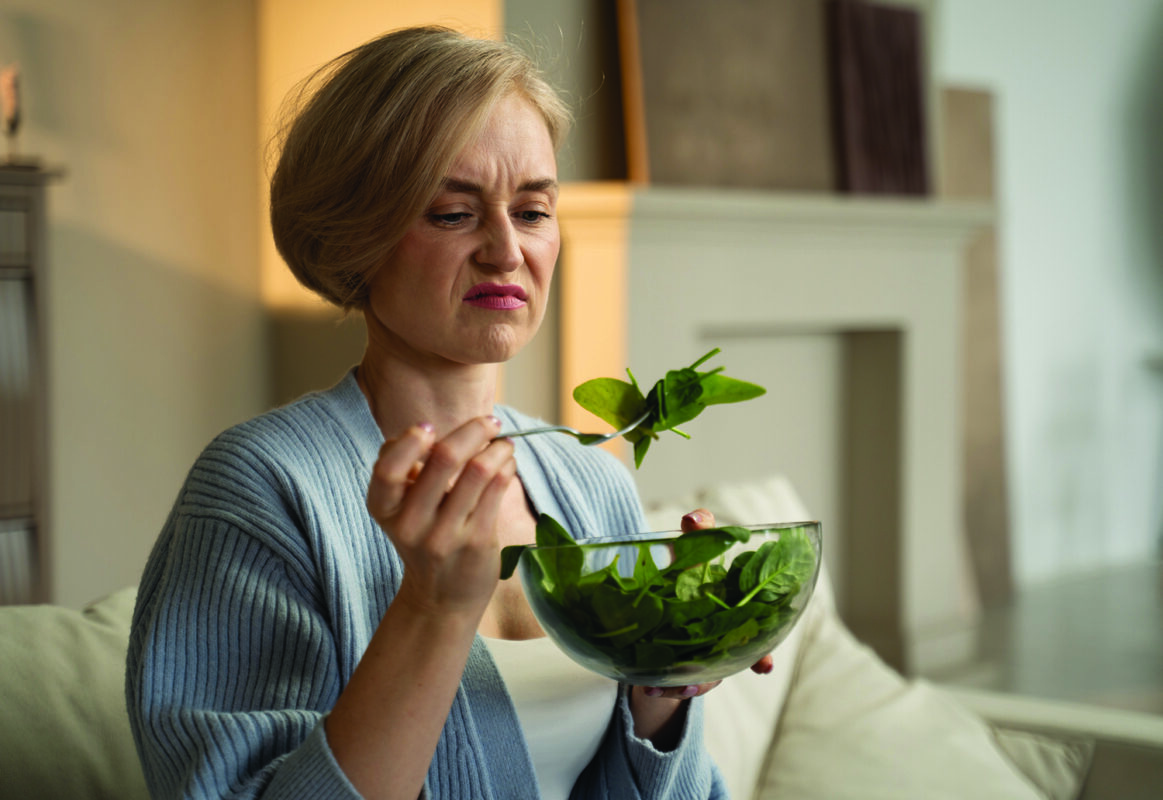
Many older adults report that their sense of taste changes as they get older. This problem is partly caused by a natural loss of taste buds in older age, according to Patricia Bloom, MD, with the Icahn School of Medicine at Mount Sinai.
“Regardless of the cause, loss of taste can lessen your interest in and enjoyment of eating, as well as place you at risk of consuming spoiled food that makes you sick,” Dr. Bloom says. “Taste loss also can red-flag underlying medical conditions, so it is important to mention the issue to your doctor.”
What Is Loss of Taste?
Officially known as presbygeusia, age-related loss of taste can manifest in several ways. “There are now five recognized realms of taste: sweet, savory, sour, bitter, and umami,” Dr. Bloom notes. “Presbygeusia reduces your ability to detect one or more of these tastes, with studies suggesting that sour and bitter are reduced the most. In contrast, sweet seems to be relatively preserved, which may be a reason why some people with dementia seem to develop a sweet tooth.”
While presbygeusia impacts your sense of taste, most older adults don’t suffer complete taste loss (a phenomenon called ageusia). Partial loss of taste (known as hypogeusia) is most likely, Dr. Bloom confirms, although for some people the reduction may be quite significant, while others may experience taste distortion. Dr. Bloom adds that your sense of smell also diminishes with age. “Since taste and smell are interconnected, this also plays a role in decreased taste,” she says.
Common Causes of Loss of Taste
Aging affects taste sensation partly because of how it impacts taste buds, which are located all over the tongue, soft palate (the roof of your mouth), back of the throat, and top of the esophagus (which you may know as your food pipe). You probably haven’t ever given much thought to how your taste buds work, but they contain specialized cells that react to molecules released by foods and drinks as they mix with saliva. Once stimulated in this way, your taste buds send signals, via the nerves, to your brain telling you that what you are eating tastes sweet, savory, or sour.
“Most of us have about 4,000 active taste buds, but they begin to decrease from about age 50,” Dr. Bloom says. “Those that remain begin to atrophy, which further affects our ability to taste foods and drinks.” The nerves that conduct signals from your taste buds to the brain also may not work as efficiently.
Age-related reductions in saliva also factor into taste loss. “Older people often experience reduced saliva production, which is known as xerostomia,” Dr. Bloom says. “Since saliva helps break down foods and release the molecules your taste buds rely on, diminished saliva production can affect your ability to taste.”
Respiratory infections can interfere with taste because they tend to cause inflammation, swelling and congestion in the nasal passages. These symptoms make it harder to smell the food you are eating, with the result that it may seem bland.
Problems with your teeth may impact taste, too. “Ill-fitting dentures may require you to use more dental adhesive, which can affect the taste of food as well as trap food particles that cause an unpleasant taste,” Dr. Bloom says. She adds that upper-plate dentures also can cause taste loss, especially if they are new dentures. “Since upper-plate dentures replace the teeth in the upper jaw, they cover the taste buds on your palate,” she explains. “Moreover, the taste buds will be in constant contact with the base of the dentures.” Over time, your brain should adapt to new upper plate dentures, and you should be able to taste your food again.
Medications can contribute to diminished taste because they exacerbate xerostomia. Common culprits include diuretics, which are used to treat high blood pressure; antidepressants; decongestants; drugs used to treat urinary incontinence; and chemotherapy drugs.
Smoking, excessive alcohol intake, and cannabis use also may be contributing factors in loss of taste, by irritating the taste buds, interfering with your sense of smell, and reducing saliva production.
Head injuries and nerve-related conditions can affect taste if they damage nerves that carry taste and/or smell signals to the brain, or damage areas of the brain that interpret these signals. Some medical conditions also contribute to xerostomia, include diabetes, autoimmune conditions like rheumatoid arthritis and Sjögren’s syndrome; neurological conditions like Alzheimer’s disease, Parkinson’s disease, and stroke; chronic kidney disease; and sleep apnea (especially if this common sleep disorder causes you to breathe through your mouth instead of your nose overnight).
Nutritional deficiencies also have been implicated—for example, low levels of vitamin B12, zinc, and iron may be a cause.
Loss of Taste vs. Loss of Smell
Have you ever noticed that food doesn’t taste as good when you have the flu or COVID-19? “That’s because sensations of taste and smell are intertwined,” Dr. Bloom explains. “The aroma of a delicious meal is one of the most important contributors to its flavor.”
Loss of smell also is natural to some extent, since nerve endings in the nose naturally degenerate with age—in fact, a problem with smell often is described as a problem with taste, according to Dr. Bloom. So, is loss of smell your main problem? You may be able to figure this out if you’re still able to discern the five basic taste realms but find it difficult to distinguish between different tastes—for example, a raspberry and a cherry are both sweet, but it’s your sense of smell that helps you differentiate between the two.
Symptoms That May Occur Along with Loss of Taste
In older age, things often creep up so gradually you can be unaware of them. The same occurs with loss of taste, too. So how can you tell if it’s causing you problems? Dr. Bloom says that having to add more salt to your food is one clue to look for, because it probably signals that your aging taste buds find your usual seasoning efforts too bland. Perhaps you now order the spiciest entrée when you eat out, or find that you notice the texture of your food much more than its taste? These are also symptoms, as is not eating as much as you used to or eating without really enjoying your meal.
Another symptom that can occur is a distorted sense of taste. “For example, foods or drinks might taste sour when they should be sweet or may seem excessively salty,” Dr. Bloom says. “You also may notice a persistent metallic taste in your mouth. This is called dysgeusia and can be caused by reduced saliva production, medications, medical conditions, and nutritional deficiencies.”
When to See a Doctor
Dr. Bloom cautions that any loss of taste or smell without an obvious cause may indicate a medical issue and warrants a call to your doctor, particularly if the onset is rapid and symptoms persist. Other danger signs include loss of appetite that causes you to lose weight and/or become dehydrated (signs of dehydration include urinating less frequently and urine that is a darker color than usual).
Also seek advice fast if loss of taste or smell follows a fall (you may have suffered a head injury without realizing it) or is accompanied by neurological symptoms. “These include drooping on one side of the face, slurred and/or incoherent speech, and weakness on one side of the body,” Dr. Bloom says. “All can indicate a stroke, which is a medical emergency.” Loss of smell accompanied by a headache or new memory problems also should be checked out immediately.
How Doctors Diagnose Loss of Taste
Your medical history will be important in diagnosing the cause of your loss of taste. “We would ask when the symptom first occurred or was noticed, and how it manifests—is it that your sense of taste is diminished or that it seems to be completely gone,” Dr. Bloom says. “We’ll be looking for possible contributing factors, such as a current or recent respiratory infection, a new medication, or dentures that are new or don’t fit properly.”
Simple tests that may be carried out include an examination of your tongue and throat, to check for signs of a dry mouth, inflammation, sores, or infections such as thrush. Your nose will be examined too—your doctor will want to check for swelling, excessive mucus that may indicate a sinus problem, and obstructions.
Smell and taste disorder testing can be useful, too. The University of Pennsylvania Smell Identification Test involves going through a series of booklets that contain “scratch and sniff” strips and four possible answers to choose from. Taste tests involve having solutions that match the five basic tastes placed on your tongue for you to identify.
Imaging tests, such as magnetic resonance imaging, typically are needed only if your doctor suspects that a neurological issue is causing your taste disorder. If a nutritional deficiency or a problem with your thyroid gland might be a factor, lab tests may be ordered.
Treatment Options
If your doctor suspects that a medical issue or nutritional deficiency is contributing to your loss of taste, following their recommendations for managing the condition may help revive your sense of taste. “If medications may be a factor, a different drug or a lower dose might make a difference,” Dr. Bloom says. “Be sure to clean dentures every day and avoid wearing them for at least four hours per day—and be sure to see your dentist if your dentures don’t fit well.”
If your mouth is dry due to reduced saliva, you might want to try artificial saliva products, which can be purchased over the counter at pharmacies. “Something as simple as sucking a lozenge also can be helpful to stimulate saliva flow,” Dr. Bloom adds.
If you’ve gotten into the habit of adding more salt to your food to increase the taste, try to cut back—salt contributes to dehydration, which can worsen xerostomia. “If you can’t do without it, a good approach is to add a very small amount to the finished meal instead of using it during cooking,” Dr. Bloom advises. Also try to cut back your consumption of caffeine and alcohol (and avoid using mouthwashes that contain alcohol).
Other supportive care strategies include using saline nasal spray to keep your nasal passages moist and wash away mucus that may be affecting your sense of smell.
Home Remedies and Self-Care Tips
Although recovering your sense of taste depends on the cause, there are things you can do to help you taste your food again. Follow these self-help strategies:
- Take care of your teeth and gums. Poor oral hygiene may affect your sense of taste even if you have all or most of your natural teeth. “Schedule a dental exam and cleaning at least once per year—more often if you can,” Dr. Bloom says.
- Stay hydrated. “Ideally, you should consume about eight glasses of fluids per day,” Dr. Bloom says. Don’t forget that this can include beverages other than water. If your urine is straw-colored, you’re adequately hydrated.
- Try different textures and flavors. The texture of food often becomes more important if your sense of taste is less sharp, Dr. Bloom notes. “Chew your food for longer, since this will help break food down and release the molecules that contribute to its taste,” she adds. “And take steps to make your meals taste stronger—you might want to add garlic, basil, oregano, turmeric, thyme, and lemon juice to foods.”
- Quit smoking. “Smoking damages blood vessels and will reduce the blood supply to your remaining taste buds,” Dr. Bloom says.
- Eat nutrient-rich foods if your appetite has been affected by your loss of taste. The Mediterranean diet is a healthy eating plan that boosts overall health, but if you are unsure of how many calories you should be consuming per day or how you should be prioritizing the different food groups to ensure adequate nutrient intake, ask your doctor to refer you to a registered dietitian.