Chronic pain can be relentless. For people living with conditions like severe arthritis, nerve pain, or complex regional pain syndrome, the search for relief often becomes a long journey involving medications, injections, physical therapy, and even surgery.
When those options don’t work, clinicians may consider a newer, still-evolving chronic-pain treatment: ketamine.
“Ketamine is used when patients have intractable pain and have exhausted all other options,” explains Cleveland Clinic pharmacist Annabelle Hood, PharmD, BCACP.
Originally developed as an anesthetic, ketamine is now being studied and used in specialized centers as a way to help reset how the body experiences pain.
Ketamine: From Operating Room to Pain Clinic
The U.S. Food and Drug Administration (FDA) has approved ketamine primarily for anesthesia during surgical procedures. It is also used in a related form, called esketamine (or S-ketamine), for treatment-resistant depression.
Ketamine can be prescribed “off-label” for treating chronic pain, however. As such, it is not yet FDA-approved for this purpose, but clinicians may prescribe it when they believe it could help.
Interest in ketamine grew after doctors observed that at certain doses it could reduce pain not just during surgery, but also afterward. From there, researchers began asking an important question: Could lower doses help people with long-standing, hard-to-treat pain? “The answer, so far, appears to be ‘sometimes,’” Hood says.
How Ketamine May Work
Unlike traditional pain medications, ketamine not only blocks pain signals but also may change how the brain processes pain. The drug acts on receptors in the nervous system that play a role in pain signaling. But that’s probably only part of the story. Researchers now believe it may also affect broader brain pathways involved in how you perceive pain.
In simple terms, ketamine may help reset abnormal pain signaling, especially in conditions in which the nervous system has become overly sensitive. That’s one reason it’s often considered for neuropathic pain, which originates in the nerves themselves, rather than for pain caused strictly by structural problems like joint damage. Still, Hood emphasizes that there may be other mechanisms of ketamine that could be playing a role for pain, and that research into its effects is ongoing.
Who Is a Candidate for Ketamine Treatment?
Dr. Hood stresses that ketamine is typically considered a last-resort option, not a first-line therapy. As such, it’s used in people who have already tried a list of other therapies to address their pain, including over-the-counter medications like acetaminophen (Tylenol) and nonsteroidal anti-inflammatory drugs (NSAIDs), such as ibuprofen (Advil, Motrin) and naproxen (Aleve); prescription nerve-pain drugs or antidepressants; topical treatments such as lidocaine or capsaicin; opioids, in some cases; injections, such as corticosteroids; physical therapy; and surgery, when appropriate.
By the time ketamine is considered, people have often been living with pain for months or years. Common conditions that may be treated with ketamine include complex regional pain syndrome, fibromyalgia, certain types of neuropathic (nerve-related) pain, and severe, treatment-resistant back or joint pain.
What Ketamine Treatment Involves
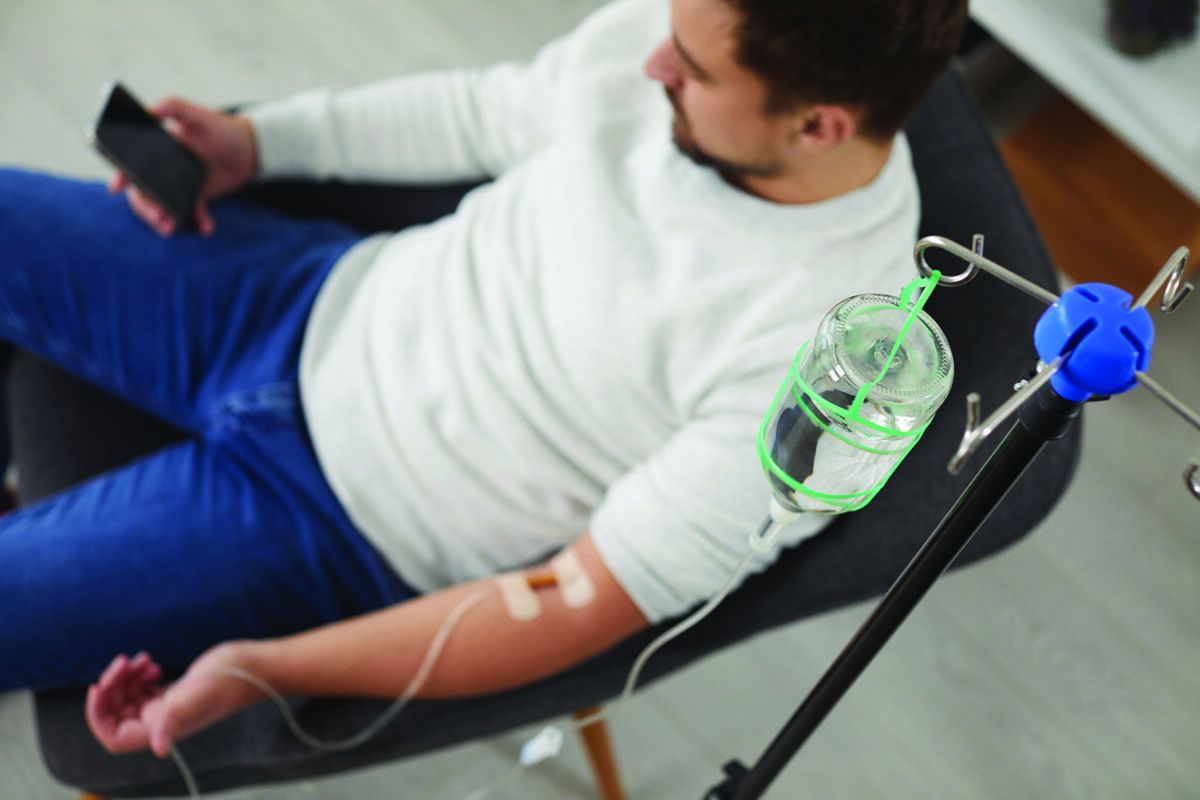
At specialized centers, ketamine therapy follows a structured protocol, which may vary depending on the center. At Cleveland Clinic, a low-dose intravenous infusion is typically given over about 40 minutes at an outpatient infusion center. The dose is based on body weight and repeated daily for five consecutive days.
People are closely monitored during treatment. Vital signs, lab values, and symptoms are tracked to ensure safety. Dosing for chronic pain is often a fraction of anesthetic levels. This lower dosing helps reduce risks while still aiming to provide pain relief.
Results of Ketamine Treatment
One of the most challenging aspects of ketamine therapy is its unpredictability. People generally fall into three categories if the drug helps, depending on how long the beneficial effects last:
- Immediate but short-lived response. Some people feel better during or right after the infusion, but the benefit fades quickly.
- Moderate response. Others experience relief that lasts days, weeks, or even a few months before pain returns.
- Strong, long-lasting response. A smaller group may have significant, lasting relief, sometimes after just one treatment.
In clinical studies, 20% to 46% of ketamine recipients report meaningful improvements in pain and function. On average, benefits may last around 10 to 14 weeks, so some people return for treatments every few months.
Ketamine Side Effects and Safety
At low doses, ketamine is generally considered safe when administered in a monitored setting. Common side effects may include nausea, dizziness or a “loopy” feeling, anxiety, or mild hallucinations.
These effects are usually temporary and can often be prevented or managed with pretreatment medications. More serious risks, such as changes in heart rate, blood pressure, or liver function, are less common but are carefully monitored.
Because ketamine is associated with a history of recreational misuse and can have psychoactive effects, it is given under strict supervision in medical settings.
Who Should Avoid Ketamine?
Ketamine therapy is not appropriate for everyone. It’s not used in people who are pregnant or breastfeeding, those with a history of ketamine abuse or addiction, and individuals with certain psychiatric conditions, such as psychosis. It may be ruled out for people with significant liver or heart disease.
A thorough evaluation is essential before starting treatment, and the guidelines can vary depending on the provider.
Barriers to Ketamine Treatment
Despite its promise, ketamine therapy has limitations. One of the biggest is cost. Because ketamine for chronic pain is not approved by the FDA, insurance often does not cover it. People seeking this treatment may face significant out-of-pocket expenses for both the medication and the clinical setting in which it’s delivered.
Other challenges include limited availability at specialized centers, lack of standardized protocols across institutions, and ongoing uncertainty about long-term effects and limited data.
Part of a Bigger Picture
Importantly, ketamine is rarely used alone. Most pain management programs take a multidisciplinary approach, combining ketamine with physical therapy, pain psychology, and other medications. The goal is not just to reduce pain temporarily but to improve overall function and quality of life.
Ketamine therapy represents a new and evolving option for people with chronic pain, especially those who have run out of alternatives. It doesn’t work for everyone, but for some people, it offers something they haven’t experienced in a long time: meaningful relief.
As research continues, doctors hope to better understand who benefits most, how to optimize treatment, and how to make it more accessible. For now, Hood stresses that ketamine remains a promising, but still developing, tool for treating chronic pain.