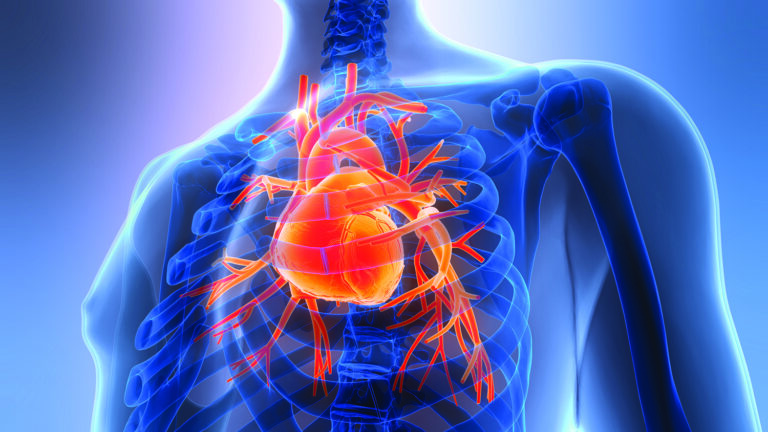
If you have heart disease and need to lose weight, the thought of going on a diet may be as depressing as, well, having a heart attack. That’s why a growing number of people are giving intermittent fasting a try. This popular eating style alternates periods of fasting with periods of unrestricted eating, providing some flexibility to accommodate individual lifestyles, food preferences, and hunger patterns. But what does the research say about intermittent fasting and heart health?
“To date, there is no compelling evidence from clinical trials or high-quality publications that intermittent fasting contributes to heart disease. Nor is there any evidence intermittent fasting directly lowers cardiovascular disease (CVD) events, since this issue has not been studied in clinical trials,” says Cleveland Clinic preventive cardiologist Ashish Sarraju, MD. “However, intermittent fasting appears to improve several key risk factors for CVD, including obesity, hyperglycemia, and hyperlipidemia, and this lowers CVD risk.”
That is enough evidence to make intermittent fasting very appealing.
What Is Intermittent Fasting?
Traditional low-calorie diets achieve weight loss through continuous energy restriction, a fancy term for eating fewer calories on a continual basis. As many people know from first-hand experience, such diets are hard to follow for any period of time.
Intermittent fasting achieves weight loss by fasting for short periods of time. There is no “official” definition of intermittent fasting, but current plans fall into three categories:
- Time-restricted eating, in which a certain number of hours in a 24-hour period are allocated to fasting or eating. A common practice is fasting for 16 hours, then allowing food intake for eight hours.
- Alternate-day fasting, a repetitive pattern that allows food to be consumed during a 24-hour period, followed by fasting for 24 hours.
- Whole-day fasting, which allocates a certain number of days every week to fasting. An example is the 5:2 diet, which allows five days of eating followed by two days of fasting.
How Intermittent Fasting May Affect Heart Health
Intermittent fasting results in consuming fewer calories, which leads to weight loss. With obesity driving major heart disease risk factors such as high blood sugar, high blood pressure, and high cholesterol, losing excess weight by almost any means is a step toward improving cardiovascular risk.
It’s worth keeping in mind that the relationships between fasting and cholesterol or fasting and blood pressure can vary significantly from one person to another.
Animal studies have shown that the body responds favorably to fasting by tapping into stored fat for energy, improving insulin sensitivity, and reducing inflammation and oxidative stress. Alternating between fasting and feeding has been shown to prevent glucose intolerance and dyslipidemia. Although these findings have not been verified in human clinical trials, intermittent fasting produces similar results: improvements in blood sugar, blood pressure, and cholesterol profiles.
What the Research Says About Heart Disease Risk
A meta-analysis of 99 randomized clinical trials comparing all three forms of intermittent fasting and a traditional low-calorie diet with unrestricted eating found that the intermittent fasting diets had similar benefits to the traditional diet in terms of weight loss and improvement in heart disease risk factors (BMJ Open Access, June 18, 2025).
When the various eating plans were compared to each other one-on-one, small advantages became evident. For example, alternate-day fasting reduced total cholesterol, triglycerides, and non-high-density lipoprotein better than time-restricted eating. Alternate-day fasting was the only form of intermittent fasting that reduced weight better than a traditional low-fat diet. However, all advantages were minor.
As far as intermittent fasting safety is concerned, study results have been mixed. One study involving more than 20,000 individuals found that those who ate during an eight-hour period and fasted for 16 hours had a 91% higher risk of cardiovascular death, compared with individuals who followed a 12:12 or 16:8 schedule (Diabetes, Metabolic Syndrome and Obesity, July 2025). Other studies found that allowing food to be consumed for 12 to 14 hours was safer than restricting it to eight hours.
Yet another study, which involved 33,052 adults, found a U-shaped association between designated eating periods and mortality (Aging Cell, November 2025). The lowest risk was found in the 11- to 12-hour eating window. Allowing food consumption for eight hours or less per day was associated with a 30% higher all-cause mortality and a greater than 50% higher cardiovascular mortality rate in older adults. Longer eating windows (more than 15 hours a day) also were associated with a 25% higher all-cause mortality rate.
Before you put the brakes on any plans to try intermittent fasting, Dr. Sarraju suggests taking these findings with a grain of salt. “Although these findings can cause alarm, it is hard to reach a conclusion from a handful of retrospective studies,” he says. “These studies can have limitations due to the inaccuracy of data collected from individuals recalling what they ate and when they ate it on a specific day in the past, and health differences that cannot be fully captured—for example, individuals who may be eating less because of preexisting health issues.”
Who Should Be Careful with Intermittent Fasting?
Although intermittent fasting may be a good option for losing weight, it may not be the perfect strategy for everyone.
“I have patients who become orthostatic in the morning if they don’t eat or drink something. Others get acid reflux if they don’t eat consistently,” Dr. Sarraju says.
People who might not be good candidates for intermittent fasting include those who:
- are prone to dehydration, such as those taking diuretic medications
- have an eating disorder
- have a gastrointestinal issue such as acid reflux or inflammatory bowel disease
- have low blood pressure and are prone to dizziness after an extended period without food
- use insulin to control diabetes
- have sarcopenia (low muscle mass)
- are pregnant or breastfeeding
“It might be unwise for these individuals to suddenly change their diet,” Dr. Sarraju says. “As for older adults, I think intermittent fasting is fine if their goal is to lose weight. They just need to make sure they get adequate nutrition and their weight doesn’t go too low.”
How to Fast More Safely, if Your Doctor Says It’s Appropriate
If you have a preexisting medical condition or eating disorder, talk to your doctor before trying intermittent fasting. It is particularly important if you take a medication to eliminate excess fluid or control your blood pressure or blood sugar, since changes in food intake and body weight may require the dosage to be changed to avoid dehydration, hypotension, or hypoglycemia.
“Ideally, you should ease into intermittent fasting gradually. You don’t want to go from a normal diet to not eating anything for several days,” Dr. Sarraju cautions.
Stay alert for severe fatigue, lightheadedness, the inability to exercise or fainting. “These symptoms indicate that maybe your system is not tolerating the strategy,” he says.
The quality of your diet always matters, but even more so when you limit your food intake. “Changing the hours you eat should not influence the foods you eat. Intermittent fasting is not a license to eat high-fat foods or ultraprocessed foods,” Dr. Sarraju says. “Choose heart-healthy foods, make sure you eat enough protein, and stay hydrated.”
Bottom Line: Should You Try Intermittent Fasting?
If you are giving careful consideration to intermittent fasting, you might want to pause and ask yourself why.
“Are you looking for a heart-healthy diet? Hoping to reduce your waist size? Seeking to lower your blood pressure or cholesterol? Be honest about what you would like to achieve. Then decide if intermittent fasting could help you achieve your goals,” Dr. Sarraju says. “If the answer is yes, discuss it with your doctor and, ideally, a dietitian. If you get the go-ahead, try the eating pattern for a couple of weeks and see how it goes.”