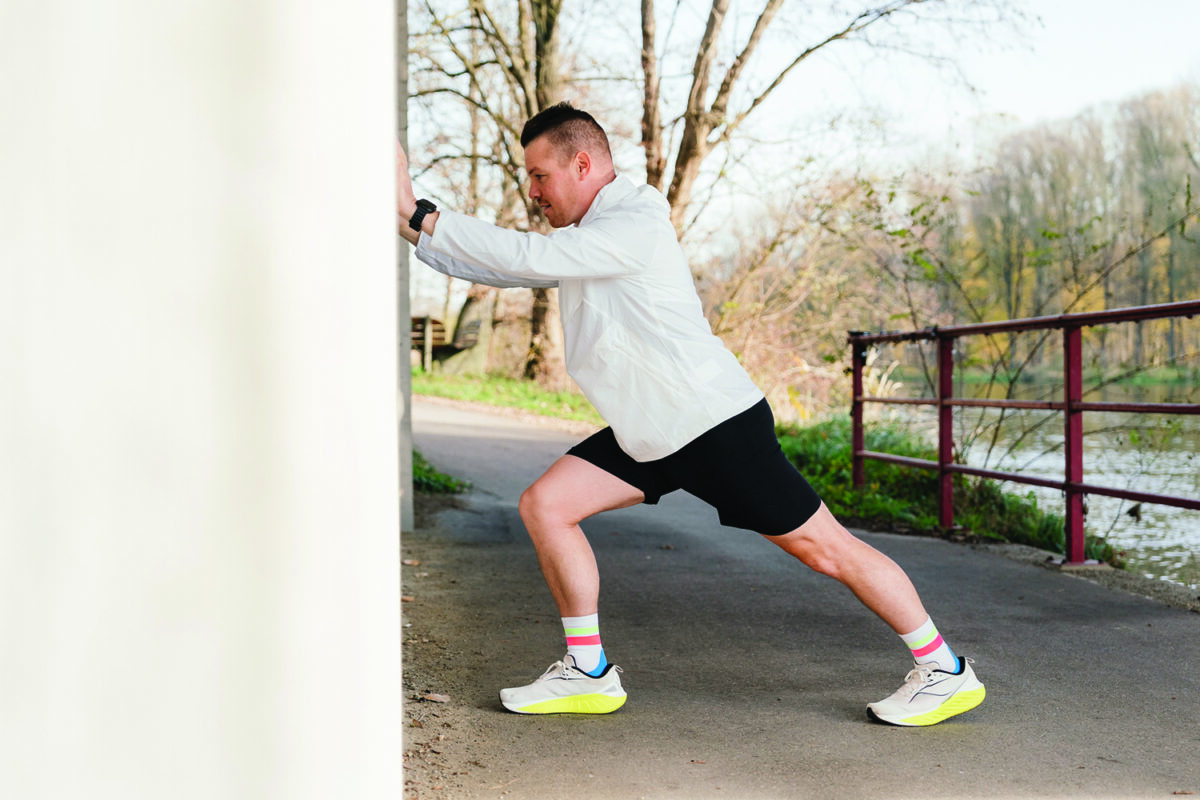
If you feel a pulling sensation, stiffness, or pain in the calf and foot, you may have tightness in the Achilles tendon, which connects the calf muscles to the heel bone. Gentle Achilles stretches can help.
Mathew Kovalchick, DPT, OCS, a physical therapist with UCLA Health System, tells the story of working with a patient whose daily five-mile walk was reduced to just 10 minutes because of Achilles discomfort.
“By the time she came to me, she had been dealing with it for three to four months,” he explains. “What she wanted back was not just the exercise. It was her walking community and the time that walking gave her to relax and be mindful.”
But after several weeks of stretching and strengthening, she recovered and was able to return to her walking routine.
“That case is typical,” he adds. “The pain rarely takes away just the activity. It takes away the routine and the people built around it, and that is what most patients are really coming back for.”
What Are Achilles Stretches?
Achilles tendon stretches work by lengthening the calf muscles and gently moving the ankle, helping ease tightness in this connected system. Upper-calf tightness often responds well to stretching, Kovalchick says, while discomfort lower in the tendon may require a different approach. A tight Achilles tendon is not automatically a signal to stretch harder.
“Where the tightness sits changes what you should do about it, and getting that wrong is a common reason home programs backfire,” Kovalchick says. Pain where the tendon attaches to the heel may worsen with aggressive stretching. Strengthening and a small heel lift may be more appropriate while symptoms settle, under professional guidance.
Why Does the Achilles Get Tight?
A sudden increase in walking, running, or other activity can overload the calf and cause a tight Achilles tendon, Kovalchick notes. Long hours sitting and skipping warmups can also contribute to stiffness.
Footwear matters, too. Switching abruptly from heeled shoes to sneakers changes what you ask of the calf and tendon. Worn-out and poorly fitting shoes can contribute as well.
Achilles Stretches to Try
Kovalchick recommends four calf stretches for Achilles tightness. Choose standing or seated versions according to your balance and comfort. Hold each for 20 to 30 seconds, repeat two to three times, and practice once daily. Do not stretch through tendon pain.
Standing calf stretch or wall stretch
This standing calf stretch targets the gastrocnemius, the larger calf muscle.
- Face a wall and place both hands against it.
- Step one foot back, keeping that knee straight and heel grounded.
- Bend the front knee and lean toward the wall until you feel a gentle calf stretch.
- Hold, release, and switch sides.
Bent-knee calf stretch or soleus stretch
A soleus stretch targets the deeper calf muscle by bending the back knee.
- Start in the same wall-lunge position.
- Keep the back heel on the floor, and bend the back knee slightly.
- Shift forward gently until you feel a stretch lower in the calf.
- Hold, release, and switch sides.
Towel calf stretch
Kovalchick recommends a strap-pull stretch as a seated option for people who feel unsteady standing. A towel calf stretch uses a towel instead.
- Sit securely, with one leg extended and the knee straight.
- Loop a towel or strap around the ball of that foot, holding both ends.
- Gently pull your toes toward you until your calf stretches.
- Hold, release, and switch sides.
Seated calf stretch with a bent knee
- Sit securely and bend the knee of the leg you are stretching.
- Loop the towel or strap around the ball of that foot.
- Pull gently toward you, maintaining the bend in your knee.
- Hold, release, and switch sides.
A heel drop stretch, with the heel lowered below a step, is not a starting exercise for everyone. Because Kovalchick warns against aggressive stretching when pain is at the heel attachment, ask a physical therapist whether this movement belongs in your program.
How to Stretch Your Achilles Safely
Warm up with a few minutes of marching in place. Move slowly, avoid bouncing and never force your ankle into a deeper stretch. You should feel a gentle pull rather than sharp pain. Stop if discomfort increases.
If you are looking for Achilles tendonitis stretches, seek guidance about the location and cause of your pain before choosing exercises. Kovalchick recommends consulting a physical therapist or physician if you have an injury, feel unsure, or experience increasing pain. Seated options can make stretching more manageable when balance is a concern.
Other Ways to Support a Tight Achilles
For lasting Achilles tendon pain relief, stretching may be only part of the plan. “Stretching relieves the symptom; strengthening is what keeps it from coming back,” Kovalchick says. “Most people do the stretching and skip the strengthening.”
The recommended Achilles tendon exercises include heel raises. Begin seated, progress to standing on both feet, and then to one foot only when the current level feels easy. For seated raises, keep the balls of your feet grounded while lifting and lowering your heels. For standing raises, hold onto a countertop and lift and lower slowly. Kovalchick recommends three sets of eight repetitions once daily.
Choose supportive, well-fitting shoes, and increase your activity gradually. The patient described earlier rebuilt her walking by timed increments before adding hills and hikes.
When to See a Doctor
Arrange an evaluation for sharp pain, swelling, or discomfort that does not improve. Catching symptoms early can help prevent a longer interruption in activity. “Tightness usually shows up before pain does,” Kovalchick says. “If something tightens up after you increase your activity, that is your body telling you what it needs. It is a lot easier to deal with it then than four months later.”
A sudden pop or sharp pain behind the ankle with difficulty pushing off may signal a rupture and the need for same-day medical evaluation, Kovalchick warns. Do not stretch through it.
Also, contact your prescribing physician promptly if new tendon pain develops while taking ciprofloxacin or levofloxacin. These antibiotics carry warnings for tendon injury, with greater risk in older adults and people also taking corticosteroids.