Colorectal cancer is one of the most commonly diagnosed cancers in the United States, but it’s also one of the most preventable, largely because of screening tests like colonoscopy.
Colonoscopy allows for early detection and removal of precancerous colorectal polyps, making it a screening method preferred by many physicians and professional medical societies.
“The main thing about colorectal cancer is that it’s highly treatable and highly preventable,” says Carole Macaron, MD, a Cleveland Clinic gastroenterologist. “Ideally, you want to prevent it, and since colorectal cancer is slow-growing, we have ample time to pick up those lesions and prevent the progression to cancer.”
Colonoscopy is invasive and requires careful preparation and a good understanding of what to expect before and after the exam. As such, you play a vital role in the success of your colonoscopy and, therefore, in reducing your risk of colorectal cancer.
What Is a Colonoscopy?
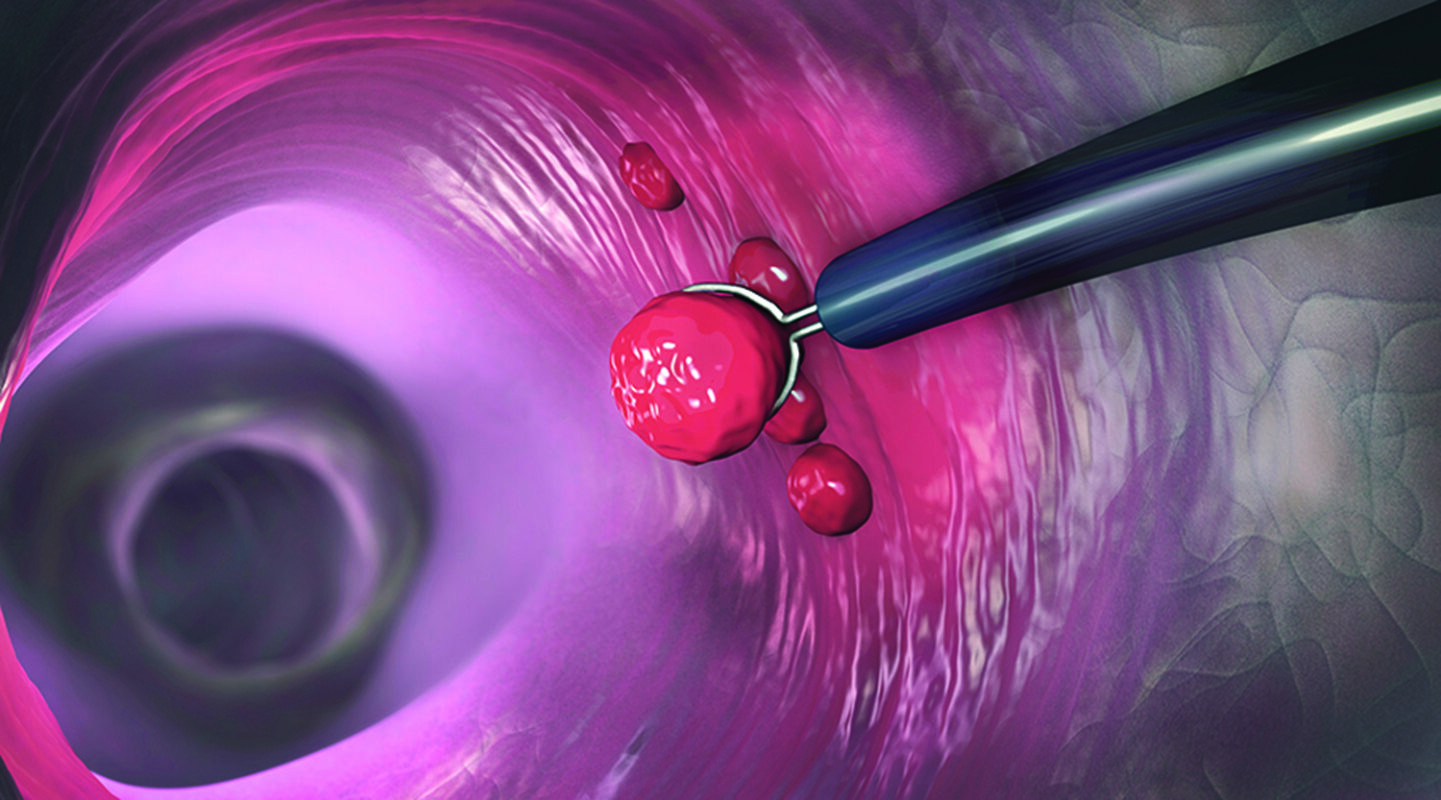
In a colonoscopy, an endoscopist passes a small scope (colonoscope) through your anus and advances it through the large intestine, including the colon and rectum.
The scope pumps air into the colon to inflate it, while a lighted camera in the scope captures video of the entire inner lining of the bowel—from the rectum to the beginning of the colon (cecum), on the right side of the abdomen—and transmits it to a screen. The specialist then slowly withdraws the scope while continuing to look for any abnormalities. If any polyps are detected, the physician can remove them using a special tool in the scope.
Who Should Get a Colonoscopy?
Guidelines from the American Cancer Society (ACS) and other medical organizations generally recommend that adults at average risk begin colon cancer screening starting at age 45. Average-risk individuals who remain healthy and have at least a 10-year life expectancy should undergo regular screening until age 75, after which decisions to continue should be individualized.
Colonoscopy is one of several options for colorectal cancer screening available for average-risk individuals, and it has the greatest sensitivity for detecting precancerous polyps, Dr. Macaron says. However, she notes that it’s the only choice for people at high risk of colorectal cancer, which includes individuals with inflammatory bowel disease, a family history of colorectal cancer, a personal history of colorectal cancer or precancerous polyps, or a genetic syndrome that increases colorectal cancer risk. Colonoscopy also becomes necessary if a non-colonoscopy screening test returns a positive result.
“It really is the gold standard, the standard of care,” Dr. Macaron says. “It is the only one-step screening test we have. With colonoscopies, we can look for precancerous polyps and remove them during the same procedure, preventing them from progressing. That’s one reason it’s considered the best test.”
How to Prepare for a Colonoscopy
To provide your endoscopist with an optimal view of the inner lining of the colon and rectum and the best chance of identifying anything suspicious, you have to carefully clear the bowel of any residual waste. That process requires you to follow dietary restrictions and complete a thorough bowel preparation, or cleansing, in the hours and days before the procedure. You’ll also need to talk with your doctor about any modifications you might need to make to your medication regimen.
In the week leading up to your colonoscopy, follow a low-fiber and low-residue diet, which may include chicken, eggs, low-fat dairy products, white rice and other foods. It’s especially important to avoid foods that leave indigestible residue in the colon, such as corn, nuts, seeds, popcorn, whole grains, and fruit with skin.
The day before the procedure, you’ll switch to a clear-liquid diet, in which you refrain from solid foods or milk products, as well as any products with red, purple, or orange coloring that your endoscopist might mistake for blood in the bowel. If you cannot tolerate a clear-liquid diet or require some calories, your doctor may allow a limited low-residue diet the day before, but check to be sure what you can and cannot eat and how much.
The diets you might follow the day before your colonoscopy include:
Clear-Liquid Diet
- Clear bouillon, broth, or consommé
- Beverages: Water, lemonade, strained, clear pulp-free juices (like apple or white grape), coffee or tea (with no milk or non-dairy creamer added), Gatorade, Kool-Aid or other flavored drinks, ginger ale, seltzer water
- Snacks/sweets: Jell-O, flavored ice (e.g., ice pops, Italian Ice), hard candies
Note: Don’t eat anything orange, purple, or red
Low-Residue Diet
May include small portions of:
- Eggs
- Chicken breast
- Fish
- Deli meats
- Cooked potatoes (without skin)
- Low-fat milk or yogurt
- Ice cream
- Refined white grains (e.g., white bread, white pasta, white rice)
Note: Ask your physician if a low-residue diet is an acceptable option and which foods you should/shouldn’t consume.
Traditional bowel-cleansing methods involved drinking four liters (nearly a gallon) of laxative solution the evening before the colonoscopy. While these preparations are still in use, you also have the choice of lower-volume bowel preps that require significantly less solution—about two or three liters, depending on the brand—or preps taken as pills along with about a half-gallon of water.
Your doctor may have a preferred bowel prep, but review all your options and select the one that works best for you. Whatever prep you choose, follow the instructions carefully and consume the recommended amounts of water with the solution. “If a patient goes with a lower-volume prep, I explain to them that you still have to drink quite a bit of liquid to flush the colon,” Dr. Macaron says.
Also, experts now recommend a split-dosing approach, in which you consume half the bowel prep the night before and the rest about four hours before your procedure. For a morning colonoscopy, set your alarm to take the second dose in the middle of the night. If your procedure is scheduled for the afternoon, you might consume the entire prep on the morning of your colonoscopy or take the first dose later the night before.
If you experience constipation or slow transit time in your gut or a previous bowel preparation was inadequate, your doctor may recommend taking a laxative a few days before your procedure to help “jump start” the process of cleansing your colon and make the bowel preparation easier, Dr. Macaron says.
Expect to have your first bowel movement within an hour or two of the first dose of the bowel prep solution. Wear clothing that’s easy to remove if you have to rush to the bathroom, and equip your bathroom with soft toilet paper and/or baby wipes. Once your stool is mostly clear, you should be good to go.
For many people, the bowel preparation is the most difficult part of the colonoscopy process—after all, no prep tastes like fine wine or your favorite dessert. But there are things you can do to make it more palatable and help reduce any nausea or vomiting:
- Refrigerate or add ice to the solution.
- Add a small amount of lemon juice or sugar-free powdered drink mix to it (nothing red, purple, or orange).
- Chew mint-flavored gum (don’t swallow it) after you finish drinking the solution, to minimize the aftertaste. Or, chase it with some ginger ale.
- Drink the solution through a straw, keeping the straw toward the back of your tongue so you can avoid the taste buds toward the front of the tongue.
“I get my colonoscopy, and at the end of the prep, the last two cups are always the hardest to drink,” Dr. Macaron says. “I tell my patients not to drink the prep too quickly. They can also chill it with ice or add flavoring to make it easier to tolerate.
“For me, not eating the day before was harder, but everybody is different,” she continues. “I think it just requires some planning. If I plan ahead of time and I know that day I’ll be prepping and not scheduling activities, I take it better.”
What Happens During the Procedure
Due to the deep sedation used in colonoscopy, you’ll need someone to drive you to and from your appointment. When you arrive at the endoscopy suite for your colonoscopy, you’ll change into a gown and lie on your side on the exam table. You’ll be given an IV for sedation, and fall asleep. You shouldn’t remember the procedure, but once it’s done, some people feel some abdominal pressure or fullness from the air insufflation and advancement of the scope.
The exam itself typically takes up to 30 minutes, although it may take longer if polyps are removed. You’ll then spend up to an hour in the recovery room.
“For their first exam, patients are often concerned because it’s an unknown. They don’t know what the procedure is, what it entails or if they’re going to be in pain. They hear stories,” Dr. Macaron says. “But when they wake up and I talk to them, they almost always say, ‘Oh, that wasn’t that bad,’ and they’re OK with coming back. The more you get accustomed to the process, the easier it gets on subsequent rounds.”
What to Expect After a Colonoscopy
Your endoscopist will review the results of the exam, which will be compiled in a report. Things to note from the report include:
- Whether the endoscopist was able to examine the colon all the way to the cecum.
- How the endoscopist rated the quality of the bowel preparation, which can influence the quality of polyp detection and may necessitate a repeat exam much sooner. “If the inner lining of the colon is covered by stool, it’s going to lead to limited visibility,” Dr. Macaron says. “This leads to missed lesions, and we know that missed lesions are associated with interval cancers.”
- The number and size of polyps found/removed, as well as the type.
If polyps were removed, they’ll be sent to a pathologist for analysis. Colorectal cancer typically arises from polyps known as adenomas, as well as flat lesions known as sessile serrated polyps. The presence of these polyps and the size and number of polyps removed determine how soon you should return for a follow-up colonoscopy.
One of the advantages of colonoscopy is that if you’re at average risk of CRC and no polyps are found, you won’t need another exam for 10 years. However, “If we remove an advanced lesion, whether it’s an advanced adenoma or advanced serrated lesion, patients will be coming back in three years,” Dr. Macaron says. “If we remove one to two small adenomas, they will be coming back in seven years. So, the interval can vary.”
Are There Risks or Side Effects?
Colonoscopy carries a very low risk of complications such as infection, bleeding, and bowel perforation, as well as potential complications from sedation. “When I talk to my patients, I quote a one in 10,000 risk of complications,” Dr. Macaron says. “They’re fairly rare, especially when you have a good endoscopist and the right setup.”
After your procedure, check for any persistent blood in your stool—you may see some blood if polyps were removed, but it should subside. Report any signs of infection (abdominal pain, fever or chills) to your physician immediately.
Overall, “To get the most out of your colonoscopy, you want to have an excellent prep, and you want to have a high-quality exam and a great endoscopist who spends an appropriate amount of time inspecting the lining of the colon,” Dr. Macaron advises. “Then, if polyps are removed, know what these polyps were, and be aware of when you need to come back for the repeat exam.”