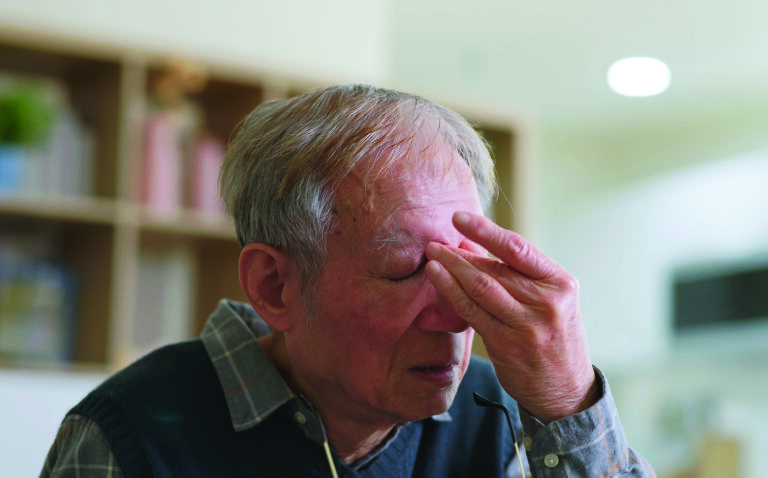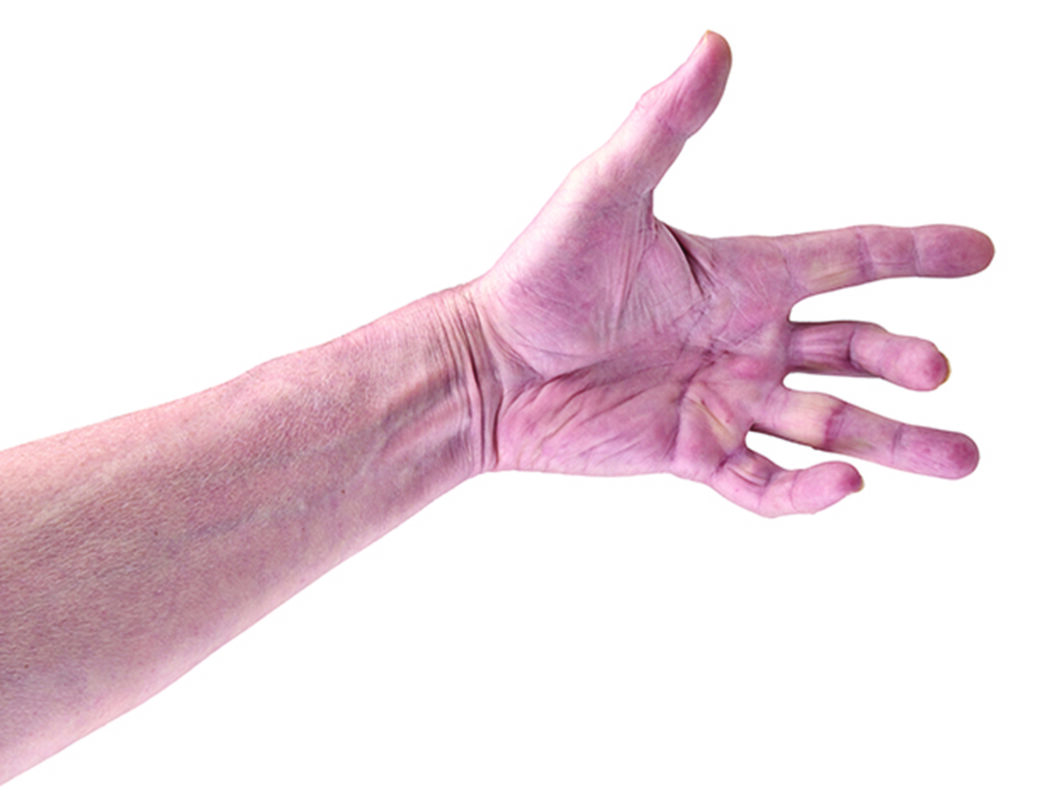
Your finger is curved in toward your palm, and you can’t straighten it. It’s like you have trigger finger.
What you may actually have is Dupuytren’s contracture (or Dupuytren’s disease), a condition that causes a hand deformity in which you can’t straighten one or more of your fingers. It affects about 5% of people in the United States, especially men.
“It’s a fairly common condition,” says Morgan Bertsch, MD, a Cleveland Clinic hand and upper extremity surgeon. “People will come in and say they think they have trigger finger, or sometimes they think it’s a mass in their hand.”
Though it’s not life-threatening, Dupuytren’s can be life-altering and limit your ability to complete everyday tasks. Fortunately, in most cases, minimally invasive treatments can manage it successfully.
What is Dupuytren’s Contracture?
Whereas trigger finger is caused by an inflamed or irritated tendon in the hand, Dupuytren’s contracture occurs when the palmar fascia (the tissue layer just underneath the skin of your palms) overgrows and forms small lumps along the tendons that control finger movement. These nodules can develop into thick cords along the tendon that tug your fingers into a flexed position, or hand contracture.
The contracture can occur in any finger joint. However, it most commonly affects the metacarpophalangeal (MCP) joint, causing the finger to bend where it meets the palm, Dr. Bertsch says. In other instances, it can affect the proximal interphalangeal (PIP) joint, causing a bend at the second finger joint.
“Depending on which joint is involved, it can really affect the mobility of the finger,” Dr. Bertsch says.
Symptoms of Dupuytren’s Contracture
Typically, Dupuytren’s is recognized by the sequence of three symptoms it produces in your hand:
- Nodules: Benign growths in the palmar fascia, under the skin of your hands. These nodules can be felt in your palm, and they can be visible. Dimples can develop in the skin on either side of the nodule.
- Cords: Eventually, the nodules may thicken and form long cords on the fascia that tug on your fingers, drawing them toward your palm. Some people also develop knuckle pads, a thickening of the tissue on the back of the knuckles.
- Contracture: Once Dupuytren’s has advanced, the cords in the fascia thicken and tighten to the point at which they pull the finger toward the palm, preventing you from extending or straightening the digit. The contracture usually doesn’t hurt, but it can severely restrict your hand function.
Dupuytren’s contracture symptoms most commonly affect the ring and pinky fingers, and they can occur in multiple fingers at once.
What Causes Dupuytren’s Contracture
The exact cause of Dupuytren’s remains unclear, but it’s widely considered to be an inherited condition. “There’s a genetic component to it,” Dr. Bertsch says. “A lot of people we see with Dupuytren’s will have someone in their family who had it before them.”
Although Dupuytren’s can affect anyone, it’s significantly more common in men than women, and in people of European (particularly Scandinavian) descent—it’s sometimes referred to as “Viking’s disease” due to the prevalence in Scandinavian populations.
Dupuytren’s Contracture Risk Factors
In addition to genetic factors, certain health conditions, including diabetes, alcoholism, HIV/AIDS and epilepsy, have been linked with a greater likelihood of developing Dupuytren’s contracture.
It tends to develop in your 50s and 60s, and it usually develops slowly over years. “But we know that the earlier it starts, the more aggressive it tends to be,” Dr. Bertsch says. “And the converse is true, as well—the later it starts, usually it’s a little bit more slow-growing.”
How Is Dupuytren’s Contracture Diagnosed?
If you notice the nodules, cords, or early signs of Dupuytren’s contracture, discuss them with your primary care physician, Dr. Bertsch advises, and discuss whether a referral to a hand surgeon is needed.
Your doctor will perform a physical exam, review your symptoms and measure your finger movement and, if present, the degree of contracture in your finger(s). Your physician will also conduct a simple “tabletop” test to diagnose Dupuytren’s. Essentially, if you can’t flatten the palm of your hand on a tabletop, you have Dupuytren’s contracture, Dr. Bertsch says.
“Imaging tests are not typically necessary,” she adds “But I usually get a screening X-ray just to make sure there’s nothing else going on in the hand, such as arthritis unrelated to Dupuytren’s. That way I can be mindful of it when I’m planning treatment.”
Treatment Options
Dupuytren’s contracture does not require immediate treatment in all cases. Depending on the contracture severity and how significantly it affects your daily function, you might hold off on a procedure to correct it. Dr. Bertsch says she normally doesn’t recommend any type of procedure for contractures that are less than 30 degrees.
For mild contractures, physical therapy exercises can improve range of motion in the fingers, while a splint can hold your fingers in the correct position to stretch the palmar fascia. Some evidence suggests that low-dose radiation therapy can help in the early stages, to help reduce nodules and cords and prevent contracture.
Due to the slow-growing nature of Dupuytren’s, these conservative treatments may provide relief and allow you to function for months or years. But if you have a palpable cord in your palm, a positive tabletop test and limited hand function, you’re a candidate for a minimally invasive procedure, Dr. Bertsch says.
One option is the medication collagenase clostridium histolyticum (Xiaflex®). The drug is an enzyme, injected into the palm during an office visit, that helps to break down the problem tissue. Two or three days later, you’ll return to your practitioner’s office to undergo manipulation, in which your finger is manually straightened. “You’ll see immediate results after that three-day window,” Dr. Bertsch says.
Although effective, the treatment can cause significant inflammatory reactions (e.g., swelling and bruising). Also, because the skin involved in the contracture shrinks, it can tear during manipulation, necessitating a wound care process.
Another minimally invasive procedure is needle aponeurotomy (percutaneous fasciotomy), in which your doctor uses a needle to poke holes in the fibrous cords and break them up to relieve tension. The outpatient procedure is done under local anesthesia.
“I’ve had really good results with this technique,” Dr. Bertsch says. “From a patient perspective, it’s such a small procedure, and they can immediately start moving their fingers.”
“Patients can get back to normal, day-to-day, light use pretty much right away,” she continues. “It might be a little longer with the Xiaflex treatment just because you have that swelling and inflammation that can happen. However, if you have a skin tear, that would slow the recovery down to more like weeks.”
For more severe contractures that are untreatable with minimally invasive procedures or that recur after initial treatment, surgery to remove the affected fascia is indicated. Recovery from this more complex procedure can take weeks to months, and there’s a risk of wound-healing problems and increased scar tissue growth because of the incision required, Dr. Bertsch says. However, it has the lowest rates of Dupuytren’s recurrence, compared with the minimally invasive procedures.
What Happens If It Gets Worse?
“If left untreated, Dupuytren’s can really limit your function and ability to use your hands. It can eventually contract to the point where you can’t even get your hand around to grab a bottle, put your hand in your pocket or put gloves on because you have a bent finger,” Dr. Bertsch says.
After all the procedures, Dr. Bertsch recommends that her patients wear a splint during sleep each night for three months to keep their treated hand straight and to help prevent a recurrence. She also advises them to meet with an occupational therapist (hand therapist), who can make the splint and counsel them on exercises to improve hand function (see “What You Can Do”).
It’s important to understand that these treatments can manage the symptoms of Dupuytren’s, correct the contracture and restore function in your hand, but the disease itself cannot be cured. Eventually the symptoms can return and require a repeat procedure.
“What I tell patients is with Dupuytren’s, it’s not a matter of if it will come back but rather when it will come back,” she explains. “If we kept it away for five years, we’re happy, and then we have the option of doing an open procedure or trying another needle aponeurotomy or Xiaflex. But if we do the open surgery first and the symptoms come back in five years, now we have a lot more scar tissue, and the second procedure, no matter what it is, will be more complicated.”
- Tell your doctor about any lumps or cords you develop in your palm, especially if you feel one or more fingers being pulled toward the palm.
- Weigh the pros and cons of all your treatment options. Understand that Dupuytren’s is not curable, and the symptoms are likely to return, regardless of your treatment choice.
- Ask your doctor about your risk of other conditions associated with Dupuytren’s, including Ledderhose disease (plantar fibromatosis), which produces similar symptoms in the feet; and Peyronie’s disease, an abnormal penile curvature.
- Discuss the use of a splint after treatment to keep your hand and finger straight while you sleep.
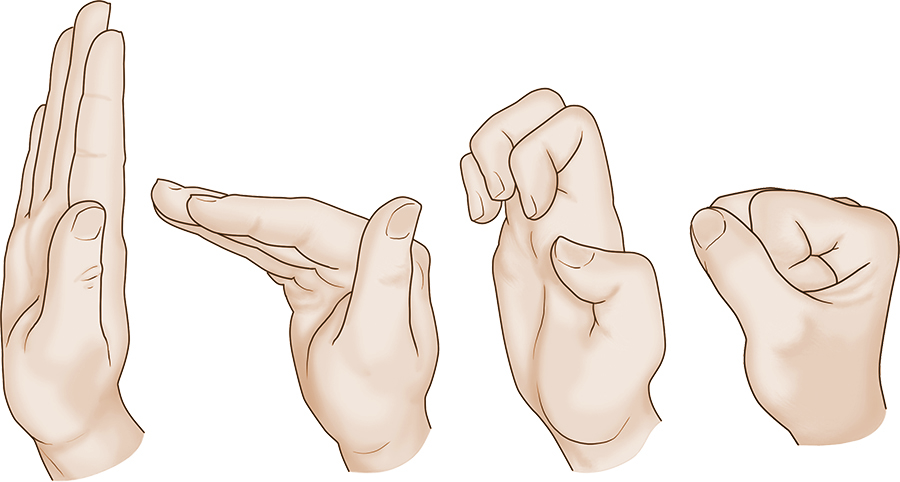
- Meet with a physical therapist, who can recommend exercises like these to help with your recovery after treatment:
Tendon glide
- Start with your fingers together and your hand pointing straight up.
- Bend your fingers at the knuckles. Point them forward and keep them straight while keeping your thumb pointed upward. Hold for five seconds.
- Next, bend your thumb across your palm, and bend your fingers at the midpoint, forming a claw. Hold for five seconds.
- Draw all your fingers into a fist.
Perform these movements in a slow, controlled manner. Repeat this sequence 10 times.