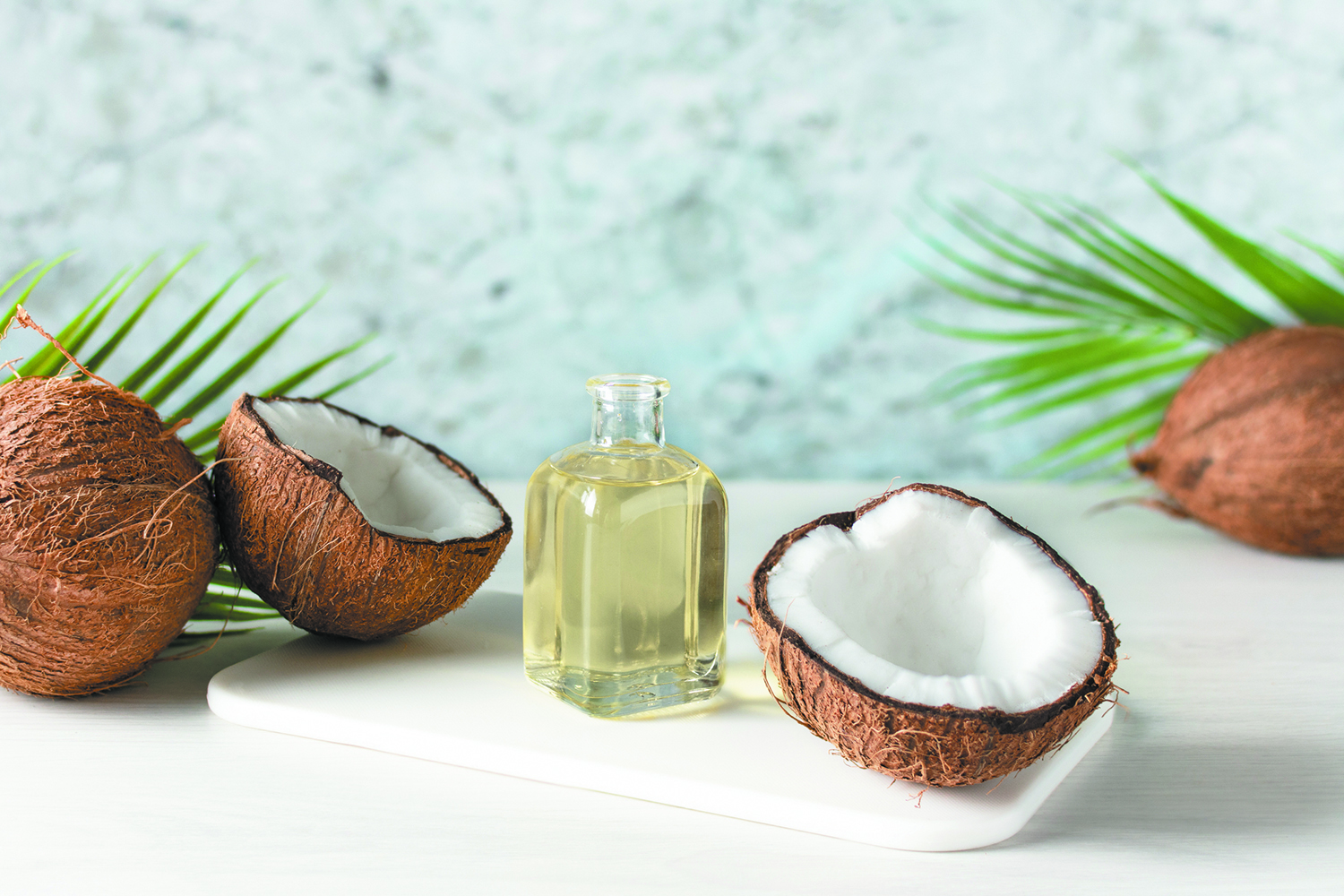
Maybe you heard that coconut oil is a healthy oil that has a positive effect on your cholesterol.
If so, you heard wrong.
“One tablespoon of coconut oil contains 10.5 grams (g) of fat, 91% of which is saturated fat,” says Julia Zumpano, RDN, LD, a Cleveland Clinic dietitian. “Coconut oil actually has more saturated fat than bacon grease.”
You want to avoid saturated fat, a fat found in animal products and some tropical oils (including coconut and palm oils), because it may contribute to increased levels of low-density lipoprotein (LDL, “bad”) cholesterol. This type of cholesterol can accumulate in blood vessels and contribute to the formation of fatty atherosclerotic plaques that cause heart attacks and strokes.
To lower cardiovascular risk, the American Heart Association recommends individuals on an 1,800-calorie-per-day diet limit their saturated fat intake to 12 g a day. That’s about one tablespoon of coconut oil.
Are There Any Coconut Oil Benefits?
Coconut oil is extracted from the white flesh of a coconut. The oil contains medium-chain triglycerides, which encourage the body to burn calories faster. Some studies have found that the use of coconut oil may help people lose weight. But here’s the thing: Coconut oil contains 104 calories per tablespoon, which hardly makes it a diet food.
“It would be very difficult to offset the number of calories you consume in the form of coconut oil with the minimal increase in energy expenditure it offers,” Zumpano says.
Refined vs. Unrefined Coconut Oil
Proponents of coconut oil advise consuming unrefined coconut oil, since nutrients are lost in the process that turns coconut meat into coconut oil. Truth is, however, that there is little difference in refined vs. unrefined coconut oil. Either way, it contains only trace amounts of vitamins and minerals.
What to Use Instead of Coconut Oil
For heart health, research has confirmed the best oils are those high in monounsaturated and polyunsaturated oils. That means extra-virgin olive oil is at the top of the list of healthful oils. One tablespoon of extra-virgin olive oil contains only 1.9 g of saturated fat and has 10 g monounsaturated fat and 1.4 g polyunsaturated fat.
Since extra-virgin olive oil has a low smoke point, avoid using it when cooking with a high heat. Instead, use avocado oil. One tablespoon of avocado oil contains 2 g saturated fat, 10 g monounsaturated fat, 2 g polyunsaturated fat and, like olive oil, lots of vitamins and nutrients.
What Is Coconut Oil Good For?
Although coconut oil only pretends to be a health food, many people find its flavor irresistible. If you are seeking to intensify the flavor of a tropical dessert, go ahead and add a touch of coconut oil.
“As an alternative, consider using coconut water, coconut milk, light coconut cream or unsweetened coconut flakes to get the same irresistible flavor without all the saturated fat,” says Zumpano. “It’s OK to use coconut oil occasionally, but make sure to use it rarely if you have high cholesterol.”