Bone broth has been a component of Asian cooking for years. Only relatively recently has it become popular in the United States—and its popularity continues to grow. Today, you’ll see bone broth products lining supermarket shelves and bone broth recipes highlighted on television cooking shows and internet podcasts.
The burgeoning interest in bone broth has been driven largely by proponents of low-carbohydrate diets, such as the paleo and keto eating patterns.
But what is bone broth? Well, it’s exactly what it sounds like, and it has some beneficial nutrients.
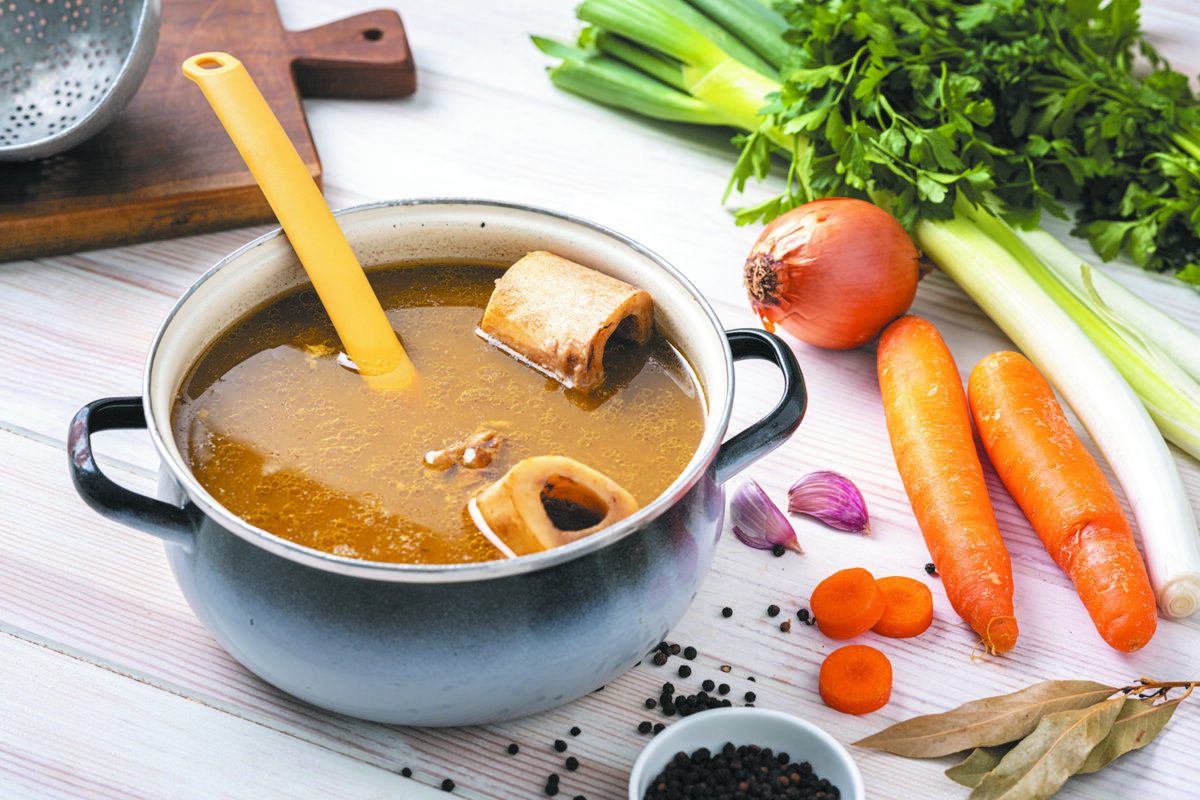
“It’s a broth that’s made from boiling animal bones and sometimes other ingredients,” says Cleveland Clinic dietitian Julia Zumpano, RD, LD. “The key is water and bones boiled for a long period of time. The broth has the bone marrow and other nutrients from the bones.”
Bone Broth Benefits
Bone broth differs from regular broth, which can be made with meat or vegetables and cooked over a shorter time. And, it contains a host of nutrients that regular broths lack.
“Bone broth contains sodium, potassium, magnesium, calcium, phosphorus, iron, zinc, and selenium.” Zumpano says. “It provides collagen, which is an important protein found in animal bones; therefore, you get your dose of amino acids, too.”
Collagen is a building block in the body and has benefits for bones, joints, muscles, and skin. It can also improve gut health. Zumpano says that when she has an upset stomach, soup made from bone broth is her first choice to help her feel better.
How to Make Bone Broth
The key to bone broth is a long cooking time—at least six hours, but the longer the better. For a higher-quality broth, cook it for 24 or hours or more. Many people use a slow cooker, but you can also make bone broth on the stovetop, in a pressure cooker, or even on top of a wood-burning stove.
Most animal bones will work, including fish bones, but there is no vegan version with the same nutritional profile. Adding an acid like vinegar or lemon juice helps to extract the nutrients from the bone.
Nutrients in the finished broth vary widely depending on how you prepare it (see the recipe accompanying this article). If you don’t want to make bone broth yourself, prepared versions are available in many grocery stores, sometimes in the refrigerator section.
You know you have a good bone broth when it is gelatinous when refrigerated.
Ingredients
- 4 lbs soup bones from beef, lamb, bison, venison, chicken, turkey, or duck (ask your local butcher for organic or grass-fed versions)
- 2 Tbsp apple cider vinegar
- 2 bay leaves
- 2 carrots, roughly chopped
- 1 bunch parsley
- 1 medium onion, chopped
- 1 tsp sea salt
- 2 garlic cloves, smashed
- 2 quarts filtered water
Directions
Place the bones in a slow cooker, and drizzle with vinegar to coat all the bones. Add in vegetables, herbs, salt, and water. Stir to combine. Set the slow cooker on low and cook for 12 to 24 hours.
When broth is finished, remove and discard all solids—bones, vegetables, and herbs—by straining the liquid through a sieve into a glass container or 4-quart jar. Refrigerate the broth for at least three hours or overnight. The fat will separate, rise to the top, and form an opaque white layer. Skim this congealed fat and discard.
To serve, heat the broth (which will resemble gelatin) over medium-low heat, stirring occasionally. Pour one cup into a mug and enjoy, or use the broth in recipes calling for chicken or beef stock. Store all leftover broth in a sealed container in the refrigerator for up to four days or in the freezer for nine months to one year.
Nutritional Information
Serving size: 1 cup
Nutrition per serving:
- Calories 72
- Fat 6 grams (g)
- Saturated fat 3 g
- Cholesterol 22 milligrams (mg)
- Fiber 0 g
- Protein 6 g
- Carbohydrate 1 g
- Sodium 269 mg
Ways to Use Bone Broth
Some people enjoy a steamy mug of bone broth. You also can add it to any recipe in which you might use chicken, beef, or vegetable broth.
Soup is an obvious choice, but bone broth can also go into many recipes in place of water or other liquid. For example, while making rice, couscous, risotto, or quinoa, replacing some or all of the liquid in the recipe with bone broth can add nutrients. You can even add it as liquid in one-pot dishes, macaroni and cheese, or mashed potatoes.
Overall, bone broth can add liquid along with a burst of flavor and nutrients that water or regular broth would not provide.