A skin cancer diagnosis can be frightening, but most skin cancers are highly treatable, especially when detected early. Even advanced melanoma, once associated with extremely poor survival rates, can sometimes be controlled for years or potentially cured with newer treatments.
We talked to Joseph G. Crompton, MD, PhD, in the UCLA Division of Surgical Oncology to learn more.
Understanding Skin Cancer
Skin cancer develops when abnormal skin cells multiply uncontrollably. There are three main types of skin cancer:
- Basal cell carcinoma (BCC) is the most common. It develops in the basal cells of the epidermis, the skin’s outermost layer. BCC generally grows slowly and rarely spreads to distant parts of the body.
- Squamous cell carcinoma (SCC) develops in the squamous cells near the skin’s surface. It is more likely to spread than BCC, particularly when tumors are large, deeply invasive, or located in high-risk areas.
- Melanoma develops in melanocytes, the cells that produce the pigment melanin. It is less common than BCC and SCC, but it is more dangerous because it can spread to lymph nodes and distant organs.
Less common skin cancers include Merkel cell carcinoma (an aggressive form affecting cells near nerve endings in the skin) and certain skin lymphomas.
Risk factors for skin cancer include fair skin, a history of sunburns, frequent ultraviolet (UV) radiation exposure from the sun or tanning beds, older age, a weakened immune system, and a personal or family history of skin cancer. Skin cancer can also develop in areas that receive little sun exposure.
How Skin Cancer Is Diagnosed
Warning signs of skin cancer include a sore that doesn’t heal, a pearly or waxy bump, a scaly or crusted patch, or a mole that changes in size, shape, or color. Melanoma warning signs are often described using the ABCDE rule:
- Asymmetry: The shape of one half differs from the other.
- Border: Edges are often ragged, blurred, or irregular, and the pigment may spread into nearby skin.
- Color: Uneven color; could be shades of black, brown, tan, white, gray, red, or blue.
- Diameter: An increase in size, usually larger than a quarter-inch or the diameter of a pencil eraser.
- Evolution: The mole or lesion is changing or evolving.
Skin cancer diagnosis begins with a visual examination by a dermatologist. If a suspicious growth is found, the dermatologist removes a sample of tissue for examination under a microscope. A biopsy identifies the cancer type and provides information about how aggressively it may behave. For melanoma, one of the most important questions is whether cancer cells have spread beyond the original tumor. Doctors use staging to describe the extent of cancer. Stage 1 and 2 melanoma is generally localized, while Stage 3 may involve nearby lymph nodes or skin and Stage 4 involves distant organs.
For some patients, doctors may recommend a sentinel lymph node biopsy, a procedure that removes one or more nearby lymph nodes to check for cancer cells. Gene expression profiling tests analyze activity in selected genes within a tumor to estimate its risk of spreading. Dr. Crompton says these tests may provide additional information, but they are still being investigated and are not routinely recommended as substitutes for established sentinel lymph node biopsy criteria.
Researchers are also investigating blood tests that could identify melanoma cells or tumor DNA in the bloodstream. “In five to 10 years, we may have a blood test that can tell us whether melanoma cells are present and whether the cancer has spread,” Dr. Crompton says. Although blood-based melanoma tests are being researched and some are used in selected clinical settings, no blood test is established as a reliable replacement for standard melanoma staging procedures.
Skin Cancer Treatment Options
There are several types of skin cancer treatment. Most early skin cancers can be removed surgically, while more advanced cancers may require additional therapies.
Skin Cancer Surgery
Surgery is one of the most common and effective treatments. During a surgical excision, the doctor removes the tumor along with a margin of surrounding healthy tissue. The tissue is then examined to determine whether cancer cells remain at the edges.
For certain basal cell and squamous cell carcinomas, doctors may recommend Mohs surgery, a specialized procedure in which thin layers of skin are removed and examined under a microscope. This process is repeated until no cancer cells remain. This approach preserves healthy tissue and is particularly useful for cancers on the face, ears, and other sensitive areas.
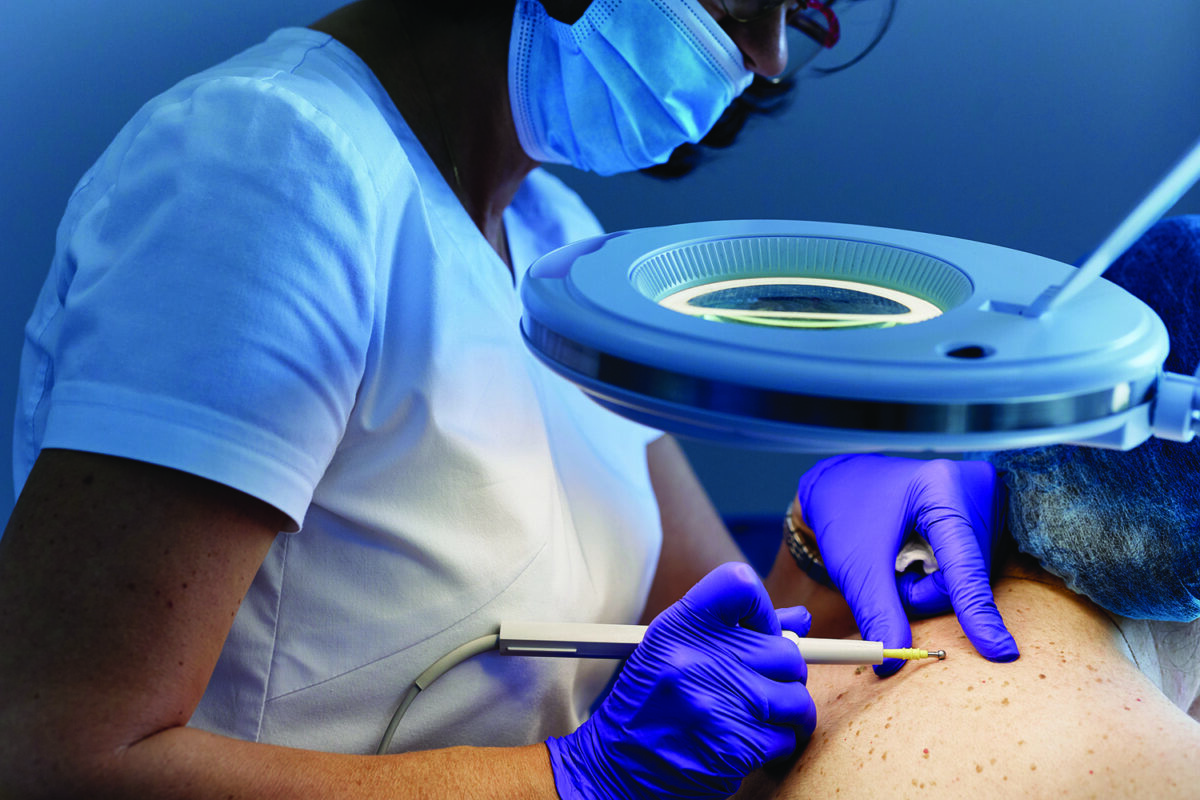
Other techniques include curettage and electrodesiccation, in which a doctor scrapes away the tumor and uses an electric current to destroy remaining abnormal cells.
Cryotherapy
This treatment uses extreme cold, usually liquid nitrogen, to destroy abnormal cells. It may be appropriate for certain small, superficial skin cancers and precancerous growths called actinic keratoses. It is generally not preferred for deeper or aggressive cancers.
Topical Treatments
Some superficial skin cancers can be treated with prescription creams. Topical chemotherapy for skin cancer commonly involves fluorouracil (5-FU), a medication that destroys rapidly dividing abnormal cells. Another option, imiquimod, stimulates the skin’s local immune response. Fluorouracil may be used for selected superficial basal cell carcinomas and actinic keratoses; imiquimod is an immune-response modifier rather than chemotherapy. Neither is appropriate for invasive melanoma or deeper tumors.
Radiation therapy for Skin Cancer
This treatment uses high-energy radiation to destroy cancer cells. It may be recommended when surgery is difficult because of the tumor’s location, when a patient cannot undergo surgery, or when additional treatment is needed after an operation.
Photodynamic Therapy
In this treatment, a light-sensitive medication is applied to the affected skin and is then exposed to a special light that activates the medication and destroys abnormal cells. It may be used for actinic keratoses and selected superficial skin cancers.
Laser procedures & Chemical Peels
These are sometimes used for precancerous lesions, but they are not standard treatments for invasive skin cancers.
Immunotherapy for Skin Cancer
One of the most significant advances in melanoma treatment has been immunotherapy, which helps your immune system recognize and attack cancer cells, Dr. Crompton explains. T cells play a central role; these immune cells naturally recognize and destroy abnormal cells.
“We know that T cells have a natural capacity to kill cancer cells,” Dr. Crompton says. “Sometimes that doesn’t work, and that’s when we can manipulate the immune system to re-engage and attack the cancer cells.”
For people with advanced melanoma, these treatments have dramatically changed the outlook. “Melanoma has become curable in some patients,” Dr. Crompton says. He notes that some individuals with widespread melanoma experience complete and durable responses, meaning their cancer disappears and remains undetectable for an extended period.
However, immunotherapy isn’t necessary for everyone. Many early-stage melanomas can be successfully treated with surgery alone, although immunotherapy may be recommended for some high-risk Stage 2 melanomas.
Targeted Therapies
These treatments interfere with specific molecular changes that allow cancer cells to grow. For example, some melanomas have mutations in a gene called BRAF. Patients with these mutations may benefit from medications that block BRAF and related proteins.
For advanced basal cell carcinoma that cannot be treated with surgery or radiation, medications that inhibit a signaling system called the Hedgehog pathway may be an option. Immunotherapy is also used for certain advanced squamous cell carcinomas and basal cell carcinomas.
Choosing the Right Skin Cancer Treatment
The most appropriate treatment depends on the type and stage of cancer, its location, whether it has spread, and a person’s overall health. For early melanoma, surgery may be all that’s necessary. More aggressive melanomas may require lymph node evaluation and additional treatment. Dr. Crompton emphasizes the importance of determining whether melanoma has spread before deciding on treatment. He also recommends a multidisciplinary approach for more serious cases.
“For melanoma, there’s the dermatologist, the dermatopathologist, the surgical oncologist, and the melanoma oncologist,” he says. Depending on how the cancer progresses, patients may need expertise from several specialists.
If you’re diagnosed with skin cancer, consider asking your doctor these questions:
- What type and stage of skin cancer do I have?
- Is surgery likely to remove all the cancer?
- Do I need additional tests to determine if the cancer has spread?
- What are the risks and benefits of the recommended treatment?
- What is the likelihood that the cancer will return?
- Should I consider a second opinion or a clinical trial?
What to Expect During and After Skin Cancer Treatment
Side effects depend on the treatment. Surgical procedures may cause temporary pain, swelling, bleeding, or scarring. Prescription creams often cause redness, crusting, and irritation as abnormal cells are destroyed. Radiation may cause skin changes and fatigue.
Immunotherapy can produce more serious side effects because stimulating the immune system may also cause it to attack healthy tissues. Possible complications include inflammation of the intestines, lungs, liver, thyroid, or other organs. People receiving immunotherapy require careful monitoring and should promptly report new or worsening symptoms.
Follow-up care is important regardless of the treatment used. People who have had skin cancer are at increased risk of developing another skin cancer and should continue regular skin examinations.
Clinical Trials and Emerging Treatments
Among the most promising developments in skin cancer clinical trials is a personalized melanoma vaccine. Unlike traditional vaccines, which prevent infectious diseases, therapeutic cancer vaccines are designed to treat people who already have cancer or reduce the likelihood that their cancer will return. An experimental vaccine is designed to prime the immune system to attack melanoma cells, Dr. Crompton explains.
The vaccine, intismeran autogene (mRNA-4157 or V940), is customized to the genetic mutations found in an individual’s melanoma. Researchers analyze the tumor and develop a vaccine intended to teach the immune system to recognize its unique characteristics. UCLA was one of the major sites participating in the phase 3 clinical trial, Dr. Crompton says.
The vaccine is being studied in combination with pembrolizumab (Keytruda), an immunotherapy medication. In January 2026, the vaccine developers reported that five-year follow-up data from an earlier phase 2b trial showed a 49% relative reduction in the risk of cancer recurrence or death among people receiving the combination, compared with pembrolizumab alone. In August 2026, the developers announced that their phase 3 trial had also met its primary goal of improving recurrence-free survival (the length of time after treatment that a person survives without signs of the cancer returning), as well as a key secondary goal involving distant metastasis (the spread of cancer to areas of the body beyond the original tumor site). The vaccine remains investigational and has not yet received regulatory approval.
Prevention and Early Detection
Although treatments have improved dramatically, preventing skin cancer and detecting it early remain essential. The most important preventive measure is limiting exposure to ultraviolet radiation. Use broad-spectrum sunscreen with an SPF of at least 30, seek shade during peak sunlight hours, wear protective clothing, and avoid indoor tanning.
Regularly examine your skin for new or changing growths, including areas that are difficult to see, such as the scalp, back, and soles of the feet. Report suspicious changes to a dermatologist. People with a history of skin cancer may need more frequent professional examinations.
Even with the advances in immunotherapy and personalized vaccines, many skin cancers can be successfully treated with relatively minor procedures when discovered early.