You’ve probably been advised to save up a stash of money to manage life’s emergencies. Of course, we also take out insurance in case of trouble. But you wonder if both are necessary. In what ways is your emergency fund a form of insurance? Comparing these two ways of building financial security can help you make smarter money decisions.
We interviewed certified financial planner James Holtzman, CFO, CPA, CEO of Legend Financial Advisers to help us examine the emergency fund vs. insurance and how the two of them together comprise the best financial safety net.
What Is an Emergency Fund?
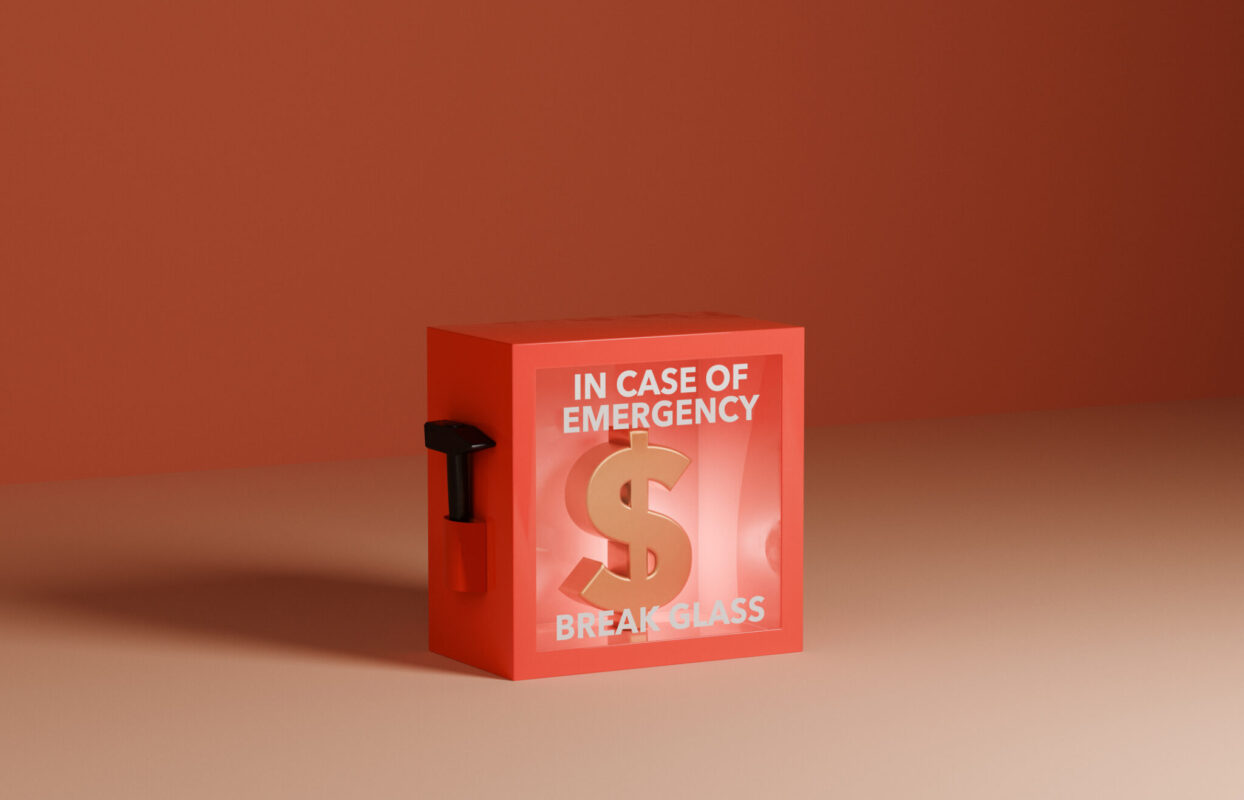
“I look at the emergency fund as the first line of defense against certain kinds of eventualities that come up,” Holtzman says. For small items, such as a last-minute birthday gift, there’s your checking account. For catastrophic items like storm damage to your house, there’s insurance. For unexpected intermediate costs or big costs not covered by insurance, there’s your emergency fund.
Understanding Insurance: A Quick Overview
Insurance protection provides peace of mind against financial losses due to a triggering event. If your house burns down, your homeowner’s insurance will, at least to a certain degree, make you financially whole again. If you get in a car accident, your auto policy will cover most of the damage. And if you get sick, your health insurance will pay some or all of your medical bills.
How an Emergency Fund Acts as a Form of Insurance
Like insurance, an emergency fund is a form of risk management. In both instances, you’re buying peace of mind by either setting aside money (in the case of the emergency fund) or paying out money (in the form of insurance premiums) so that you’ll be covered when the fateful day arrives.
But the two tools are quite different. “With insurance, you’re transferring your risk over to the insurance company,” Holtzman says. That risk is then pooled with the risks of other policyholders. Not so, of course, with your emergency fund. “The emergency fund is self-insurance,” says Holtzman. You’re holding onto the risk and covering the losses out of your own pocket. With insurance, you could get lucky and pay a single premium before your home gets destroyed and the company has to cut you a $500,000 check. With an emergency fund, you must have paid into the fund the amount of the damages.
But among emergency-fund benefits is that it’s a highly streamlined method of risk management. “The emergency fund can just immediately take care of things,” Holtzman says. “If you have to go through insurance, you have more delays, more processes.”
When and How to Use Your Emergency Fund
Use your emergency fund for things you can’t afford to pay out of checking but that you don’t want to finance. Example: If your car unexpectedly needs a major repair, writing a check could leave you penniless until next payday. You could pay by credit card, but then you’ll be paying interest. If you’ve got the money sitting in an emergency fund, there’s no reason not to dip into it.
Examples of when to use emergency funds are limitless. A beloved family member dies a thousand miles away and you need to travel to the services. Or you get laid off—your emergency fund can allow you to continue your lifestyle with minimal belt-tightening until you find new work.
Caution: Don’t reach into the emergency fund for impulse buys, trivial purchases or anything you’d categorize as discretionary spending.
Emergency Fund vs. Insurance: Why You Need Both
There are limitations to both the emergency fund and insurance. With the emergency fund, you probably won’t have enough to cover a major catastrophe. With the insurance policy, you want to avoid making claims for things you could pay out of pocket.
But the two complement each other perfectly for comprehensive coverage, especially if you use the emergency fund to pay your insurance deductibles.
Best: Once you’ve stashed away enough of an emergency fund to easily absorb any insurance deductible, raise your policy’s deductible to lower your premiums and save a few dollars. After all, you’ve already got the deductible money sitting in an account.
How Much Should You Save In Your Emergency Fund?
“Three to six months’ worth of expenses is a good rule of thumb,” Holtzman says. “But your risk tolerance plays into how much of an emergency fund to maintain. Some people feel better having a full year’s worth.”
The best way to build your fund is to make it automatic, just like retirement saving. “Choose a percentage of your paycheck that will go directly into a money-market fund set up as your reserve,” says Holtzman. “Take advantage of opportunities such as bonuses, windfalls and found savings, and put them toward the fund as well.”
What about savings vs. an emergency fund? The two have distinct purposes and should be kept separate. Savings is for planned expenditures such as vacations or downpayments. Keep adding to your savings instead of dipping in every time there’s an emergency.
Reminder: Don’t be afraid to use the emergency fund if you need to. In many situations, using an emergency fund may be preferable to relying on high-interest credit card debt, Holtzman says. The beauty of funding your reserve “on autopilot” is that you will go straight back to replenishing it if you’ve had to take out money.