Over the past five years, residential electricity rates across the US have risen nearly 40%. That financial burden has prompted homeowners to look for ways to lower their electricity bills. But with so many parts of the home dependent on electricity, where do you start?
Bottom Line Personal asked Robin Yochum of the Southwest Energy Efficiency Project to share some of her tips to reduce electricity consumption—including everything from daily habits to home appliance upgrades and actionable advice on how to make lasting changes in your electricity bill starting today.
Understand Your Electricity Usage
Before you can make any changes to your electricity usage, you have to be able to track it. “Once people see exactly how they use energy on a daily, even hourly, basis, they become much more motivated to monitor and reduce it,” Yochum says.
She suggests starting with your local utility company: “Many offer online dashboards that are easy to navigate, with apps that you can log into on your phone.” This allows you to view your electricity trends over time and throughout the day. With this information, you can pinpoint the exact times you’re using the most electricity and isolate why that may be the case. If your utility doesn’t offer this, you can still track your electricity consumption by using the kilowatt data from your monthly bills.
Quick Wins: Simple Habits That Lower Your Bill
The quickest and easiest way to reduce your electricity bills is to make certain lifestyle changes. Yochum emphasizes how the simple habits that everyone already understands still make a large impact. “The biggest thing I learned growing up was to turn off your lights and shut the refrigerator door,” she says. Here are suggestions for what else you can start doing today…
- Manually unplug devices when they’re not in use, including kitchen appliances, laptops, gaming systems and phone chargers. Note: The inconvenience of unplugging a TV with cable connections may be more trouble than it’s worth.
- Use smart power strips to prevent “vampire draw” from these devices—that is, electric power consumed by devices that are turned off but still plugged into an outlet. When you use a smart power strip, one plug is set to “master device”— typically the TV. The others are set to “peripheral devices,” such as gaming systems and soundbars. When the TV turns off, it reduces its electrical current and goes into standby mode. The power strip detects this change and immediately cuts power to all peripheral devices, eliminating their vampire draw and saving electricity. The power strip then waits for a current change from the TV, indicating that it’s turned on, and it restores power to the peripheral devices.
- Turn off lights when they are not needed.
- Run the dishwasher, washing machine and dryer only with full loads.
- Use cold water whenever possible to reduce electric water heating.
- Cool your home by opening windows in the morning.
- Draw the curtains or blinds when windows are shut to stop heat transfer.
Upgrade for Efficiency: Appliances and Lighting
Today’s appliances use significantly less electricity than those from prior decades. Example: According to the Department of Energy, refrigerators manufactured today use 75% less energy than those produced in 1973. This change is largely due to higher efficiency standards and advancements in technology. But there are still strategies to reduce appliance and lighting electricity…
Choose energy-efficient appliances
Appliances that are ENERGY STAR-certified exceed federal energy-efficiency requirements. Example: ENERGY STAR fridges are 9% more efficient than other models. Over the course of the fridge’s life span, this could amount to hundreds of dollars in savings.
Also: Many states offer direct rebates to people who purchase ENERGY STAR products. This could range from $25 to $50 for smaller things like smart power strips and dehumidifiers to hundreds of dollars for larger household appliances. The process for claiming these rebates varies—some require you to purchase products directly from your utility company…some retailers offer immediate rebates…and others require a mail-in application. Use the ENERGY STAR rebate finder to look for specific information for your zip code.
Switch to energy-efficient lighting
Upgrading to energy-efficient lighting is one of the easiest and most practical ways to reduce electricity bills, says Yochum. “That’s one of the lowest tiers of changes you can make. It’s affordable, highly efficient and immediately effective.” ENERGY STAR-rated LED light bulbs use 75% less energy and last 25 times longer than incandescent bulbs. Smart light bulbs are also a good option—you can set automated schedules that ensure you never leave the lights on when you’re away.
Heating and Cooling: Where Most Energy Goes
Heating, cooling and water heating are the largest sources of electricity consumption in a home, accounting up to 70% of all usage. It requires an enormous amount of energy to create heat (in the case of heating) and remove heat (in the case of cooling). The larger the temperature difference between the indoors and outdoors, the more electricity your heating, ventilation and air-conditioning (HVAC) system uses. But there are many ways to reduce home energy consumption from these systems…
Optimize your thermostat
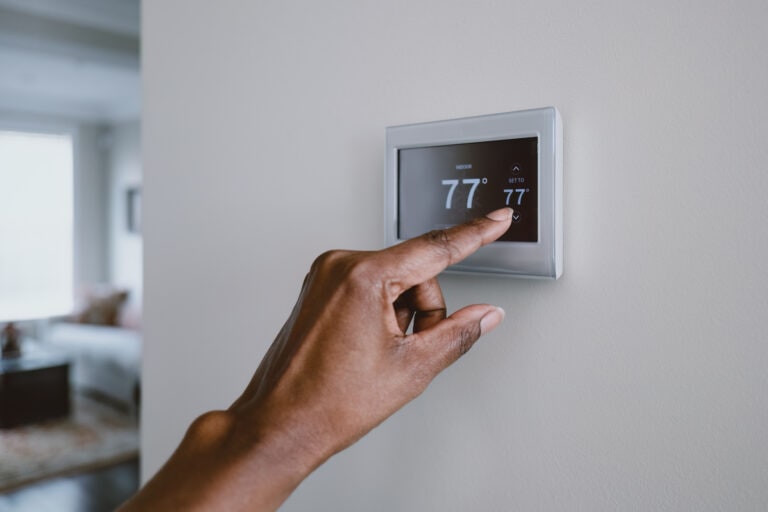
A programmable thermostat can schedule your heating and cooling cycles. Example: It can be set to turn off your heating and cooling system when you’re away for work during the day and turn it back on an hour before you arrive home. This can dramatically reduce electricity consumption.
Alternative: A smart thermostat. These devices typically are enrolled in demand-side management programs. That means you give your utility provider permission to connect to your smart thermostat. During high-demand periods (such as heat waves), the thermostat receives a signal from the utility provider to raise the home temperature, which reduces strain on the grid. Oftentimes, the utility company will provide a small discount on your monthly utility bill when you’re enrolled in this program. It may also provide a direct rebate for the smart thermostat itself. These incentives (and the process for getting them) vary by state, so ask your utility provider about what’s available or use the Database of State Incentives for Renewables & Efficiency (DSIRE). Many utility districts have time-of-use (TOU) rate plans when customers pay a premium for electricity during peak periods. By using a smart thermostat, you can avoid these additional costs.
Maintain your HVAC system
A well-maintained HVAC system operates more efficiently. By regularly replacing filters and cleaning evaporator coils on the outdoor unit, you ensure that the system has adequate airflow. This reduces how much the blower fan motor has to work, which reduces electricity consumption. Best: Schedule semiannual tune-ups with an HVAC contractor.
Seal and insulate your home
A poorly insulated home wastes heating and cooling and forces the HVAC system to run more frequently and use more electricity. “Proper insulation and air sealing are the most critical steps a homeowner can take,” Yochum says. These types of weatherization services are “pivotal improvements to your home’s building envelope.” Air sealing involves filling the air gaps in your home with foam sealant. These gaps are typically found in the attic around lighting fixtures and electrical boxes that protrude into the living space or in the construction itself —basement rim joists are a common culprit. Inadequate insulation is usually found in the attic and basement. Air sealing and insulation can both be done DIY by handy homeowners.
Once insulation and air sealing are complete, Yochum recommends replacing an older HVAC system with a heat pump. “A heat pump drastically affects the overall efficiency of the home,” she says. A heat pump is a type of HVAC system that transfers heat energy from the air, rather than creating it. They are incredibly energy efficient. They are installed on the outside of the home and look like a regular central AC unit. The difference is that they provide both heating and cooling (and can even be used for water heating or clothes drying). They must be installed professionally and can cost anywhere from $5,000 to $20,000, depending on the size of the home. A heat pump often is eligible for local rebates, so again, check DSIRE.
Yochum mentions that homeowners may be eligible for rebates on heat pumps, weatherization services and other energy-efficient upgrades through the Department of Energy-funded Home Energy Rebate Program. This program was paused for some time but is now slowly being rolled out to each state, with some programs already active. Cities and counties sometimes provide financial incentives as well.
Yochum says, “Rebate availability depends entirely on your location, and navigating those programs can be overwhelming for homeowners. That’s why regional organizations like SWEEP work to streamline this information and connect people with the savings they deserve.
Laundry, Kitchen and Water-Use Tips
Water and electricity use can go hand in hand, and there are a few simple tips you can take to help reduce the consumption of both. Try to run your dishwasher and laundry only when they’re full, even if that means waiting until the end of the day when more things are dirty. For laundry, try to use cold water whenever you’re able to.
Why do these strategies matter? An on-demand water heater uses electricity to heat water. By using cold water instead of hot whenever possible, you can reduce your electric bill. Additionally, many standard clothes and dishwashers use the same amount of electricity regardless of load size. If you prioritize using them only with full loads, you can reduce water waste and maximize electrical usage. You can also consider hand washing and drying your dishes or leaving clothes out to dry on a line.
Outdoor and Seasonal Strategies
The outside of your home also consumes electricity—sometimes a surprising amount.
- Replace hardwired lights for the driveway and stairs with motion-sensor lights that automatically save electricity.
- Unplug appliances in your garage—fridges and freezers, for example—when they are empty or not in use.
- Replace the pool pump with an energy-efficient one. Pool pumps are one of the most overlooked devices. An older version can be the second-largest source of electrical consumption in a home, just behind the HVAC system, and could be costing you up to $270 per year. Upgrade to an ENERGY STAR pool pump to save significant amounts of energy and money.