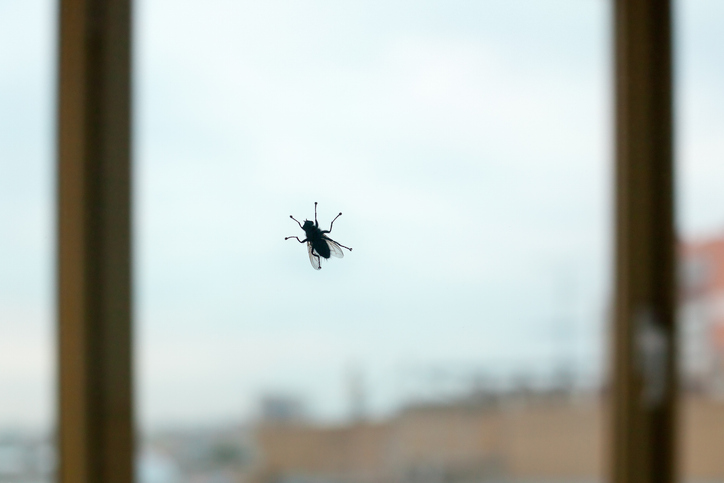
There’s almost nothing more frustrating and irritating than having a fly outbreak in your home. But fly infestations are more than just a nuisance. House flies spread pathogens that can cause diseases like food poisoning and dysentery.
Thankfully, there are simple and effective methods for stopping fly outbreaks in their tracks. Bottom Line Personal connected with Susannah Krysko, a household pest extension specialist at Cornell University, to discuss how to get rid of flies, how to keep them away, and when hiring outside help might make sense.
Understanding Flies in the Home
Flies are among the largest group of insects out there, and many of them are attracted to human foods and waste materials. This is why it’s so common to find them in your home and in the areas surrounding your home.
How can you tell a fly from another type of insect? It comes down to how many wings they have. “Flies are in the insect order Diptera, which have two wings,” Krysko explains. “That’s the basic definition of a fly.”
Like other insects, flies go through four stages of growth: egg, larva, pupa, and adult. When we see flies in our homes, it’s usually when they’ve reached their adult phase.
But fly eggs and larvae often hide out of sight in our homes too—generally in moist, dark places where we don’t notice them, such as drains, garbage, or standing water.
What Attracts Flies
Flies that are most likely to end up in your home are attracted to garbage, food, and compost trash, human and animal waste, and moisture.
“If they’re in the home, they’re going to be attracted to the moisture and food in the bathroom and kitchen, and they’re going to land on surfaces where we process our food,” Krysko says.
Additionally, Krysko explains, flies are attracted to items located outside our homes, including trash, dog or other animal feces, and compost heaps.
Once nearby, flies end up making their way inside our homes through doors, windows, broken screens, or any unsealed openings.
Common types of flies
“There are many different types of flies,” says Krysko. “The ones we’re concerned with getting in our homes are considered the ‘filth flies,’ and those are the ones that are attracted to our garbage, moisture, and compost piles.”
Types of flies in the home are typically divided into two main groups:
- Larger filth flies, including house flies, blow flies, and bottle flies
- Smaller filth flies, such as drain flies, phorid flies, and fruit flies
Larger filth flies tend to have small bodies but large eyes. You’ll see them buzzing around your house and outdoors.
- House flies, the most common type of fly found in the home, have red eyes and gray bodies. They are attracted to trash and food.
- Blow flies and bottle flies have metallic blue or green bodies and tend to congregate around dead animals, feces, or trash.
- Cluster flies are often confused with common house flies (and are not filth flies). Unlike house flies, they don’t spread diseases, but tend to invade homes in the autumn months and cluster in spaces like attics to stay warm.
Smaller filth flies have more delicate legs and bodies and aren’t as good at flying as larger flies. They can live and reproduce in indoor settings, but are also found outdoors, and often enter the home through open doors or windows.
- Fruit flies are often called vinegar flies because they’re attracted to vinegar. They are also attracted to rotting fruit and can be found congregating near your trash or anywhere where you keep decayed fruits or veggies.
- Drain flies are true to their name and can be found congregating in drains of sinks and bathtubs. They feed on bacteria, algae, and fungi.
- Phorid flies feed on decayed animal and plant matter. They can be found in drainpipes, garbage, and garbage disposals.
Signs of a Fly Infestation
The key to managing a fly infestation is to start early, before things get out of control. This means recognizing early signs of fly infestation.
The earliest signs don’t usually involve adult flies buzzing around your home but rather signs of flies reproducing. For example, if you see fly eggs, larvae, or maggots in your home, you know you have an emerging fly problem.
“Flies usually lay their eggs in decaying organic matter, and then what hatches out—we typically call a maggot. They’re legless, so that’s the identification clue,” Krysko describes.
Anytime you see a few flies that weren’t there before, this might signal the start of a fly infestation. “If you’re seeing 20 to 30 flies a day emerging, then you’ve got a bigger problem,” Krysko explains.
Health Risks Associated with Flies
The most common house flies don’t bite, but that doesn’t mean they’re innocent. House flies can spread bacteria and parasites, and diseases including cholera, E. coli, and salmonella.
Here’s how it works. Flies love to gorge on decayed food, feces, garbage, and sometimes dead animals.
As they move across surfaces in your home, they deposit germs they’ve picked up from inside your trash, or whatever they’ve picked up outdoors, such as fecal matter from pets or farm animals.
They are very skilled at spreading these germs. “Most flies have a spongy mouth part that just collects stuff as they’re sampling,” Krysko describes. “Basically, their mouth parts have a lot of surface area and a lot of potential to be picking things up and spreading them.”
How to Get Rid of Flies: Step-by-Step Solutions
Whatever type of filth flies you’re dealing with, the methods for getting rid of flies are similar.
Getting rid of flies involves a few basic principles:
- Eliminate their breeding sites and food sources
- Seal your house so they can’t enter
Step One: Sanitation and Prevention
If you want to get rid of flies, you need to figure out what their food source is. It can be helpful to identify what type of fly you’re dealing with, because different flies feast on different food matter. Most flies breed (lay eggs) in the same areas where their food sources are.
The most common flies—the bigger flies like house flies, blow flies, and bottle flies—are attracted to garbage, Krysko notes. As such, you need to remove and seal off all trash.
Krysko’s tips for this include:
- Keep a lid on your trash can and compost bin
- Periodically clean your trash cans (indoors and out)
- Store any outside trash cans as far from your home as possible
- Clean up any dog or other pet feces from your premises promptly
Smaller filth flies (fruit flies, drain flies, and phorid flies) require different control and prevention tactics. “Storing fruit and veggies in the fridge, cleaning drains, and in the case of phorid flies, inspection for sewage leaks are important,” says Krysko.
Opt for enzymatic cleaners over bleach when cleaning drains. Bleach can kill a few fly eggs or larvae, but it doesn’t remove the sludge they breed in, and worse, the sludge holds the bleach at the surface of the pipe and plumbing fixtures, causing corrosion—and potentially leaks.
Step 2: Seal Entry Points
Flies are tiny little things and can slip in through any small crack or unsealed entry point in your home. “They’re taking advantage of the little cracks and crevices, right around your windows,” Krysko says.
She recommends:
- Using sealants and caulk around the windows and the doors
- Promptly closing your doors after coming inside
- Making sure all window screens are properly installed and free from holes
Step 3: Traps and Extermination
While the best way to get rid of flies is to cut them off from their food source/breeding spots and eliminate their entry points into your home, other fly elimination remedies have their place, too. These methods are especially helpful if you are dealing with a small outbreak.
DIY and Natural Remedies
Overall, Krysko doesn’t recommend any specific natural remedies for flies or homemade fly traps because most don’t have enough evidence or research behind them.
That said, she says that some DIY traps are effective, and there are plenty of methods available. “There’s no harm in trying a repellant like citronella mint, for example, but don’t rely on them as the only form of control.”
Perhaps the most well-known DIY and natural remedies involve fruit flies. It’s known that fruit flies are attracted to vinegar, so people often make DIY traps by placing vinegar and dish soap in a cup, then covering the opening with plastic wrap and poking a few tiny holes for the flies to enter.
“I’ve made my own by putting some juice/fruit or vinegar at the bottom of a cup and placing a funnel made out of paper in the cup. The flies fly in, and they can’t find the opening to fly out,” Krysko adds.
Store-Bought Solutions
Krysko says there are several store-bought solutions that can be helpful for getting rid of flies. Here are her suggestions:
- Fly swatters, which are effective against a small number of flies
- Sticky fly paper or fly tape that you can put around your home
- Fly trap “bags” that you hang outside, away from the home
- Indoor light traps, which use ultraviolet light to attract flies and a sticky surface to trap them
“Bug zappers will not do anything to reduce the flies that fly around during the day. They do not attract mosquitoes and often end up killing moths and beetles that are attracted to light but are not harmful to humans,” Krysko notes.
Commercial Sprays
If you’re going to buy a commercial spray to deal with a fly problem, Krysko says to use products that are specifically labeled for flies or flying insects. It’s crucial to follow the instructions and safety precautions as described on the label.
Importantly, keep in mind that insecticides have limitations. Spraying with insecticide might “temporarily kill a few flies, but the insecticides don’t last long,” Krysko says. “Anything we get over the counter isn’t going to be an effective long-term control.”
When to Call a Professional
While many of us can handle fly infestations on our own, there are times when it makes sense to call a pest-control professional.
“If there’s a heavy fly infestation, and you can’t figure out the cause of it, then it might be best to call a licensed pest control person,” Krysko advises.
While some people are reluctant to hire a professional who’s going to apply chemicals, Krysko points out that professionals have been trained to limit exposure. “A well-trained pest management professional is more likely to apply pesticides in ways that limit human exposure and are more effective than if you did it yourself,” Krysko assures.
How to Prevent Future Fly Problems
While flies are most active in the summer, they are a problem to tackle throughout the year. “Filth flies are going to be more active in the summer,” Krysko says, but flies like cluster flies will start to invade your home in autumn and can become wintertime pests if you don’t seal your home from them during the fall months.
The best way to prevent any future fly infestations is to follow the same tips you used to stop infestations in the first place: cutting off food and breeding sources, and sealing your home so flies can’t get in.
The trick is to do this consistently—and all year long. And when in doubt, don’t hesitate to hire a professional for support.