
The best nonstick cookware in 2026 balances three things—reliable food release, safe materials and realistic durability. After reviewing manufacturer specifications, independent testing data and input from award-winning cookbook author Linda Gassenheimer, we recommend…
- Best Overall: Frieling Black Cube Quick Release
- Best PFAS-Free Option: GreenPan Valencia Pro (ceramic)
- Best Budget: Farberware Copper Ceramic
- Best for Induction: OXO Ceramic Professional
- Best High-Heat Option: Misen Carbon Nonstick
Nonstick pans are ideal for frying eggs, cooking fish and low-oil cooking — but they are not designed for extreme heat or lifelong use.
For readers concerned about PFAS or PTFE exposure, ceramic and carbon steel alternatives are widely available—though they may trade some long-term slickness for chemical simplicity.
Below, we break down which nonstick pans perform best and which are safest. We’ll help you choose one that fits your stove, cooking style and health priorities.
Why Choose Nonstick Cookware?
Compared with bare stainless steel, nonstick pans typically heat quickly…wipe clean with minimal scrubbing…and are affordable enough that every kitchen can keep at least one dedicated nonstick skillet in the rotation. They are especially useful for beginner cooks, busy families and anyone with limited time for soaking and scrubbing pans.
But nonstick cookware is not ideal for every job. Very high‑heat searing, broiler use and metal‑utensil abuse shorten the life of nonstick pots and pans, and serious steak or stir‑fry lovers may still prefer cast iron or carbon steel for those tasks. But as part of a mixed cookware lineup, a good nonstick frying pan or skillet is one of the most practical pieces you can own.
Bottom Line Personal asked long-time cooking expert Linda Gassenheimer to identify the best nonstick cookware available today for different needs and lifestyles.
“Keep in mind,” she says, “Most nonstick pans have a limited life span—three to five years. After that, the coating may start to degrade and lose its nonstick properties. Once that happens, the pot or pan should be discarded.”
How We Chose the Best Nonstick Cookware
For this nonstick cookware buying guide, the key criteria are…
Performance: Even heating, fast responsiveness and reliable food release at common stovetop temperatures.
Durability: Scratch- and abrasion-resistance, warp resistance and real‑world reports of how long the nonstick surface stays effective.
Safety: Whether coatings contain PTFE/PFAS (otherwise known as “forever chemicals”)…maximum safe temperatures…and how forgiving the pans are to everyday use.
Ease of use: Weight…handle comfort…balance…compatibility with gas, electric and induction cooktops…and oven and dishwasher ratings.
Value: Price relative to life span and performance—since most nonstick pans are disposable by design, a pan that costs four times as much should reasonably last longer or deliver clearly superior performance.
Independent lab tests from organizations such as Consumer Reports, Good Housekeeping and TechGearLab—combined with brand documentation and expert commentary on ceramic versus PTFE coatings—inform the recommendations and the nonstick cookware pros and cons explained below.
Types of Nonstick Cookware
PTFE-coated pans offer the slickest release and typically outlast ceramic coatings if kept at low to medium heat and are protected from scratches. They can stay nonstick longer than most ceramic coatings.
Downsides: PTFE belongs to the PFAS chemical family, and overheated pans (above roughly 500°F) can begin to degrade and release fumes, which are especially hazardous to pet birds. Safety guidance emphasizes moderate heat and good ventilation. Chipped and peeling PTFE cookware should be discarded so flakes do not end up in food.
Ceramic nonstick is a sol‑gel (a chemical mixed with a solid to form a safe nonstick coating) silica‑based coating that is typically PFAS‑free and marketed as the safest nonstick pans option. These coatings tolerate higher temperatures—up to around 600°F to 800°F—without decomposing, which gives them an edge for high‑heat oven work. The tradeoff is durability—while they perform beautifully at first, ceramic surfaces often lose their easy‑release qualities sooner than PTFE, sometimes within one to three years of regular use. Gentle cleaning and avoiding abrasive scouring pads are important to maintain performance.
Pros…
- Typically PFAS‑free and free of PTFE, PFOA and related chemicals.
- Higher heat tolerance than PTFE, especially for oven use.
- Attractive colors and finishes that appeal to design‑conscious kitchens.
Cons…
- Shorter nonstick lifespan on average.
- Can become more “sticky” over time, particularly if overheated.
- Often more expensive up front than basic PTFE pans.
Other nonstick options: Stainless, cast iron and carbon steel. Stainless steel, cast iron and carbon steel are not coated with nonstick chemicals, but when properly seasoned or preheated with oil, they can behave like durable nonstick cookware for many tasks. Seasoned carbon steel pans, in particular, are popular alternatives for people avoiding PFAS. With use, they develop a polymerized oil layer that becomes increasingly nonstick. These pans excel at high‑heat searing and can last decades, but they require more maintenance—seasoning, careful cleaning and sometimes hand‑drying and oiling to prevent rust. They also typically weigh more than a lightweight aluminum nonstick skillet.
Top Picks for Different Uses
| Product | Coating Type | PTFE/PFAS Status (Per Manufacturer) | Oven Safe To | Induction Compatible | Notable Caveats |
| Misen Carbon Nonstick Frying Pan | Hybrid carbon steel + ceramic-based nonstick | PTFE-free (per Misen); no added PFOA stated | 1100°F | Yes | High heat tolerance does not prevent long-term nonstick wear |
| OXO Ceramic Professional 10″ Frypan | Ceramic nonstick | PTFE-free (per OXO) | 600°F | Yes (induction base model) | Metal utensils may shorten coating life |
| GreenPan Valencia Pro | Thermolonceramic | PFAS-, PTFE-, PFOA-free (per GreenPan) | 600°F (lids lower) | Yes | Ceramic coatings typically wear faster than PTFE |
| Frieling Black Cube Fry Pan | Hybrid stainless steel + PTFE nonstick | Contains PTFE (per Frieling) | 500°F | Yes | “Metal utensil safe” refers to raised steel grid; nonstick layer still degrades over time |
| Farberware Glide Copper Ceramic Deep Frying Pan | Ceramic nonstick | PTFE-free (per brand labeling) | 350°F | No | Lower oven tolerance; not induction compatible |
| HexClad Hybrid Fry Pan (current TerraBond line) | Hybrid stainless + ceramic-based coating | PTFE-free (per HexClad TerraBond specs) | 900°F (500°F with lid) | Yes | Verify production date; coating specs have evolved over time |
Best Overall: Frieling USA Black Cube
“I have used this easy-to-clean and dishwasher-safe pan for about eight years, but it still looks new and cooks well,” says Gassenheimer.
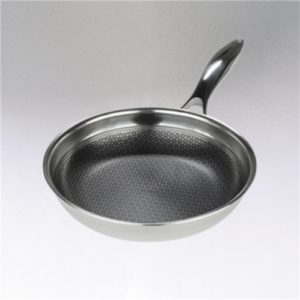
Frieling USA Black Cube. Photo credit: Frieling USA.
“The inside features a raised stainless-steel hexagon-shaped surface that sits over a black nonstick surface. You can use metal utensils on the raised surface.” The raised stainless grid helps protect the nonstick surface from direct utensil contact, which can extend its life. But no nonstick coating is permanently scratch-proof, and performance will gradually decline over time with regular use.
Specifications…
- Coating: PTFE nonstick beneath raised stainless-steel grid
- PTFE/PFAS: Contains PTFE; PFOA-free (per manufacturer disclosure)
- Oven safe: 500°F
- Induction compatible: Yes
- Dishwasher safe: Yes (manufacturer-rated)
- Price: Starts at $90
Alternative brand with similar hybrid surface: HexClad Hybrid.
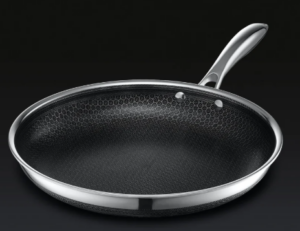
HexClad Hybrid. Photo credit: HexClad
HexClad’s current TerraBond line is marketed as PTFE-free and “free from forever chemicals,” though coating formulations and marketing claims have evolved over time. Buyers should confirm the specific production line and manufacturing date when purchasing.
Best for Healthy Cooking (Nontoxic)
PFAS-free ceramic lines such as GreenPan Valencia Pro appeal to home cooks focused on minimizing exposure to traditional PTFE-based coatings while still enjoying easy cleanup.
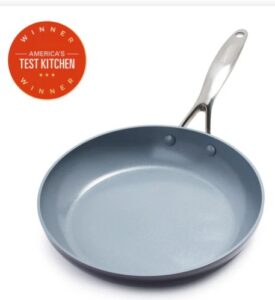
GreenPan Valencia Pro. Photo credit: GreenPan/The Cookware Company.
Ceramic coatings may lose slickness faster than traditional PTFE nonstick. For longevity, avoid overheating and metal utensils.
Specifications…
- Coating: Thermolon ceramic
- PTFE/PFAS: PFAS-, PTFE-, and PFOA-free (per manufacturer)
- Oven safe: 600°F (glass lids typically lower)
- Induction compatible: Yes
- Price: $40 to $80 depending on size
Best Budget Pick: Farberware Copper Ceramic Deep Frying Pan
“This is my go-to pan for cooking and easy cleanup,” Linda says. “I use it to sear food as well as cook. Since it is large (it does come in smaller sizes), it has a helper handle for easy lifting.
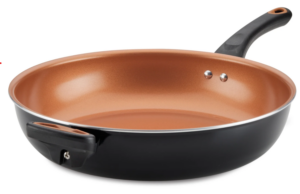
Farberware Copper Ceramic Deep Fying Pan. Photo credit: Farberware Cookware.
The pan can go in the dishwasher, but I find that it typically comes clean in minutes with just soap and a sponge. I’ve used mine for three years, and it still looks new.” This is an affordable entry into ceramic nonstick, though its lower oven tolerance makes it better suited for stovetop cooking than oven finishing.
Specifications…
- Coating: Ceramic nonstick
- PTFE/PFAS: PTFE-free (brand labeling)
- Oven safe: 350°F
- Induction compatible: No
- Dishwasher safe: Yes
- Price: Starting at $25
Best for Induction Stoves: OXO Ceramic Professional Nonstick Fry Pan
“Shaped more like a bowl than a fry pan, it can be used for soups and stews as well as eggs and other quick-cook foods,” Gassenheimer says.
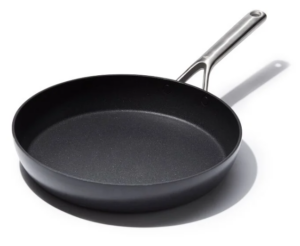
OXO Ceramic Professional. Photo credit: OXO/Helen of Troy Limited.
“The durable hard-anodized aluminum body can handle high heat and heats food evenly. Easy to clean and dishwasher safe.” Metal utensils may shorten the life of ceramic coatings.
Specifications…
- Coating: Ceramic nonstick
- PTFE/PFAS: PTFE-free (per OXO)
- Oven safe: 600°F
- Induction compatible: Yes (induction-ready base)
- Dishwasher safe: Yes
- Price: Starting at $80
Best for Oven Use: High-Heat Ceramic or Carbon Steel
High-heat ceramic options such as GreenPan Valencia Pro (rated to 600°F) and carbon steel options such as Misen Carbon Nonstick give you the flexibility to start dishes on the stovetop and finish them in a hot oven.
GreenPan
“This one is oven-safe to 600°F, induction-compatible and dishwasher-safe,” Gassenheimer says. “The coating will pit if metal utensils are used, but it will still retain its nonstick quality.”
Specifications…
- Oven safe: 600°F
- Induction compatible: Yes
- Coating: Ceramic (PFAS-/PTFE-free per manufacturer)
Misen Carbon Nonstick
“This pan heats evenly and creates a good sear. It is oven-safe even at high heat and comes pre-seasoned and ready to use,” Gassenheimer says. Note: Even high-heat coatings can degrade over time if routinely exposed to extreme temperatures.
Specifications…
- Material: Nitride-treated carbon steel with ceramic-based nonstick
- PTFE/PFAS: PTFE-free (per manufacturer)
- Heat-safe rating: Up to 1100°F
- Induction compatible: Yes
Best Premium-Priced Nonstick Pan: Misen Carbon Nonstick Frying Pan
“This pan comes preseasoned and ready to use,” Gassenheimer says. “Keep in mind—most carbon steel pans need seasoning after each use. The more you use the pan, the more the surface becomes nonstick.”
Specifications…
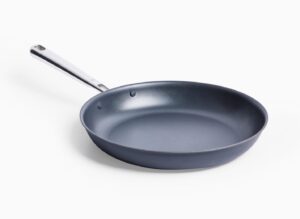
Misen Carbon Nonstick. Photo credit: Misen.
- Material: Nitride-treated carbon steel
- Coating: Ceramic-based nonstick layer
- PTFE/PFAS: PTFE-free (per Misen)
- Heat-safe rating: Up to 1100°F
- Induction compatible: Yes
- Price: Starting at $129 for 12-inch
What to Look for When Buying Nonstick Cookware
Coating and material
When comparing nonstick cookware brands, start by deciding whether PTFE or ceramic—or a coating‑free option like carbon steel—better fits your comfort level and cooking style. PTFE remains the slickest and longest‑lasting nonstick surface under gentle use, whereas ceramic offers PFAS‑free peace of mind at the cost of somewhat shorter life.
Beneath the coating, hard‑anodized aluminum and multi‑ply stainless/aluminum construction deliver the most consistent heat and help prevent warping over time. For induction cooktops, look for “induction‑ready” or magnetic stainless bases and verify that the specific line you’re considering is compatible.
Handle design, lids and ergonomics
Balanced weight and comfortable handles are surprisingly important—poorly designed handles can twist your wrist or run hot, especially on gas stoves. Riveted, stay‑cool stainless or silicone‑wrapped handles with a gentle curve are easier to control, and helper handles on large skillets make it safer to move full pans. Tight‑fitting lids—often tempered glass—help with simmering, while vent holes prevent boil‑overs.
Oven- and dishwasher-safety
If you routinely finish frittatas, casseroles or skillet desserts in the oven, check the maximum oven‑safe temperature and whether lids and handles are included in that rating. PTFE pans often top out around 400°F to 450°F, while some ceramic lines are rated to 600°F or more and carbon steel can usually go even higher. Dishwasher‑safe claims are common, but many experts still recommend hand‑washing to slow down wear on coatings.
Safety considerations
For readers focused on the safest nonstick pans, PFAS‑free ceramic, seasoned cast iron and carbon steel are popular options, though each comes with its own care requirements. If you choose PTFE, keep heat at low to medium, avoid preheating an empty pan, don’t use it under a broiler, and replace it promptly if the coating chips, peels or shows deep scratches. Good kitchen ventilation—opening a window or using a hood—further reduces airborne fumes from any cookware.
Durability and warranty
No nonstick coating lasts forever, so durability and warranty terms matter for real‑world value. PTFE pans generally last three to five years, while ceramic pans often deliver peak performance for one to three years depending on care. Hybrid or nitride‑treated carbon steel can last far longer when maintained. Look for warranties that clearly distinguish between defects (covered) and normal wear. Remember that a moderately priced pan replaced every few years can be a better investment than a very expensive pan that still eventually loses its nonstick surface.
Here are concise definitions of the key chemicals with pros and cons…
PFAS (per- and polyfluoroalkyl substances): PFAS is a large family of thousands of synthetic fluorinated chemicals used for their oil‑, water‑ and stain‑repellent properties in products like nonstick coatings, food packaging and textiles. In cookware, PFAS appear mainly as polymer coatings (like PTFE) that create a slick, nonstick surface on pans.
Pro: PFAS‑based polymers provide very effective, durable nonstick and grease‑resistant performance at normal cooking temperatures.
Con: Many PFAS are extremely persistent “forever chemicals” linked to environmental contamination and potential health risks, which is why some shoppers now look for PFAS‑free cookware.
PTFE (polytetrafluoroethylene, often known by the brand name Teflon) is a specific type of PFAS polymer used as the primary nonstick coating on many traditional pans and bakeware. It is chemically inert and stable under typical low‑ to medium‑heat cooking when bonded to the pan’s surface.
Pro: PTFE delivers the slickest, most reliable nonstick performance and generally lasts longer than ceramic coatings when not overheated or scratched.
Con: If overheated (around or above 500°F to 570°F), PTFE can break down and release fumes that may harm people and are deadly to pet birds, and as a PFAS, it raises broader environmental concerns.
PFOA (perfluorooctanoic acid) is an older PFAS compound that was widely used as a processing aid in manufacturing PTFE nonstick coatings but is no longer intentionally used in cookware in the US and the European Union due to health concerns. It helped PTFE form smooth, uniform coatings on pans during production but was largely burned off in high‑temperature curing.
Pro: Historically, PFOA made it easier and more efficient for manufacturers to produce consistent, high‑quality PTFE nonstick coatings.
Con: PFOA has been linked to serious health issues (including certain cancers and thyroid and immune problems), prompting global phase‑outs and driving consumer demand for “PFOA‑free” or PFAS‑free cookware.