
Is the water that comes out of your home’s faucets safe to drink? “There is a discrepancy between what is safe in tap water and what is legal,” says Sydney Evans, MPH, from the Environmental Working Group. “Drinking water from a utility is regulated, but that doesn’t mean there aren’t any contaminants at all. Contaminants vary across the states, and different ones have different risks—many of which don’t go away even when water is boiled or used for cooking.”
Why Consider a Home Water Filter?
“Risks [from contaminants] are variable and long term,” Evans explains. “One group of contaminants most people are going to have from their water-treatment system is disinfection byproducts. Two regulated groups of disinfection byproducts are trihalomethanes and haloacetic acids. Disinfection is absolutely necessary, but there is a tradeoff. Byproducts have been linked to some cancer risk—but they are easily removed by a filter at home.”
Per- and polyfluoroalkyl substances (PFAS), so-called “forever chemicals,” now are showing up in more and more water systems. They are linked to serious health conditions, including cancer (kidney and testicular), high cholesterol, liver damage, thyroid disease, decreased immune response to vaccines, reduced fertility and developmental issues in children, such as low birth weight. Regulations have recently passed for some level of treatment, but many water systems are not yet treating for them, explains Evans.
Also, depending on where you are, there may be nitrate in your water—mostly from agricultural runoff, but they can impact entire watersheds. Long-term consumption of nitrate-contaminated water is linked to increased risk for several cancers—in particular, colon, kidney and stomach cancers—as well as reproductive-system disorders and thyroid disease. Risks are highest for infants younger than six months of age, pregnant women and people with certain preexisting gastrointestinal conditions.
Water-Filtration Technology
There are three main technologies available for home water filters…
- Activated carbon-based technology primarily filters out chlorine, volatile organic compounds (VOCs), sediments, bad tastes and odors.
- Ion exchange technology removes dissolved inorganic contaminants and minerals (calcium and magnesium) from water by swapping them with less harmful ions, such as sodium and hydrogen.
- Reverse osmosis removes 99% of contaminants including heavy metals (lead, arsenic), chemicals (PFAS, chlorine), fluoride, salts and microorganisms and significantly improves taste and odor.
Types of Home Water Filters
There are multiple options for filtering your homes water…
Pitchers use an internal carbon cartridge to filter tap water after it is poured into the container.
- Pros: Pitchers are low cost (ranging from $15 to $150), easy to install and easy to use.
- Cons: Pitchers must be refilled regularly, which can be inconvenient for larger families. They filter for disinfection byproducts but not always for PFAS and other contaminants.
Faucet-mounted filters attach to the taps—you unscrew the aerator and screw on the filter. A lever allows you to switch between filtered and unfiltered water.
- Pros: Faucet-mounted filters can remove unpleasant odors and tastes as well as various contaminants, including chlorine. Some also can filter out PFAS. They are not expensive—starting at $15 up to $80 for high-end units. They are easy to install and use, although replacement cartridges can be costly—depending on the filter, prices range from about $13 to $57.
- Cons: They slow down water flow and do not fit on pullout sprayers or some other types of faucets.
Under-sink filters are hidden in the cabinet. Some can remove a wide range of contaminants without reducing flow rate. Carbon-based under-sink filters can remove chlorine, organic compounds and some pesticide residues. Reverse-osmosis ones can remove dissolved solids such as salts and nitrates, and in some cases, heavy metals.
- Pros: No loss of counter space…good water flow…efficient cleaning.
- Cons: These can be expensive—$1,000 or more for a reverse osmosis unit. They may require custom plumbing or countertop changes for installation of a dedicated faucet…and replacement filters can be expensive—between $25 and $100, depending on the unit.
Whole-house filters are installed at the main water line of the home and provide filtered water throughout the entire house.
- Pros: They can remove many contaminants and improve appliance lifespans since water passing through appliances leaves fewer deposits.
- Cons: These are very costly—between $700 and $5,000, depending on the system type, capacity, home size and installation cost—and they often require professional installation and substantial basement or garage space. Replacing the filters can be complex, and the filters themselves are between $100 and $500 per year. Note: Homeowners with significant plumbing skills may be able to install whole-house filters themselves, but it involves cutting main water pipes, installing valves and more. Replacing the filter requires turning off the home’s water supply, following instructions to release pressure, removing the old filter and installing the new one, plus testing for leaks. Whole-house filters may slightly reduce water pressure.
Countertop filters attach to the tap with a hose that directs water through a small purifying device that sits next to the sink.
- Pros: They are easy to install and fairly good at removing contaminants. Prices range from $50 to more than $450.
- Cons: They may not fit all faucets…clutter countertops…and replacement cartridges may cost more than the unit itself.
How to Choose the Best Water Filter for Your Home
The Environmental Working Group offers a step-by-step guide to selecting the right water filter for your home at EWG.org/tapwater/water-filter-step-by-step-guide.php. To find out what type of water filter is best for you, enter your Zip code. Things to consider…
Costs vary widely for filtration units, filter replacements and professional installation, if needed, and also vary widely by region of the country and even at specific locations (states and localities) within a given region.
Certification: Look for third-party certification of the product you are considering by the National Sanitation Foundation (NSF) and the American National Standards Institute (ANSI). “Certifications are not absolutely necessary but can be a good idea,” says Evans. “They are a way to have an independent agency certify that the filter really does what it claims to do—a straightforward seal of approval. But bear in mind that even filters without certification may work just fine. The key is to find something appropriate for your specific area and to take into account both the up-front purchase cost and ongoing maintenance.”
Best Home Water Filters by Category
“There is no single best overall solution,” Evans explains. “For the most comprehensive water-treatment filtration option, probably go for a reverse osmosis system, most likely with under-sink installation. But for anyone who is budget-constrained, countertop units and pitcher filters will be most affordable.”
EWG tested 10 countertop water filters. Here are its recommendations…
Best overall: Epic Pitcher
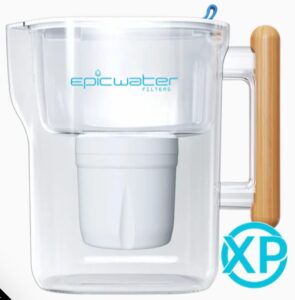
Epic Pure XP Water Filter. Photo credit: © Epic Water Filters.
Epic Pitcher was nearly 100% effective at removing contaminants, at a reasonable price. It is NSF/ANSI compliant.
Runner up: Clearly Filtered offers high-end water pitchers and under-sink filtration systems that are nearly 100% effective at removing contaminants and are NSF/ANSI compliant.
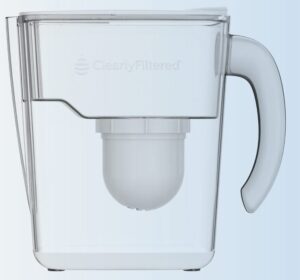
Clearly Filtered Water Pitcher. Photo credit: © Clearly Filtered.
Specifically for nitrates: Zero Water
Zero Water pitchers are 100% effective at removing even low levels of nitrates.
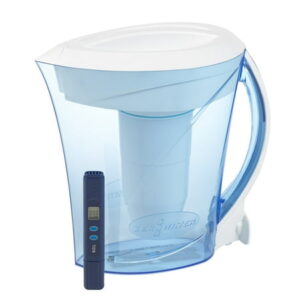
ZeroWater Pitcher. Photo credit: © Zero Filter Online LLC.
Budget option: Pur Plus
Pur Plus faucet-mounted systems and pitchers are good for removing disinfection products.
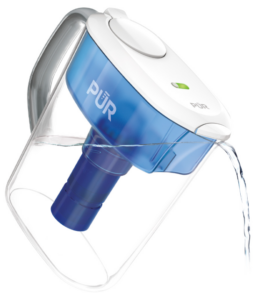
PUR PLUS Pitcher. Photo credit: © PUR/Helen of Troy Inc.
Dealing with Well Water and Lead
“Well water is an entirely different situation from municipal water,” says Evans. “The whole argument for reducing specific contaminants is predicated on the ability to look up those contaminants in a database. But no one monitors drinking water from a household’s own personal well. If you have a well, look at nearby utilities—as long as they use groundwater, they are most likely drawing from a similar source.”
Testing well water regularly is one of the most important things you can do to protect your family’s health. Unlike public water systems that have to meet federal water quality rules, private wells are not regulated under the Safe Drinking Water Act.
The Environmental Protection Agency and Centers for Disease Control and Prevention recommend testing well water at least once a year. More frequent testing can be wise if you live near farmlands, industrial sites or landfills. For an idea of potential risks in your area: Go to EWG’s Tap Water Database at EWG.org/tapwater.
To have your well water tested, contact your local health department for a referral to a state-certified testing laboratory. The lab will provide sterile collection bottles and instructions for collecting and shipping the samples to ensure accuracy. Costs vary widely.
Practical Tips for Dealing With Lead in Your Water
Lead is a special case and a lot harder to generalize about, because it usually is not a treatment problem but an issue in the water-distribution system. Lead is most likely coming from the system itself—specifically from the pipes—and the pipes involved can be at the individual home or at the utility. This means that two neighbors may have entirely different lead concentrations depending on their home piping systems. It is hard to get individual testing data, because lead contamination happens after water is treated. Anyone concerned about lead may want to have their home water tested. Some municipalities and utility companies will do it or can provide references to places that will. Costs vary widely.
Practical Tips for Filter Maintenance and Use
Filter cartridges must be replaced periodically to function effectively. The cost of replacement filters for countertop and pitcher filters varies widely—a replacement may cost $20 to $160 or more. Take into account the frequency with which manufacturers say filters need replacement—your own experience may vary, but this can be a good general guide. Some filter models have a built-in filter-life indicator that tells you when the filter needs to be changed. Otherwise you will need to track use on your own.
For systems with more complex installation, such as whole-house filters, find out the maintenance requirements when the system is installed, and keep up with what is needed—both to have any possible needed repairs handled under warranty and to be sure the system is working at optimal levels to keep your drinking water as safe as possible.