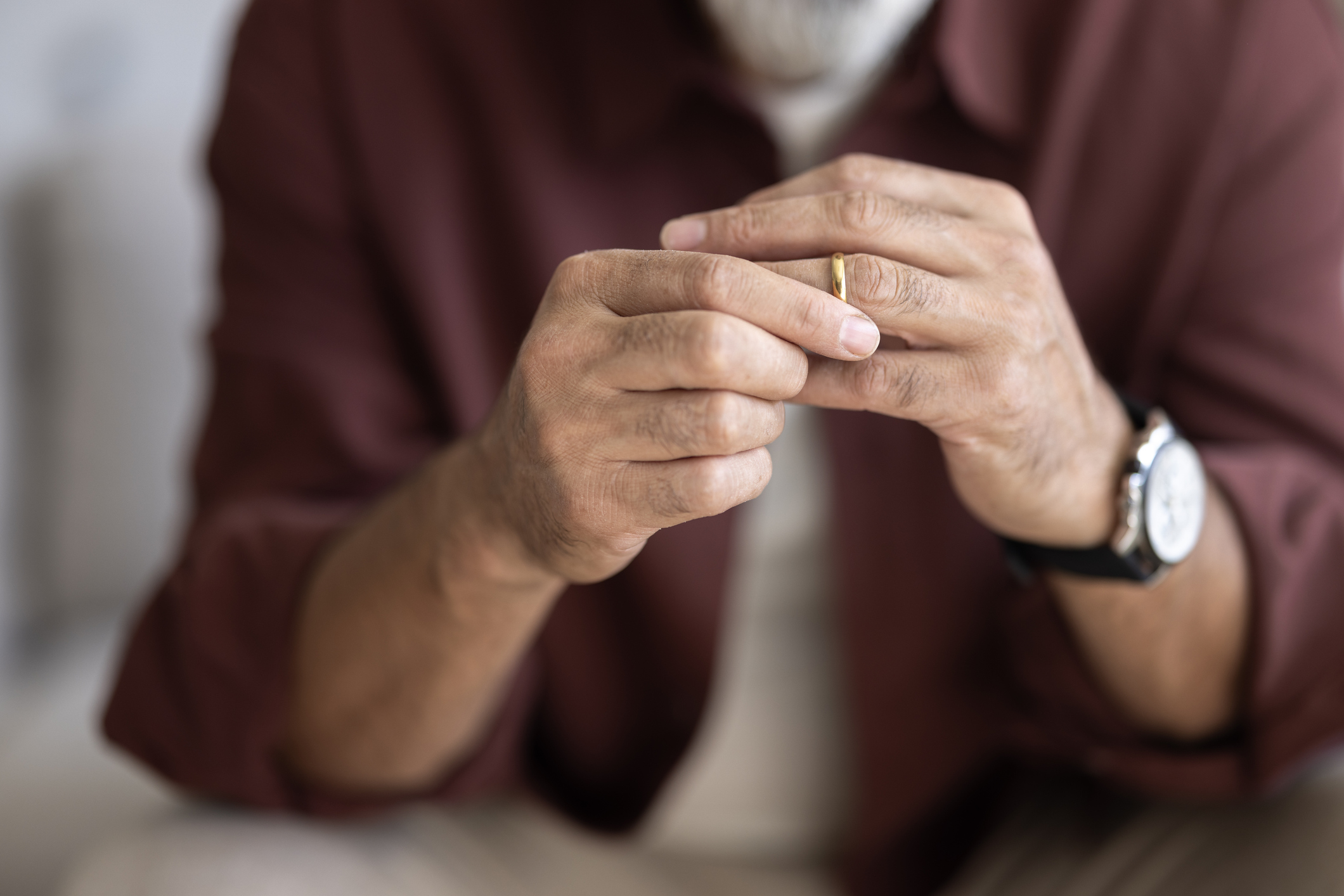
According to the 2022 study “The Graying of Divorce: A Half Century of Change” done at Bowling Green State University, more than one-third of American adults divorcing are age 50 and older. What’s more, those 65 and older are the only age group with an increasing divorce rate.
Why is this happening and, more importantly, can you stop it from happening to your own marriage? Bottom Line Personal turned to couples’ therapist Michele Weiner-Davis, MSW, author of eight books on relationships including Divorce Busting, to understand how couples grow apart over time and what she does during her unique, two-day intensive sessions to help build back that love.
What Is a Gray Divorce?
Quite simply, gray divorce is a divorce that occurs later in life. “A growing number of people fit the category of over 50…married for 20 to 30 years…and deciding that they can’t or don’t want to make a go of it anymore,” explains Weiner-Davis. “Very often, people considering divorce later in life are in second and subsequent marriages.”
Why People Divorce Later
One common reason for gray divorce is that couples wait until their children leave home. “They think it’s best for the kids to have what they consider to be a stable, albeit boring and passionless marriage. And they make a commitment to stick around,” says Weiner-Davis. “So many people—including my own parents who, after 23 years of marriage back in the day when people didn’t get divorced, waited until I left home to get a divorce—believe this myth that if the kids are adults, they can handle it better. But I’m here to tell you that for me, at age 17, it was without question one of the hardest things that ever happened in my life because it came completely out of the blue—my parents had never argued.” Complicating matters is when divorcing couples rely on their adult children as confidants—this only adds to the kids’ stress, especially if they are forced to take sides.
How Partners Drift Apart
“In the beginning, partners were crazy in love and focused on their similarities. Then life set in,” explains Weiner-Davis. “They have kids, jobs, other responsibilities. Their extended family, community involvement or going out with buddies all became more important than focusing on the relationship.” Result: They grow apart and start focusing on their differences rather than their similarities.
“The relationship goes on the back burner. Couples take that as a rite of passage, thinking, We’ll have our time later in life. They take for granted that they can reinvest energy in the relationship down the road—but that is just absolutely wrong. A relationship is a living thing, and it needs to be nurtured.”
The classic pattern Weiner-Davis sees is that one person in the relationship doesn’t like the way things are going. “They make some sort of attempt to reconnect, but if that bid for connection isn’t met with an immediate response, they just give up. And, when people don’t feel emotionally connected, every small thing that happens in the relationship gets put under a microscope and magnified,” she says. “Over time, the disconnection that resulted from not prioritizing the relationship can breed contempt—the unhappy partner stores these negative feelings inside, and that resentment festers.”
Once stuck in that place, a person’s internal dialogue often goes this way—This will never change, and I don’t want to spend the rest of my life like this. I may have 20 or maybe 30 good years left if I’m lucky. Is this truly the way I want to live out the rest of my life?
“People envision getting a new lease on life, going out with a bang instead of this drumbeat that has been their life,” says Weiner-Davis. “Typically, when a couple is teetering on the brink of divorce, it is very rarely a unilateral decision—for both people to say we’re at the end of our rope and we want to just disengage collaboratively. It does happen from time to time, but the norm is that one person truly wants to end the relationship, and the other person, of equal magnitude, does not want to end the marriage.”
The Way Back
There is an alternative to divorce for older couples. “When there’s a relationship breakdown, it’s a skill deficit,” says Weiner-Davis. “We’re not born knowing how to have great relationships—there’s no gene for that. Most people learn through observing their role models as they’re growing up and, quite honestly, most people don’t have great role models. And even if you had the best parents in the world, what if you marry someone who didn’t? How then do you negotiate what happens in marriage?
“The good news is that we’ve learned so much in the last few decades about the differences between successful long-term marriages and the ones that end up divorcing. There are skills that people can learn, and my default position is a marriage can be saved until proven otherwise—even with couples in which one person wants in and one person wants out. The solution comes from helping people understand that they got to the place they’re in not because either of them is evil but because things were mishandled. I teach people how to handle things differently.”
Here are some of the specific approaches Weiner-Davis takes in her two-day couples’ intensives…
Start with the right attitude
“People contemplating gray divorce often feel hopeless. It’s important to know that there are many, many people who were at that place of hopelessness and were able to turn things around when they were willing to do the work to make it happen,” says Weiner-Davis.
Look back on the history of your relationship
“Most people were deeply in love early on in their relationship. I’m a solution sleuth,” Weiner-Davis explains. “I want to know how they went from wanting to be together all the time to now never being in the same room together or when they are, sitting in separate places. Once I start asking people how things were different back then, they begin to see that some of the way they were feeling was the result of the effort and the intention of focusing on having connection.”
Besides rekindling memories about what drew you together in the first place, Weiner-Davis suggests thinking back to when you faced a crisis together and reflect on how you got through it. “This helps you see that, at one time, you were a really great team. Congratulate yourself about things that have gone well.” She also suggests “finding out whether there are unresolved issues between you because of crises that didn’t go well. You may be able to see patterns that developed in the relationship or events that got you stuck.”
Address any longstanding resentments
A lot of partners hold grudges over perceived slights for a very long time. According to Weiner-Davis, “These skeletons in the closet can prevent the wall between you from coming down. “By communicating, you can plow through, clear the air and feel more connection. Oftentimes, it turns out that there’s a big misunderstanding about what happened.”
Acknowledge your spouse’s strengths
Research shows that in healthy relationships, there’s typically a five-to-one ratio of positive things said to zingers, says Weiner-Davis. “With the couples that I work with, it is absolutely reversed. Try shifting your focus—wake up in the morning and decide that you’re going to find two or three things about which you can turn to your partner and say, ‘I appreciate that you’ve done this.’ The best, most efficient way to modify someone else’s behavior is positive reinforcement, so sharing your pleasure when they attempt to get things right is an important way to turn things around.”
Embrace intimacy again
Many people believe that sex fizzles out as they get older. “I haven’t found that to be true,” says Weiner-Davis, “but it changes for sure. Many people who’ve been married for 20 to 30 years have never talked about sex with each other. Or maybe they did when they were in their mid-20s or 30s, but guess what? Over time, our bodies change, and what people need to feel stimulated and passionate and interested in sex also changes. If you’re operating on old data, it’s time for a reset.”
Consider couples’ therapy
If you want to work things out but are facing stumbling blocks, a professional can teach you new relationship skills such as how to communicate in different ways and how to speak your partner’s love language.
A great way to find a therapist is by word of mouth. “Talk to people you know and love who have had positive therapy experiences. There also are directories from mental health organizations, such as Psychology Today and the American Association of Marriage and Family Therapy (AAMFT.org), where you can search not only in your area, but by the kind of issue you’re dealing with,” explains Weiner-Davis. “Read the profiles of therapists to find a good fit. There is no such thing as unbiased therapy, so learn about the person you’re thinking of working with. Has this person, for example, been divorced multiple times? It doesn’t mean he/she is not a good therapist, but it means it’s probably more likely that he will see it as a potential outcome for you.”
She adds that successful therapy depends on the relationship you have with your therapist…and the only way to know if someone is right for you is by having contact with them and then trusting your gut instinct. Questions to ask yourself: Does this person understand me? Do I have faith that this person’s skills and knowledge and experience will be able to help us find a solution? Is the therapist flexible enough that if I feel that we’re off track or going in the wrong direction he/she will pivot? “These factors are much more likely to produce a positive outcome than whatever type of therapy, including mine, that the professional practices,” says Weiner-Davis.
Look online
“If you want self-help tools to help open communication, there are online programs that could help,” says Weiner-Davis. “Gottman.com, the website of my colleagues and friends Don and Julie Gottman, has really good information that’s evidence-based and reasonably priced programs for couples.”
On Weiner-Davis’s own site, you’ll find “A Divorce Busting® Guide To The Last Resort Technique”, specifically designed for couples when one partner wants to try to save the marriage and the other has one foot out the door. You also can find information about her two-day intensives for couples who are considering divorce.