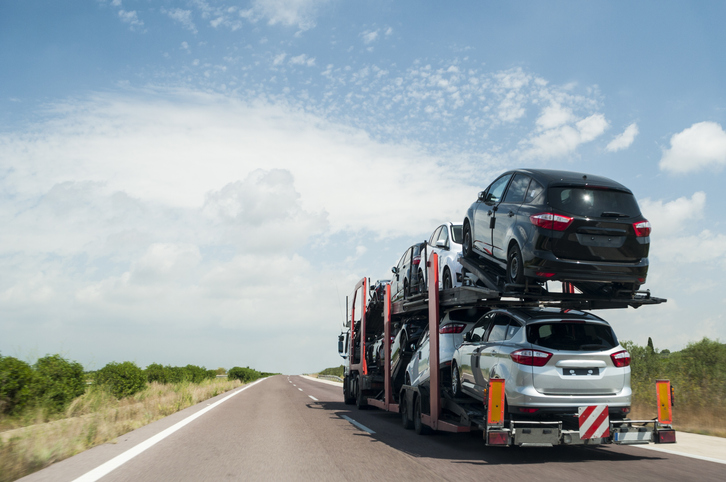
Vehicle shipping is becoming increasingly commonplace. We still transport cars for the same old reasons (relocating across the country, attending car shows and rallies), but the real impetus behind the trend is digital car-buying at greater and greater distances.
“These days,” says Karl Brauer, executive analyst at the automotive-research firm iSeeCars.com, “it’s not uncommon to find a car you want to buy and have it be 200 or even 2,000 miles away.”
We asked Brauer to take us through the ins and outs of shipping a car and how to get your vehicle from point A to point B economically and without incident.
How Does Shipping a Car Work?
“Step one of auto transport is confirming the distance you’ll need the car shipped,” Brauer says. Be as accurate as you can, which will help once you start gathering quotes.
Next, you’ll need to start cross-shopping your many different options. “There’s not just different companies,” says Brauer, “but also different styles of shipping.” For example, you might choose between open car transport and enclosed car transport, as well as between door-to-door car shipping and terminal-to-terminal car shipping.
Once you’ve narrowed down some of those choices, it’s time to gather car shipping quotes from several car transport companies. After you’ve selected the quote that provides the best balance between cost and peace of mind, you’ll prepare the car for shipping. Depending on the method you’ve chosen, the vehicle will either be picked up from you, or you’ll take it to a drop-off point.
Once the car is in transit, some carriers may send status updates on its progress, along with an estimated delivery window. A few carriers provide live or near-live GPS tracking, but why not spend an additional $30 on an Apple Air Tag so you can track it independently?
In terms of when you’ll pay, policies vary. It’s not uncommon to pay half up front and half on delivery. But some companies require full payment when you schedule. With others, you can wait and pay upon delivery.
How Much Does it Cost to Ship a Car?
Car shipping cost is hard to generalize because so many factors go into it. Distance is an obvious one, but others include enclosed vs. open, door-to-door vs. terminal-to-terminal, vehicle size, and how rigid vs. flexible you are regarding timing.
Brauer does offer a rough rule of thumb, however. “As a good starting point, assume at least a dollar a mile and probably more on shorter trips,” he says. “If you’re shipping 3,000 miles across the country, you might be able to get away with $2,000. But if you’re shipping 500 miles, you might have to pay $800 or $1,000.”
Open vs. Enclosed Car Shipping
As the names imply, open shipping means there are no walls or roof on the trailer to protect your vehicle, while enclosed means that your car will travel inside—safe from the elements, dust, flying pebbles, and bird poop.
As you might expect, enclosed shipping costs more, but it might be worth it if you have a rare, classic, or expensive vehicle… or just one whose appearance you’re very particular about. On the other hand, Brauer says, “If you’re shipping a $5,000 car, you’re probably not going to ship it enclosed. It’s not worth the extra cost.”
How Long Does it Take to Ship a Car?
Just as with cost, timing can be affected by several factors, Brauer says. The most obvious one is distance, since it will take twice as long to travel twice the distance.
Perhaps less obvious is the matter of when the vehicle will actually begin its journey. Brauer explains: “You could have the vehicle picked up by the trucking company today, but they might be planning to pick up three other cars. Maybe they’re not really going to start the journey until there are four cars in the truck, which could be days from now.”
The presence of those other vehicles on the load can have another effect on timing. “If they’re all going to the same place and there’s no reason for the truck to stop in between, it’ll go relatively quickly,” Brauer says. “But maybe those other three cars on the truck with yours have all their own stops, and maybe they’re not in a straight line but a zigzag.”
All of that takes time, and, if timing is important to you, it’s best to ask for a detailed itinerary before signing a contract.
Having said all that, Brauer clarifies that it’s possible to predict timing in a very broad sense. “Let’s say you’re moving a car across the country,” he says. “If you start researching it today, you could probably make it all happen in the next two weeks or less. With shorter distances, if you happened to get a truck that’s leaving tomorrow and all the vehicles are going to the same location only halfway across the country, you might get it there in three or four days.”
How to Prepare Your Car for Shipping
Before you turn your vehicle over to the trucking company, you’ll want to remove any personal items or valuables. Check the fluids. “I would also suggest making sure the battery’s fully charged,” Brauer says. “The car will be sitting for a while; it might need to be turned on only briefly to be moved, and the shippers might need to use the electricity without running the engine.”
It’s also smart to take an inventory of any vehicle damage before shipping. “Sometimes the shipper will do this,” says Brauer, “but it’s a good idea to do it yourself.” Take pictures of the exterior and interior of the vehicle and make notes of any problems, and of the odometer reading.
“This should be a detailed assessment of the car’s current condition,” Brauer says. “That way, if any damage occurs, you should be able to prove convincingly and with evidence that it happened during shipping.”
How to Choose a Car Shipping Company
There are lots of people out there offering to ship cars. Especially if your vehicle is valuable, you want to pick a company with real bona fides. That means not skipping over several important criteria.
Licensing
A company transporting vehicles across state lines generally must register with the Federal Motor Carrier Safety Administration (FMCSA) and have a US Department of Transportation (DOT) number.
The driver, specifically, must have a commercial driver license (CDL) depending on the vehicle or combination being operated. Check on the pertinent state requirements, as well.
Insurance
Most for-hire carriers are required by federal law to have a minimum of $750,000 in liability coverage, and certain state DMVs have other requirements.
Especially if a company you’re considering is smaller or unfamiliar to you, don’t be shy about asking to see their certificate of insurance. You can also look up the company’s coverage by entering its DOT number in FMCSA’s Licensing & Insurance database.
Pricing
You’ll obviously want to get a good deal, but don’t skimp on the other factors that will give you peace of mind. And don’t overlook the importance of price transparency.
Is it clear exactly what you’ll be paying for? Are there hidden fees? Which specific miles will you be charged for… just between your car’s origin and destination, or for meanderings while the truck picks up other vehicles? When will payment be due? What forms of payment are accepted? Is any deposit refundable?
Make sure you’ll be receiving a contract with all of that spelled out.
Reviews
See what other customers have had to say about the company. Don’t just look at the reviews on the company’s website. Visit third-party sites with no skin in the game. Pay particular attention to what customers say about times when things went wrong.
Customer support
Your treatment matters. You can’t fully predict how a company will behave if there’s a problem, but you can get a sense for it during the quoting stage.
Are the support people helpful? Are they patient with your questions? Are they transparent? These are all clues about how they would be to work with.
Common Car Shipping Mistakes to Avoid
“The very biggest mistake people make when shipping vehicles is being pennywise and pound foolish,” Brauer says. “They say, ‘Whoever gives the lowest bid gets it,’ without doing the due diligence. Who is this person giving the lowest bid? What’s their record? What’s their reputation? Can you find any reviews of them online, or any evidence of their existing performance and customer satisfaction?”
These questions become even more important when the car is valuable. Don’t cut corners and cheap out.
“Another mistake is not reading the contract carefully,” Brauer says. It might be tempting to treat it as boilerplate, but knowing what you’re signing up for is the best way to avoid trouble.