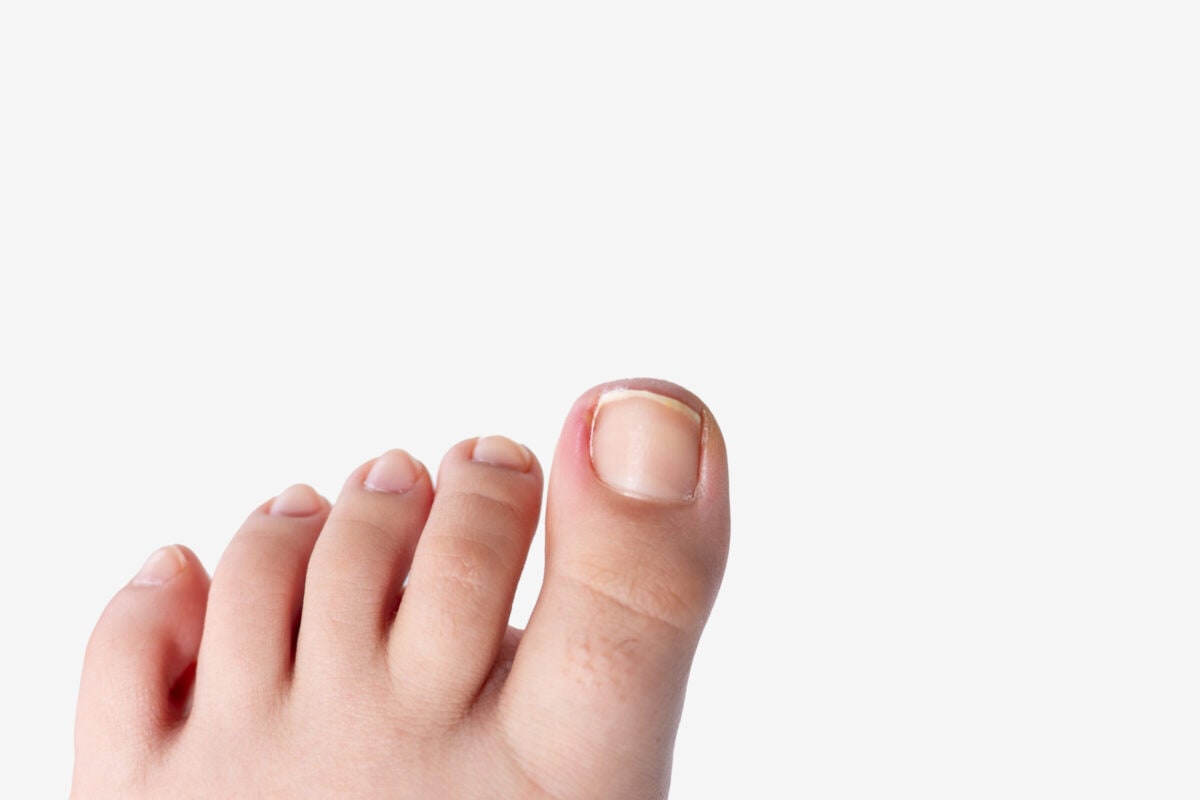
Experiencing pain and redness at a corner of your big toe? It could be an infected ingrown toenail. There are options for ingrown toenail self-care, but it’s also important to know when to see your doctor.
Called onychocryptosis, an ingrown toenail occurs when a sharp edge of the nail plate pierces the nail fold tissue. The problem can spiral from inflammation and discomfort to infection and significant pain as it grows into the surrounding skin. An ingrown toenail can be a serious threat especially if you have diabetes. Early ingrown toenail treatment, though not necessarily ingrown toenail removal, is a must to remedy the condition and prevent complications.
Signs of an Ingrown Toenail
Because of the nail plate’s sharp edges, when it embeds, it will cause visible redness and swelling in the surrounding skin. If action isn’t taken to address the embedded nail, a granuloma can develop. While it looks like a growth, a granuloma is actually a mass of vascular tissue that lies over the embedded part of the nail. A granuloma occurs in response to trauma—think of it as your body’s way of attempting to wall off the sharp object piercing the skin. In addition to significant swelling, an infected ingrown toenail will ooze pus and the area will feel extremely tender and warm to the touch.
Reasons for an Ingrown Toenail
While some people have nails that are just more prone to becoming ingrown because the nails have an exaggerated overcurvature, anyone can develop an ingrown toenail. Common causes include cutting the nail too short, cutting the nail on a curve rather than straight across, and trauma from tight or otherwise poorly fitting shoes—repetitive toe trauma, common in athletes, can happen to anyone whose big toe continuously hits the top of their shoes’ toebox.
Some factors make it hard to care for your toenails and cut them properly. You might be less flexible than you used to be. Also, toenails get thicker with age, making them harder to cut or cut straight across.
How to Fix an Ingrown Toenail: Ingrown Toenail Self-Care
Most people are quickly aware that they have an ingrown toenail because it’s uncomfortable, and if you take care of it right away, you may be able to manage it on your own. Try these steps:
- Soak the affected foot in epsom salts and cool water for 10 minutes at a time to help alleviate inflammation.
- Take an over -the-counter anti-inflammatory medication such as ibuprofen to ease discomfort.
- Keep feet clean and dry.
- Wear open-toe well fitting shoes or sandals so that the nail doesn’t make contact with the shoe. Any socks should be loosen, not constricting.
If you’re wondering how to remove an ingrown toenail yourself, don’t. Attempting to dig into the nail fold with tools or to perform a home surgery can dangerously aggravate the problem, causing or worsening an infection.
How to Fix an Ingrown Toenail: When to See a Foot Specialist
Because of the heightened risk for infection, it’s vital to see a podiatrist or dermatologist skilled in nail care as soon as possible after developing an ingrown toenail if you have diabetes, severe nerve damage, conditions that causes poor blood circulation or involved a weakened immune system. It’s also a good idea to see a podiatrist if you get repeated ingrown nails or when an ingrown toenail is extremely painful and keeping you from being active or impacting your ability to walk.
If your ingrown toenail is infected, your doctor will likely drain it and culture the fluid. Depending on test results, ingrown toenail treatment may include an oral antibiotic. Most of the time, the toenail will heal without surgery. However, in severe cases, your doctor may need to do a partial ingrown toenail removal, called a partial nail avulsion.
During the procedure, your doctor will inject an anesthetic to numb your toe and then cut away a portion of the embedded toenail. For recurrent ingrown nails, an avulsion procedure can bring permanent results with the assistance of a chemical to kill the nail root. Called a matricectomy, this surgery keeps the edge of the nail from growing inward and cutting into the skin—it redirects the nail to grow in more narrowly and eliminates the risk of chronic embedding.
Preventing Ingrown Toenails
Practice good foot care especially when it comes to trimming your toenails. Cutting nails straight across is best to prevent ingrown toenails. This means that square-shaped toenails are preferable to round-shaped ones. For some people, “squoval” (square with a bit of filing on the edge) may be acceptable.
Also, avoid cutting the nails too short—even when squared—because that too encourages embedding. In fact, if you’re prone to ingrown nails, let the nails of your big toes grow a bit longer than typical: Leaving them long enough so that the corners rest against the skin on either side helps prevent them from becoming ingrown. Other steps include make sure that your shoes are properly-fitted, with enough room for your toes.
Pedicures are still on the table as long as your feet and toenails are healthy, and you don’t have any risk factors such as diabetes. Look for a nail technician skilled at caring for people with ingrown toenails. Sometimes a simple clipping of the embedded section will create immediate relief by removing the embedded segment.
If you have health problems that involve the feet, notiably diabetes, consider routine care by a doctor, sometimes called a medical pedicure—your feet and toes will be thoroughly cared for by a specialist aware of the risks you face and able to detect signs of problems early on.